Protecting Renters from Evictions Act of 2021 This bill extends through December 31, 2021, the order issued by the Centers for Disease Control and Prevention titled Temporary Halt in Residential Evictions To Prevent the Further Spread of COVID–19 and published on September 4, 2020.
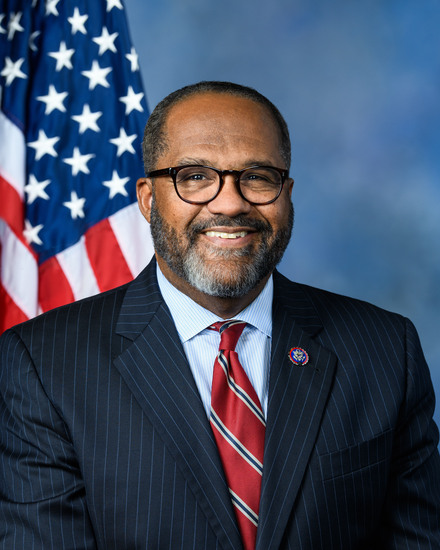
Rep. Troy A. Carter
Sponsored bills
This resolution condemns acts of violence against Afghan women and girls and any effort to limit the ability of women and girls to participate in the civic affairs of Afghanistan. It also urges the President to ensure that Afghan women, youth, and other marginalized groups are meaningfully participating and engaging in all peace talks.
Student Loan Relief Act This bill establishes a program to discharge certain federal student loan debt. Specifically, the bill requires the Department of Education (ED) to automatically discharge (i.e., repay or cancel) up to $50,000 of outstanding student loan debt for each borrower. Members of Congress are not eligible to receive loan discharges. Further, the bill outlines the method of loan discharge and excludes the loan discharges from taxable income. In addition, the bill requires ED to automatically place each federal student loan borrower in administrative forbearance for the one-year period in which ED carries out the discharge of student loans. During this period, payments are not due, interest does not accrue, and ED may not pursue debt collection activities (e.g., wage garnishments).
Performing Artist Tax Parity Act of 2021 This bill modifies the tax deduction for the expenses of performing artists (including commissions paid to managers or agents) to provide for a phaseout of such deduction for taxpayers whose adjusted gross income exceeds $100,000 ($200,000 for joint return filers). The $100,000 phaseout threshold is adjusted for inflation annually for taxable years beginning after 2021.
Andrew J. Young Safeguarding the Mississippi River Together Act or the Andrew J. Young SMRT Act or Andy's Mississippi River Bill or Andy's Bill. This bill establishes a National Mississippi River Program for the preservation of the Mississippi River Corridor. The Environmental Protection Agency, coordinating with specified federal departments, may enter into agreements with a state or local government to develop a National Mississippi River Program Office, provide grants, assistance, studies, coordination, and essential restoration and protection of the Mississippi River Corridor to sustain essential environmental services; maintain the ecological integrity, health, and biodiversity of federal lands as well as lands managed under federal programs; protect critical national infrastructure, habitat, fish and wildlife resources; and support the major U.S. economies that depend on the Mississippi River. The Program Office shall develop a comprehensive Mississippi River Restoration Plan to guide implementation of projects to sustain the corridor. In order to support the plan and for other purposes, the bill establishes a series of ongoing studies and investigations to sustain the corridor. Once every five years the Program Office shall complete an updated economic profile of the corridor.
Mississippi River Restoration and Resilience Initiative Act or the MRRRI Act This bill establishes the Mississippi River Restoration and Resilience Initiative to protect and restore the Mississippi River Corridor. The Environmental Protection Agency (EPA) must establish the initiative and the Mississippi River National Program Office to carry out the initiative. The office must (1) coordinate agency actions to protect and restore the Mississippi River Corridor; (2) develop, implement, and update the initiative, actionable goals, and an action plan required by the bill; (3) make updates and information available on a public website; and (4) submit annual reports to Congress. Additionally, the bill outlines the focus areas that each project carried out under the initiative must address, such as improving water quality and protecting wildlife habitat. The office may make grants to certain nonfederal entities to carry out eligible projects. The bill directs the EPA to include the initiative as a separate budget line item in its annual budget submission. Next, the bill directs the Department of the Interior to coordinate with the office to establish four Mississippi River Corridor research centers within the U.S. Geological Survey (USGS). These research centers must, among other duties, conduct scientific research on the focus areas of the initiative. The bill also directs the USGS to host a science forum to share current science and identify data gaps related to the ecological health of the Mississippi River Corridor. The USGS must, within two years of the forum, develop a science plan for the initiative.
Universal School Meals Program Act of 2021 This bill revises requirements under the food and nutrition programs of the Department of Agriculture, such as the school lunch and breakfast programs. For example, the bill permanently provides free meals to all school children regardless of income. The bill increases the reimbursement rate for school food authorities participating in the food and nutrition programs. The bill also prohibits school food authorities from (1) physically segregating or otherwise discriminating against any child participating in the free breakfast program, or (2) overtly identifying a child participating in the program with a special token or announcement. Additionally, the bill expands the summer food service program by making all children eligible for participation in the program. Further, the bill revises eligibility determinations for measuring poverty to include runaway or homeless youth, foster children, migratory children, and children participating in specified programs (e.g., Head Start).
Health Enterprise Zones Act of 2021 This bill provides for the designation of Health Enterprise Zones in certain geographic areas with documented and measurable health disparities. This designation, which expires 10 fiscal years after the bill's enactment, confers eligibility for certain grants, student loan repayment programs, and tax credits for those working to reduce health disparities and improve health outcomes in these zones. Specifically, community-based nonprofits or local government agencies, in coalition with health care providers, social service organizations, and others, may apply to the Department of Health and Human Services (HHS) for the designation. The application must include a plan to reduce health disparities and achieve other outcomes. In implementing the program, HHS must consult with, among others, the Department of Housing and Urban Development. When approving applications, HHS shall consider factors including geographic diversity and the commitment of supporting funds from the private sector. HHS (1) may award grants to organizations or agencies that applied for the designation to support activities aligned with their plans, and (2) must carry out a student loan repayment program for health care providers who agree to provide services in a Health Enterprise Zone. In addition, the bill establishes tax credits for employers that hire, and individuals who work as, Health Enterprise Zone workers.

End Double Taxation of Successful Consumer Claims Act This bill allows a deduction from gross income (above-the-line deduction) for attorney fees and court costs in connection with a claim of a consumer protection violation.
National Infrastructure Development Bank Act of 2021 This bill establishes the National Infrastructure Development Bank as a government corporation to finance energy, environmental (e.g., drinking water or waste facilities), telecommunications, and transportation infrastructure projects. The bill establishes the National Infrastructure Development Bank Board, which must oversee the infrastructure projects. The board may make loans and loan guarantees to assist in financing infrastructure projects. Further, the board must establish an executive committee, a risk management committee, an audit committee, and a compliance office. To be eligible for financial assistance from the bank, an infrastructure project (1) must have a public benefit, as determined by the board; and (2) may not have a sole use or purpose that is private. An infrastructure project must use iron, steel, and manufactured products that are made in the United States. The bill also establishes accounting and reporting requirements. In particular, the Government Accountability Office must, within five years of this bill's enactment, submit a report to Congress evaluating the bank's activities.