

Maddy summaryThis bill requires Congress to approve major federal regulations before they take effect. It would mandate that agencies submit detailed reports including cost-benefit analyses, economic impact assessments, and other information to Congress before implementing significant regulations. Major rules - defined as those with at least $100 million annual economic impact or significant effects on costs, competition, or employment - would need a joint resolution of approval from Congress within 70 session days. Nonmajor rules would follow a less stringent disapproval process. The bill aims to increase legislative oversight of the regulatory process, requiring Congress to formally review and approve rules that significantly impact the economy or public regulations.
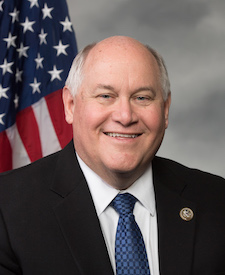
Rep. Ron Estes
Sponsored bills
Maddy summaryHR 196, the Family and Small Business Taxpayer Protection Act, rescinds unobligated funds previously allocated to the Internal Revenue Service (IRS) under the Inflation Reduction Act of 2022. Specifically, it directs the cancellation of unused balances from six specific funding categories within the IRS's budget as of the bill's enactment date. This action reduces the IRS's available funding without creating new tax policies or altering taxpayer obligations. The bill is procedural, focusing solely on redirecting existing, unspent government funds rather than changing tax laws or affecting individual taxpayers directly.
Maddy summaryHR 8244 would require skilled nursing facilities participating in Medicare or Medicaid to meet stricter approval standards for training programs if they've received significant fines for quality-of-care issues. Specifically, facilities must not have been assessed a fine of at least $12,924 for deficiencies related to resident care quality within the past year. The bill amends existing law to update the criteria for temporarily barring such facilities from offering nursing aide training programs. This directly affects nursing homes that have faced enforcement actions under Medicare or Medicaid quality standards.
Maddy summaryThis bill updates federal law to ensure tribal child support enforcement agencies have the same access to tax information as state agencies. It amends the Social Security Act and Internal Revenue Code to explicitly include tribal organizations receiving federal grants under Section 455(f) in provisions allowing the use of tax refund data to collect overdue child support payments. Tribal agencies will now be treated equally with state agencies for accessing tax information and receiving reimbursement for enforcement reports. This change directly affects Native American tribes operating child support programs and the parents and children they serve, enabling more effective collection of overdue support.
Maddy summaryThis bill, HR 1097 (Everett Alvarez, Jr. Congressional Gold Medal Act of 2023), authorizes the award of a Congressional Gold Medal to Everett Alvarez, Jr., in recognition of his service as a U.S. Navy pilot and Vietnam War prisoner of war. It directly honors Alvarez, who was the first U.S. pilot shot down in the Vietnam War, spent over 8.5 years in captivity, and later served in the Peace Corps and Veterans Administration. The bill’s key mechanism is directing the U.S. Mint to strike a gold medal bearing his name and image, with bronze duplicates available for sale to cover costs. It does not create new policies or affect any group beyond the honoree.
Maddy summaryThe ELITE Vehicles Act (HR 10516) repeals three federal tax credits for electric vehicles: one for new clean vehicles (Section 30D), one for previously-owned clean vehicles (Section 25E), and one for commercial clean vehicles (Section 45W). It also removes tax credit eligibility for electric vehicle recharging infrastructure under Section 30C. These changes take effect 30 days after the bill’s enactment, eliminating tax benefits for individuals and businesses purchasing or contracting for eligible electric vehicles or charging equipment after that date. The bill directly affects consumers, dealers, and manufacturers who previously claimed these credits.
Maddy summaryHR 7513, the Protecting America’s Seniors’ Access to Care Act, prohibits the Department of Health and Human Services from implementing or enforcing a proposed rule that would have set minimum staffing requirements for nursing homes and other long-term care facilities receiving Medicare or Medicaid funding. The bill specifically blocks the September 2023 proposed rule (88 Fed. Reg. 61352-61429) and any substantially similar rule. This directly affects long-term care facilities that rely on federal healthcare program payments. The key mechanism is a clear statutory prohibition preventing the rule from taking effect, without altering existing staffing standards or requirements.
Maddy summaryHR 10503, the REVIVE VI Act, exempts certain income earned by Virgin Islands corporations from U.S. tax on foreign income (GILTI). It directly affects Virgin Islands corporations providing services within the territory and specific U.S. shareholders (individuals, trusts, estates, or certain pre-2023-owned C corporations). The bill creates a new tax exemption for "qualified Virgin Islands services income," defined as compensation for labor performed in the Virgin Islands by a local corporation, attributable to services from within the territory, and connected to a Virgin Islands business. This change modifies the Internal Revenue Code to exclude this specific income from global intangible low-taxed income calculations for eligible entities.
Maddy summaryThe FOCA Act of 2023 requires federal agencies to stop mandating or banning contractor agreements with labor organizations (like union contracts) in construction project bids and contracts. It directly affects federal contractors, subcontractors, and agencies managing construction projects funded by the government. The bill prohibits favoring or penalizing contractors based on their labor affiliation status, aiming to promote fair competition and reduce costs. It also mandates updates to federal contracting rules within 60 days of enactment to implement these changes.
Maddy summaryThis bill requires Medicare Advantage plans to implement electronic prior authorization systems by 2027 and publish detailed data on their approval and denial rates for medical services by 2026. It directly affects Medicare Advantage plans (private insurers offering Medicare coverage) and their enrollees (seniors 65+), mandating transparency about prior authorization decisions, processing times, and appeal outcomes. Key provisions include requiring plans to report annual statistics on request approvals/denials, average processing times, and use of technology, with this data published publicly by the Centers for Medicare & Medicaid Services. The bill also sets timelines for plan responses to prior authorization requests and mandates reports to Congress on implementation and impacts.