

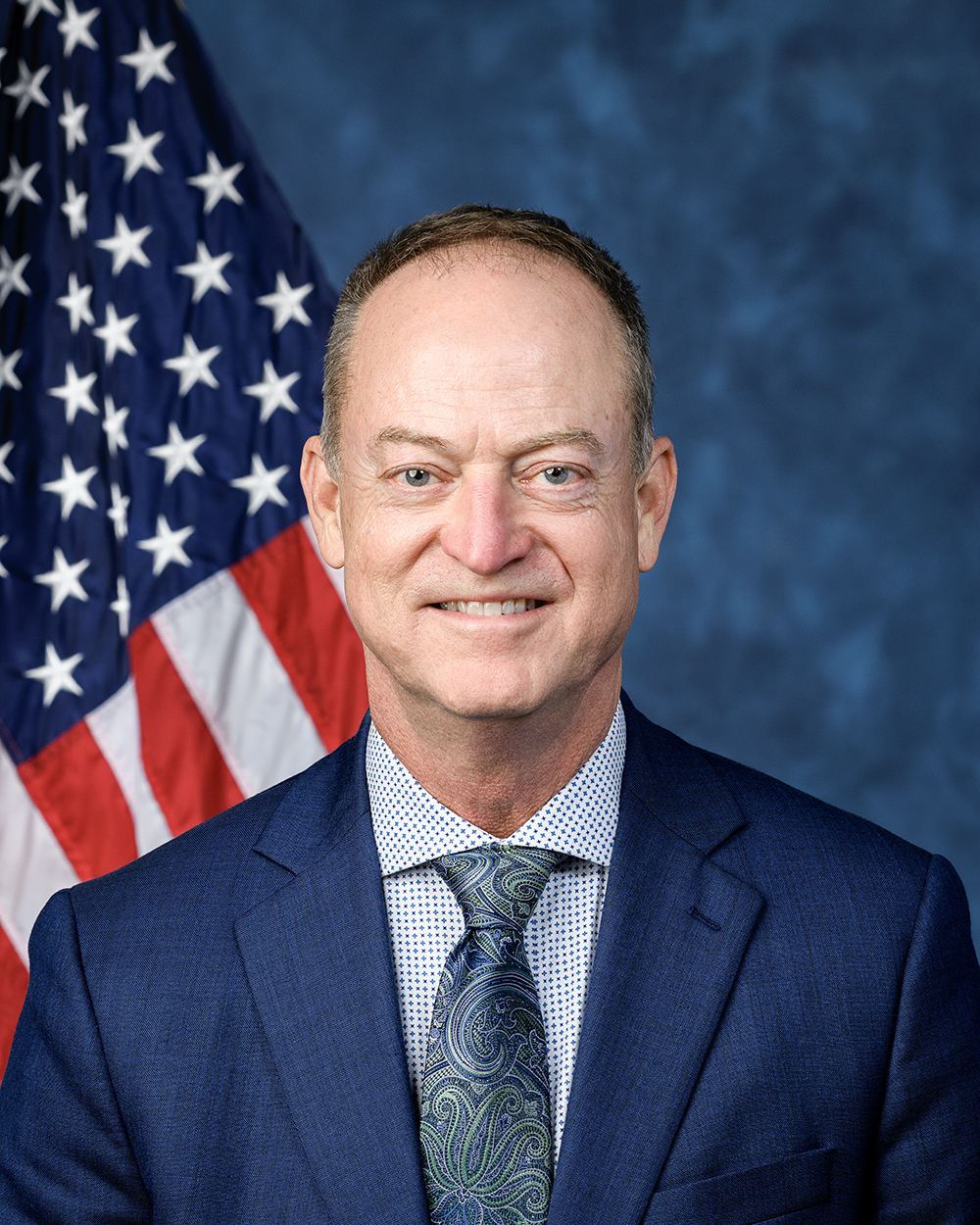
Photo of Mark B. Messmer
R United States House · District 8 · Indiana On the 2026 ballot

Rep. Mark B. Messmer

Compare
Total votes
650
all sessions
Attendance
98%
13 missed
Near the chamber average
With party
99%
of cast votes
Higher than 94% of chamber peers
Bipartisan score
1%
crosses aisle rarely
Lower than 94% of chamber peers
Sponsored
236
bills & resolutions
Near the chamber average
Committees
10
assignments
236 bills and resolutions

Sponsored bills

Total
236
Primary
16
Co-sponsor
220
This page
236
matching current filters
Co-sponsor HR 6520
In committee · Florida House · Co-sponsor
SNAP Data Transparency and Oversight Act of 2025

Maddy summaryThis bill requires state agencies administering the SNAP (food stamp) program to provide recipient-level data to the USDA Secretary upon request. It directly affects state SNAP agencies, which must submit this data within 30 days (or sooner for urgent cases) in secure electronic formats. Key provisions include mandatory data sharing for program oversight and integrity, strict privacy safeguards under the Privacy Act, and potential withholding of federal funds for non-compliance. The bill also clarifies that this does not limit the USDA's existing authority to access state data for program administration.

In committee Jan 13, 2026 1 co-sponsor
Co-sponsor HR 3453
In committee · Florida House · Co-sponsor
Empower Charter School Educators to Lead Act

Maddy summaryHR 3453, the Empower Charter School Educators to Lead Act, creates new federal grants to help educator-led teams plan and open charter schools. It provides up to $100,000 per team for pre-charter planning, targeting groups led by educators with at least 4.5 years of school-based experience (including after-school programs) and a demonstrated ability to lead. To qualify, teams must submit a community needs assessment and a plan showing how their proposed school will address those needs. The bill reserves 5% of relevant funding for these educator-led grants, adjusting existing ESEA grant formulas to prioritize this new support. This directly affects educators seeking to start charter schools and the communities where those schools would operate.

In committee Jan 13, 2026 1 co-sponsor
Co-sponsor HR 2516
In committee · Florida House · Co-sponsor
Accreditation for College Excellence Act of 2025

Maddy summaryHR 2516, the Accreditation for College Excellence Act of 2025, prohibits accreditation agencies from requiring colleges to support specific political views, ideologies, or partisan positions. It explicitly prevents agencies from assessing institutions based on their commitment to any ideology or requiring adherence to statements of faith for religious institutions. The bill also limits federal criteria for accreditation to only what is necessary, ensuring colleges comply with their accreditor’s standards - not additional unrelated requirements. This directly affects all colleges seeking federal funding through accredited programs by clarifying permissible accreditation standards.

In committee Jan 13, 2026 1 co-sponsor
Co-sponsor HR 2312
In committee · Florida House · Co-sponsor
Tipped Employee Protection Act

Maddy summaryThis bill amends the Fair Labor Standards Act to change how tipped employees' wages are calculated. It removes the previous requirement that tipped workers must "customarily and regularly receive more than $30 a month in tips" to qualify for the lower cash wage rate. Instead, it requires that the combined cash wage plus tips must equal or exceed the standard federal minimum wage for the pay period chosen by the employer (ranging from daily to monthly). The bill directly affects restaurant servers, bartenders, and other tipped workers who receive cash wages plus tips. It simplifies wage calculations for employers while ensuring tipped employees earn at least the full minimum wage when tips are included.

In committee Jan 13, 2026 1 co-sponsor
Primary HR 2270
In committee · Florida House · Lead sponsor
Empowering Employer Child and Elder Care Solutions Act

Maddy summaryThis bill amends the Fair Labor Standards Act to exclude the value of employer-provided child or dependent care services from overtime pay calculations. It directly affects employers who offer such care benefits, allowing them to exclude the cost of these services when determining overtime wages for eligible employees. The key change adds a new exclusion (paragraph (9)) to the overtime calculation rules, meaning the value of childcare or elder care provided by an employer is no longer counted toward an employee's regular rate for overtime purposes. The change applies to overtime pay required for workweeks beginning after the bill's enactment date.

In committee Jan 13, 2026 0 co-sponsors
Co-sponsor HR 2262
Failed · Florida House · Co-sponsor
Flexibility for Workers Education Act

Flexibility for Workers Education Act This bill modifies the definition of hours worked under the Fair Labor Standards Act to exclude certain voluntary training that occurs outside an employee's regular working hours. Such training does not count as hours worked even if it is offered by the employer, provided that an employee's working conditions are not adversely affected by choosing not to participate and the employee does not perform any work for the employer during the training.

Failed Jan 13, 2026 1 co-sponsor
Co-sponsor HR 909
Passed · Florida House · Co-sponsor
Crime Victims Fund Stabilization Act of 2025

Maddy summaryHR 909, the Crime Victims Fund Stabilization Act of 2025, modifies how funds from the False Claims Act are deposited into the Crime Victims Fund. It specifies that from 2025 through 2029, certain False Claims Act proceeds (specifically those for qui tam plaintiff payments and government damage reimbursements) cannot be deposited into the fund. This change directly affects the composition of the Crime Victims Fund by excluding these specific revenue streams during the specified period. The bill does not create new benefits or alter victim services; it only adjusts fund allocation rules for existing False Claims Act revenues.

Passed Jan 13, 2026 1 co-sponsor
Co-sponsor HR 6854
In committee · Florida House · Co-sponsor
No Welfare for Non-Citizens Act

Maddy summaryHR 6854, the "No Welfare for Non-Citizens Act," would remove all federal public benefit eligibility for non-citizens under current law. It amends the 1996 welfare law by eliminating exceptions that previously allowed certain non-citizens (like "qualified aliens") to access benefits such as cash assistance and unemployment benefits. The bill repeals existing provisions that permitted limited eligibility and explicitly states non-citizens are ineligible for all federal public benefits. This change would directly affect non-citizens without specific immigration statuses, removing their access to programs like SNAP (food stamps) or Temporary Assistance for Needy Families (TANF) that were previously available under limited circumstances.

In committee Dec 18, 2025 1 co-sponsor
Co-sponsor HR 4054
In committee · Florida House · Co-sponsor
Accreditation Choice and Innovation Act

Maddy summaryThis bill amends the Higher Education Act to reform how accrediting agencies evaluate institutions of higher education. It establishes new criteria for accrediting agencies to demonstrate independence from trade associations, allows states to designate industry-specific quality assurance entities as accrediting agencies, and creates protections for religious institutions to maintain accreditation based on their religious mission. The bill requires accrediting agencies to use risk-based review processes that adjust oversight based on institutional performance, publicly share accreditation data, and provides religious institutions with a new process to challenge accreditation decisions they believe fail to respect their religious mission. These changes directly affect accrediting agencies, higher education institutions, and students by altering the accreditation evaluation process.

In committee Dec 18, 2025 1 co-sponsor
Co-sponsor HR 2528
In committee · Florida House · Co-sponsor
Association Health Plans Act

Maddy summaryThis bill allows groups of small businesses or self-employed individuals to form a single health plan that treats all members as one employer for coverage purposes. It directly affects small business associations and self-employed people who can join such groups to access pooled health coverage, provided they meet specific requirements (e.g., 51+ total employees, 2+ years in existence, no health-based discrimination). Key mechanisms include permitting modified community rating for premiums (based on pooled claims) while prohibiting health status-related discrimination in enrollment, premiums, or pre-existing condition coverage. The plan remains subject to federal ERISA rules, and self-employed members must meet defined criteria to participate as both employers and employees.

In committee Dec 15, 2025 1 co-sponsor
Showing 81 to 90 of 236 bills
Previous 1 8 9 10 24 Next