

Maddy summaryHR 7346, the Drain ICE Act of 2026, repeals specific funding provisions (sections 90003 and 100052) from the "One Big Beautiful Bill Act" and cancels all unspent funds allocated under those sections. This bill directly affects ICE’s detention budget by removing existing financial authority for detention operations. It does not change immigration enforcement practices or directly impact individuals; it solely modifies budgetary allocations. The bill focuses on eliminating funding mechanisms, not on policy changes for migrants or enforcement. (Procedural bill; summary limited to 2 sentences as specified.)
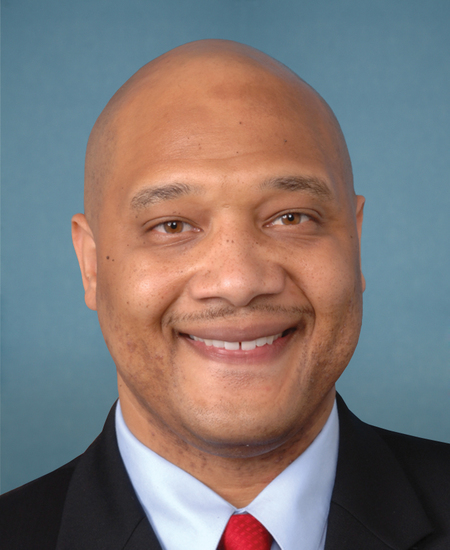
Rep. André Carson
Sponsored bills
Maddy summaryHR 7335 establishes comprehensive humanitarian standards for individuals held in U.S. Immigration and Customs Enforcement (ICE) and U.S. Customs and Border Protection (CBP) custody. The bill requires facilities to provide immediate health screenings within 12 hours (6 hours for high-risk individuals like children, pregnant people, or those with medical conditions), ensure access to adequate water, sanitation, food (with 2,000+ calories daily for adults), and age-appropriate shelter. It mandates specific facility standards including separate housing for males and females, accessible accommodations for people with disabilities, daily outdoor access for those detained over 48 hours, and proper medical equipment and personnel on-site. The bill also requires regular inspections, staff training on humanitarian protocols, and public reporting of sexual abuse complaints. These standards directly affect all individuals detained by ICE or CBP, with special protections for vulnerable groups like children, pregnant people, and those with medical needs.
Maddy summaryHR 4469, the PRESUME Act, simplifies eligibility for veterans exposed to radiation during military service. It removes the requirement for veterans to provide specific radiation dose evidence to qualify as "radiation-exposed veterans" under VA benefits. This change directly affects veterans who participated in nuclear testing or other radiation-related military activities and previously had to prove exact exposure levels. The bill amends 38 U.S.C. § 1112(c) to state the VA Secretary "may not require evidence of a certain dose of radiation" for this classification, streamlining access to medical benefits.
Maddy summaryHR 7322, the True Shutdown Fairness Act, requires federal agencies to pay regular wages to most employees and contractor workers during government shutdowns in fiscal year 2026, instead of furloughing them. It applies to all standard federal employees (excluding those on emergency duty) and contractor workers whose jobs would normally halt during a funding gap. Agencies must pay covered employees within 7 days of the bill's enactment for ongoing shutdowns, and contractors receive reimbursement for costs incurred keeping workers paid. The bill also prohibits agencies from implementing layoffs or placing employees on administrative leave for more than 10 days during a shutdown.
Maddy summaryHR 7307, the SUPPLIES Act, requires the State Department and USAID to create procedures within 60 days for handling unused supplies (like medicine, vaccines, or food) after foreign aid projects end. These procedures must prioritize preventing waste by ensuring supplies aren't destroyed, diverted, or expired without use. The bill mandates that these procedures be published online by both agencies. It directly affects U.S. government agencies and foreign aid partners managing aid supplies. The law defines "commodity" broadly to include perishable items held in warehouses or storage facilities for foreign assistance programs.
Maddy summaryHR 6820, the Airline Passenger Compensation Act of 2025, requires airlines to compensate passengers for significant delays or cancellations caused by the airline itself. It mandates $300 compensation for delays of 3-9 hours and $775 for delays of 9+ hours on domestic or international flights, plus free rebooking on the next available flight if a connection is missed. The Transportation Secretary must issue these regulations within one year of the bill's enactment. This directly affects travelers experiencing airline-caused disruptions, providing specific financial and logistical relief.
Maddy summaryHR 6635, the Bus Operator Safety and Security Act, requires new fixed-route buses over 30 feet long (with a 10+ year lifespan) purchased using federal transit funds to have physical barriers at the driver's workstation. These barriers must extend from floor to ceiling, fully enclose the workstation to block entry of people or objects, and not obstruct the driver's view. Transit agencies must install these barriers within two years of the law's enactment, unless the labor union representing bus drivers agrees to waive the requirement. The rule applies only to new buses bought with federal funds (excluding those from rural transportation programs) and directly affects transit agencies and bus drivers operating large fixed-route vehicles.
Maddy summaryThe CARE for First Responders Act (HR 6601) provides mental health support specifically for first responders, including emergency personnel and 911 operators (defined as "qualified emergency response providers"). It requires the creation of a 24/7 confidential hotline via the 988 Suicide Lifeline, peer support programs staffed by trained responders, and mobile crisis units that offer on-site mental health services during major disasters. The bill mandates trauma-informed, culturally appropriate care and education to reduce stigma around mental health, with a focus on helping responders and their families adjust after disaster work. It authorizes $5 million annually (2026-2030) for these services through grants to state/local health entities.
Maddy summaryThe Emergency Alert Grant Fairness Act requires the Federal Emergency Management Agency (FEMA) to open applications for its Next Generation Warning System grants for at least 30 days each year. It also explicitly includes public broadcasting entities (as defined in the Communications Act of 1934) as eligible recipients for these grants. This bill directly affects FEMA's grant administration process and public broadcasting organizations that provide emergency alert services. The key change is standardizing the application window and expanding eligibility to ensure public broadcasters can access funding for emergency alert systems.
Maddy summaryThis resolution (HRES 1025) expresses the U.S. House of Representatives' strong condemnation of violence, oppression, and abuse against ethnic minorities in the Democratic Republic of the Congo (DRC), particularly in the eastern regions. It specifically highlights documented atrocities - including killings, sexual violence, forced displacement, and child soldier use - perpetrated by the DRC's military (FARDC), M23, and other armed groups. The resolution calls for accountability, urges the DRC government to protect displaced civilians, and demands adherence to international agreements like the June 2025 peace deal with Rwanda. As a non-binding resolution, it serves as a formal statement of U.S. concern and outlines specific actions for U.S. officials to address the crisis.