

Maddy summaryThe Save MEDICARE Act of 2026 aims to improve the Medicare Advantage program by starting in 2028 with several changes to how health plans are paid and monitored. It requires the government to exclude diagnoses from chart reviews when calculating payments to prevent plans from inflating costs based on questionable data. The bill also speeds up audits and appeals to ensure faster resolution of coding disputes and introduces a new penalty system to recover overpayments from plans. Additionally, the law allows states to enforce Medicare rules within their borders and bans financial incentives for doctors based on how they code patient records. Finally, it establishes a mechanism for the Department of Veterans Affairs to recover costs when Medicare Advantage plans cover care that should have been paid for by the VA.
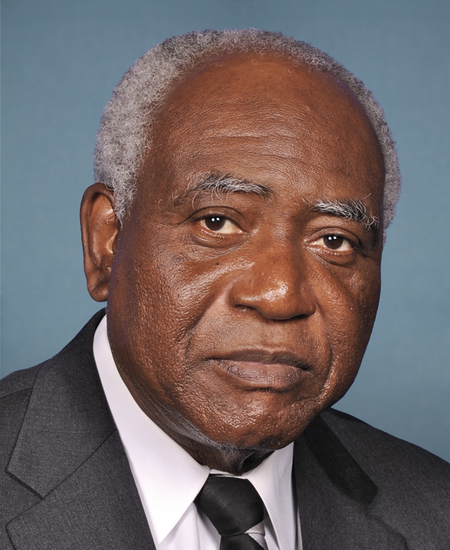
Rep. Danny K. Davis
Sponsored bills
Maddy summaryThe Child Marriage Prevention Act of 2026 establishes a new federal commission within the Department of Health and Human Services to study child marriage across the United States and recommend strategies to eliminate it. The bill also creates a grant program to help states with lax marriage laws form task forces to examine local issues and develop policy solutions. To discourage child marriage, the legislation provides increased federal funding to states that have laws prohibiting marriage for anyone under 18 years of age. Additionally, the act restricts the use of federal property for marriages where either party is under 18 and modifies immigration laws to generally require both spouses to be at least 18 for visa petitions to be approved. The bill further mandates private interviews for immigration officers reviewing spousal or fiancé petitions involving minors and requires public education campaigns about the harms of child marriage and available support resources.
Maddy summaryThe Protecting Students from Worthless Degrees Act restricts federal funding for colleges that offer programs preparing students for licensed professions unless those programs guarantee licensure eligibility in the student's specific state and provide required clinical or internship placements. To prevent low-earning degrees, the bill mandates that programs must maintain a debt-to-earnings ratio below 8 percent and a discretionary debt-to-earnings ratio below 20 percent, with institutions barred from enrolling students in non-compliant programs for up to three years. Additionally, the legislation requires colleges to clearly warn students if a program does not meet the educational prerequisites for practicing a profession in the state where the student lives. Finally, the act enforces stricter rules on distance learning by requiring schools to be legally authorized in every state where their online students reside, unless covered by a specific reciprocity agreement between states.
Maddy summaryOrlin's Law requires immigration officials to identify detained parents and prioritize family unity by limiting detention when possible. The bill mandates that parents be allowed to make free calls and visits with their children, participate in family court proceedings, and access necessary documents to care for their dependents. It also establishes a new office within U.S. Immigration and Customs Enforcement to coordinate these protections and provides for community-based alternatives to detention. Additionally, the law creates a presumption that parental rights remain intact even if a child is separated from a detained parent and outlines specific steps to facilitate reunification upon removal.
Maddy summaryThe Stop CHEATERS Act directs the Internal Revenue Service to increase its enforcement efforts against high-income individuals and large corporations by allocating billions of dollars in additional funding for tax audits, criminal investigations, and taxpayer services through fiscal year 2031. A significant portion of this funding is designated for modernizing the IRS's technology and business systems to improve its ability to detect fraud and noncompliance. The legislation also requires the IRS Commissioner to submit regular reports to Congress detailing plans to shift auditing resources toward wealthy taxpayers and analyzing how much unpaid tax is owed by different income groups.
Maddy summaryThis resolution asks the President and the Secretary of Health and Human Services to provide the House of Representatives with specific documents regarding a freeze on federal payments to five states. The requested materials include communications about how the payment freeze was decided, records of the tweet that announced it, and details on funding drawdowns, disciplinary actions, and data sharing plans related to those states. The bill specifically targets documents concerning Temporary Assistance for Needy Families, Child Care, and Social Services Block Grant programs in California, Colorado, Illinois, Minnesota, and New York. If the agencies possess the records, they must submit them to Congress within 14 days of the resolution's adoption.
Maddy summaryThis bill requires Medicare Advantage plans to implement electronic pre-approval systems for medical services by 2028 and meet transparency reporting standards starting in 2027. Plans must publicly report data on approval/denial rates, appeal outcomes, response times, and technology use for pre-approval requests, including details on how denials relate to clinical criteria. It establishes a 24-hour response timeframe for certain requests and mandates annual reviews of pre-approval requirements based on data and input from seniors and providers. The law directly affects Medicare Advantage plans, seniors enrolled in these plans, and healthcare providers who submit pre-approval requests. These changes aim to make the pre-approval process faster, more transparent, and more accountable for seniors seeking covered medical services.
Maddy summaryThis resolution expresses support for designating July 10th as Journeyman Lineworkers Recognition Day to honor the workers who maintain the nation's electrical grid. The bill specifically recognizes the dangerous conditions these employees face, such as working at heights near live power lines and responding to disasters like hurricanes and wildfires. It also commemorates Henry Miller, the first president of the International Brotherhood of Electrical Workers, who died on July 10, 1896, while performing his duties. Ultimately, the measure encourages the public to observe this day with reflection on the contributions of lineworkers.
Maddy summaryThe Find Our Families Act of 2026 requires the Department of Homeland Security to create a public online system that allows families to locate individuals detained by Customs and Border Protection or Immigration and Customs Enforcement. This system must provide search results within eight hours of detention, display information in multiple languages, and include specific details such as names, dates of birth, and facility locations, while excluding data for minors. The bill also mandates that families be notified within five hours if a detainee is transferred for medical care and establishes new reporting requirements for CBP arrests, including details on the circumstances of the arrest and the number of agents involved. Additionally, the legislation creates a process for families to report errors in detainee information and imposes penalties on employees or contractors who fail to comply with these data-sharing and reporting obligations.
Maddy summaryThis bill establishes a new Office for Civil Rights and Civil Liberties within the Department of Homeland Security, led by an Officer who reports directly to the department head. The Office is tasked with overseeing compliance with civil rights laws, reviewing potential abuses or profiling by employees, and integrating these protections into all department policies and programs. It grants the Officer authority to investigate complaints, issue public reports on findings, and coordinate with other officials to ensure diverse communities are engaged effectively. Additionally, the legislation requires each major department unit to have its own civil rights officer and mandates annual reporting to Congress on the Office's activities and progress.