

Maddy summaryThe Pregnant Women in Custody Act establishes new federal standards to protect the health and rights of pregnant women held in Bureau of Prisons facilities, immigration detention centers, and refugee shelters. It mandates comprehensive medical care, including mandatory pregnancy testing, access to contraception, and specialized dietary and housing accommodations tailored to pregnancy needs. A central provision prohibits the use of restrictive housing and physical restraints during pregnancy, labor, and the postpartum recovery period, with limited exceptions only for immediate safety threats. The legislation also requires facilities to provide nursery programs allowing mothers and infants to remain together, offers education on parental rights, and mandates regular reporting on health outcomes and the use of restrictive measures.
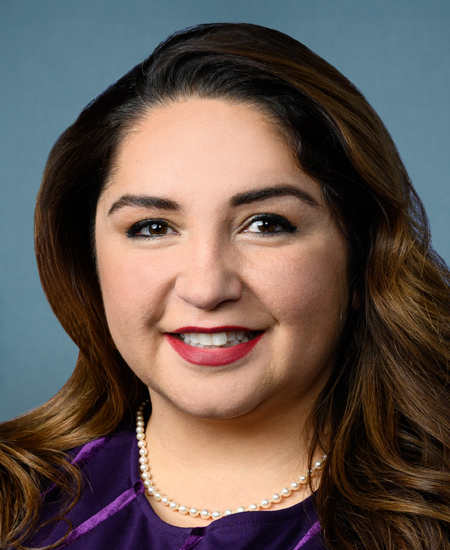
Rep. Delia C. Ramirez
Sponsored bills
Maddy summaryThis bill prohibits the U.S. government from spending money on military actions against Iran between its enactment and December 31, 2026, unless Congress explicitly approves the use of force. It allows for military action only if Congress declares war, passes a specific authorization, or if the action is necessary to defend the United States or its allies from an imminent attack while following reporting requirements. The law directly restricts the President's ability to deploy troops without legislative approval during the specified timeframe.
Maddy summaryThe Reward Work Act prohibits companies from buying back their own stock on public exchanges while requiring at least one-third of corporate board members to be elected by employees. Under this bill, corporations would need to hold one-employee-one-vote elections to select these worker representatives, with the Securities and Exchange Commission tasked with creating rules to ensure fair and democratic processes. The legislation specifically targets publicly traded companies and their boards of directors, aiming to increase worker influence in corporate governance through direct election mechanisms.
Maddy summaryThe No WAR Act prohibits Congress from using budget reconciliation procedures to fund military hostilities against Iran unless such actions are explicitly authorized by a formal declaration of war or a specific authorization for the use of military force. This legislation directly affects the legislative process by establishing a point of order that blocks any reconciliation bill attempting to provide budget authority for offensive military operations, strikes, or covert actions targeting Iranian military forces, territory, or government institutions. The bill also defines proxy forces as any foreign military or irregular groups operating with U.S. direction or material support, ensuring these entities are included in the restrictions on unauthorized funding. By amending the Congressional Budget and Impoundment Control Act, the measure aims to prevent the use of budgetary shortcuts to bypass the constitutional requirement for congressional approval before engaging in armed conflict with Iran.
Maddy summaryThis bill amends the Fair Credit Reporting Act to restrict how background information is shared with landlords when screening potential tenants. It directly affects individuals with criminal records by prohibiting consumer reporting agencies from including specific data in reports used for rental housing decisions. Key provisions ban the inclusion of arrest records, juvenile adjudications, expunged convictions, and cases resolved through diversion programs, while also preventing the reporting of convictions that have been completed or where the individual is currently on probation or parole. Additionally, the legislation requires landlords who deny housing based on these reports to provide applicants with the specific reasons for the denial within three days. Finally, the bill prevents states from setting their own time limits for how long certain types of criminal information can be excluded from these reports.
Maddy summaryThis bill, titled the Protecting Human Rights and Public Health in Foreign Assistance Act, aims to cancel specific regulations issued by the Department of State. It directly affects the federal government by prohibiting any department or agency from enforcing, implementing, or proposing rules related to protecting life, combating discriminatory equity ideology, and combating gender ideology in foreign aid programs. The legislation treats these cancelled rules as if they never existed, effectively nullifying their impact on future foreign assistance policies.
Maddy summaryThe Living Wage For All Act raises the federal minimum wage in a tiered schedule, requiring large corporations to reach $25 per hour by 2031 while giving smaller businesses a longer timeline to catch up. Once the standard is met, the law automatically indexes the minimum wage to two-thirds of the national median hourly wage to ensure it keeps pace with economic changes. The bill also eliminates the lower minimum wage for tipped employees and youth workers, phasing them out until they match the general standard, and extends similar protections to incarcerated workers. Additionally, the legislation restricts the issuance of special minimum wage certificates for workers with disabilities and mandates that employers provide technical assistance during the transition period.
Maddy summaryThe Clean Energy Workforce Act authorizes $100 million to help schools and colleges train students for jobs in clean energy, renewable energy, and climate change fields. The funding supports two main programs: grants for partnerships between schools and local businesses to create or expand educational courses that prepare students for these industries, and grants for educational facilities to become more energy-efficient and use renewable power. To ensure quality, the bill requires a review committee of educators and industry experts to evaluate grant applications, with priority given to programs that reach underserved students and share their methods with other schools.
Maddy summaryThis bill prohibits the Department of Homeland Security from using federal funds to create or expand new immigration detention facilities, including warehouses, tents, and modular structures. It directly affects immigration enforcement agencies by banning the construction, renovation, or operation of non-traditional detention centers and preventing the transfer of funds to such projects. The legislation requires any money previously allocated for these facilities to be redirected toward affordable healthcare and housing services instead. Effective immediately upon enactment, the ban applies to all existing federal funds and prevents the use of current budgets for establishing or operating alternative detention models.
Maddy summaryThis resolution expresses the sense of the House of Representatives that stable housing is a fundamental human right that keeps families together, regardless of immigration status. It condemns a past administration's proposal to ban mixed-immigration status families from receiving prorated federal housing assistance and calls on the Secretary of Housing and Urban Development to withdraw any such rule. The resolution also urges Congress to increase funding for federal housing programs and calls for a Government Accountability Office report on the impact of such proposals on family separation and homelessness.