

Maddy summaryHR 1447 prevents employers from ending health insurance coverage for workers during a lawful strike or a lockout (when an employer stops work to pressure union demands). It directly affects unionized workers participating in strikes or facing lockouts, ensuring they maintain healthcare coverage during these labor disputes. The bill adds penalties: employers violating this rule face up to $75,000 per violation for lockouts ($150,000 for repeat offenses or serious harm) and up to $50,000 per violation for strikes ($100,000 for repeat offenses or serious harm). These penalties apply to employers who cut healthcare during strikes or lockouts, with the National Labor Relations Board enforcing the fines.
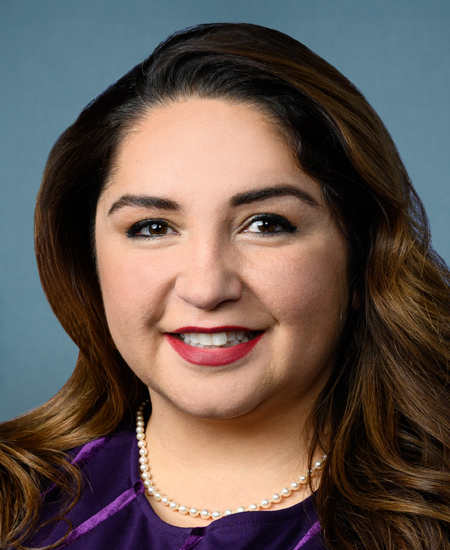
Rep. Delia C. Ramirez
Sponsored bills
Equal Citizenship for Children Act of 2023 This bill expands the application of automatic acquisition of citizenship for certain children born outside of the United States. Specifically, the bill provides citizenship retroactively to such a child who, while under the age of 18, (1) resided in the United States as a lawful permanent resident (or had a pending application for such status), and (2) was in the legal custody of the child's citizen parent. It also eliminates the physical custody requirement for the automatic acquisition of citizenship. The bill applies to a child meeting these requirements who was born after noon on January 9, 1941, but who turned 18 prior to February 27, 2001 (the effective date of the Child Citizenship Act of 2000).
Maddy summaryHR 1404, the Facial Recognition and Biometric Technology Moratorium Act of 2023, bans U.S. federal agencies and officials from using facial recognition, voice recognition, or other remote biometric surveillance systems (like gait analysis) for law enforcement or surveillance in the United States. It directly affects federal law enforcement agencies and state/local governments receiving Byrne grant funding, which they would lose if they don’t adopt similar bans. Key provisions prohibit federal acquisition or use of these systems (except for narrowly defined congressional authorizations), ban federal funding for such systems, and make illegally obtained biometric data inadmissible in court. The bill also allows individuals to sue the federal government for violations and requires states receiving federal funds to implement comparable restrictions.
This resolution calls for the federal government to establish a national biodiversity strategy, which must include a goal of conserving at least 30% of U.S. lands and waters to protect biodiversity and address climate change by 2030 and other goals necessary to reduce the threats to biodiversity.
Maddy summaryHR 1369, the "Peace on the Korean Peninsula Act," directs the U.S. State Department to review restrictions on Americans traveling to North Korea, particularly for humanitarian reasons like family reunions (affecting approximately 100,000 Americans with relatives there). It also requires the State Department to create a diplomatic roadmap for ending the Korean War through formal negotiations with North and South Korea, including establishing liaison offices. The bill mandates reports to Congress within 180 days detailing these reviews and strategies, without changing existing military deployments or U.S. policy on North Korea's nuclear program. It focuses on diplomatic engagement to replace the 1953 armistice with a permanent peace agreement.
Maddy summaryThis bill allows asylum seekers not in detention to obtain work authorization 30 days after filing their asylum application, provided their application isn't deemed frivolous. It directly affects individuals seeking asylum in the U.S. who are awaiting a final decision on their case. The authorization remains valid until the asylum application receives a final denial, including any administrative or court appeals. This changes the prior system where many asylum seekers faced prolonged work restrictions while their cases were processed.
Maddy summaryHR 1247 would award a Congressional Gold Medal to the Freedom Riders collectively, honoring their pivotal role in challenging segregation in interstate travel during the Civil Rights movement. The medal, to be struck by the U.S. Mint and displayed at the Smithsonian Institution, recognizes their nonviolent protests that led to the 1961 federal ban on segregation in interstate public facilities. This is a symbolic tribute with no legal effect, as the bill does not create new policies or alter existing laws.
Maddy summaryThe Richard L. Trumka Protecting the Right to Organize Act of 2023 strengthens workers' rights to organize unions by making it harder for employers to interfere with organizing efforts. Key provisions include changing the definition of "employee" to make it more difficult to classify workers as independent contractors, prohibiting employers from threatening to permanently replace striking workers, and requiring employers to provide voter lists for union elections. The bill also creates a new electronic voting system for union elections, strengthens whistleblower protections for workers reporting labor violations, and increases penalties for unfair labor practices. These changes directly affect workers seeking to form unions, employers who may interfere with organizing, and labor organizations. The bill aims to make it easier for workers to exercise their right to collective bargaining under the National Labor Relations Act.
Maddy summaryThe Justice for Black Farmers Act of 2023 addresses historical discrimination against Black farmers by the USDA through several key provisions. It establishes an Equity Commission to study discrimination and recommend solutions, creates an independent Civil Rights Oversight Board to review discrimination complaints, and provides land grants of up to 160 acres to eligible Black farmers at no cost. The bill also improves access to credit for socially disadvantaged farmers, requires the USDA to collect and publish data on racial disparities in its programs, and includes protections against discriminatory practices in the livestock industry. These measures aim to increase land ownership and economic opportunity for Black farmers while addressing systemic barriers they've faced for decades.
Maddy summaryThis bill requires retail electric suppliers to generate 80% of their electricity from renewable sources by 2029 and 100% by 2030. It also mandates that vehicle manufacturers sell 80% zero-emission vehicles by 2029 and 100% by 2030. Additionally, large agricultural corporations must implement regenerative practices on 50% of their land by 2026, increasing to 100% by 2030. The legislation provides tax incentives for businesses making these transitions and requires annual reporting on compliance with these new standards. Businesses failing to meet these requirements may lose certain tax deductions under this law.