

Maddy summaryThe MINT Act modifies rules for federal home loan banks backing tax-exempt bonds used in community development projects. It removes a 2010 deadline for certain bond issuances and shifts safety requirements to be set by the Federal Housing Finance Agency Director, rather than fixed standards. This directly affects community development organizations and local governments using tax-exempt bonds for housing or neighborhood revitalization. The changes apply to guarantees issued after the bill's enactment, streamlining how these bonds are secured.
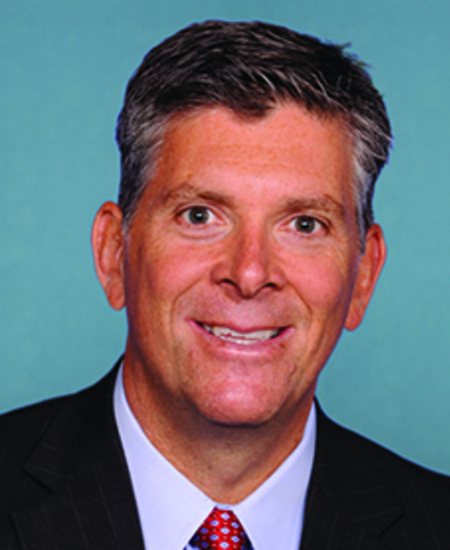
Rep. Darin LaHood
Sponsored bills
Maddy summaryThis bill changes tax depreciation rules for specific equipment used in restaurants and bars. It classifies "qualified energy-efficient draft alcohol property" (like stainless steel/aluminum containers and tap systems for serving alcohol) as 15-year property for tax purposes, allowing faster depreciation deductions. The change applies to equipment installed after December 31, 2025, and directly affects restaurant, bar, and entertainment venue owners who purchase this equipment. The bill does not alter tax rates or create new programs, only modifying how eligible equipment is treated under existing tax code provisions.
Maddy summaryThis bill changes tax rules for specific education loan repayments. It allows graduates to exclude from taxable income amounts received through "post-graduation scholarship grants" that repay part of their student loans. These grants must be provided by qualified nonprofits (like private foundations or community trusts) to individuals who agree to live and work in communities with below-average bachelor's degree attainment rates. The grants require direct payments to loan holders, exclude employees of the granting organization, and include reporting requirements for the Treasury Department on program effectiveness within three years.
Maddy summaryThis bill directs the Secretary of Transportation to update the federal definition of "motorcycle" in transportation regulations within 120 days of enactment. The new definition specifies that a motorcycle must be a three-wheeled vehicle designed to be ridden while sitting astride, steered by handlebars, and capable of exceeding 30 mph. It directly affects motorcycle manufacturers, regulators, and riders by aligning federal safety standards with this updated definition in the Code of Federal Regulations. The change ensures regulatory consistency for vehicles meeting these specific design and performance criteria.
Maddy summaryThis bill prevents state or local governments from banning or restricting energy connections (like installation, modification, or access) based on the type or source of energy, such as electricity, natural gas, or renewable fuels. It directly affects consumers choosing energy providers and energy companies seeking to offer services. The key provision prohibits local laws, regulations, or policies that limit energy services sold in interstate commerce, covering all energy types listed in the bill’s definitions. It does not create new programs but limits regulatory authority at the state or local level. The law aims to ensure open access to diverse energy sources without source-based restrictions.
Maddy summaryThis bill creates a tax exclusion for certain disaster mitigation payments received by property owners. It allows individuals to exclude from gross income funds paid by state programs (or approved entities) to make improvements that reduce damage from windstorms, earthquakes, or wildfires. The exclusion applies to payments made for specific property upgrades like storm shutters or fire-resistant roofing. The change takes effect for 2021+ tax years and includes a retroactive option for taxpayers to amend prior returns. It directly affects homeowners participating in qualifying state disaster resilience programs.
Maddy summaryThis bill authorizes U.S. sanctions against foreign individuals or entities that obstruct Lebanese citizens abroad from voting in Lebanon’s parliamentary elections, as defined by the bill. It targets actions like blocking voter registration, manipulating ballots, intimidating diaspora voters, or undermining election administration under Lebanese law. Key mechanisms include blocking assets, denying U.S. visas, and revoking existing visas for sanctioned parties. The bill requires the President to report to Congress on sanctions implementation, election integrity efforts, and foreign interference risks, with the authority expiring after five years. It directly affects foreign actors interfering with Lebanon’s electoral process, not Lebanese citizens or U.S. policy.
Maddy summaryHR 6635, the Bus Operator Safety and Security Act, requires new fixed-route buses over 30 feet long (with a 10+ year lifespan) purchased using federal transit funds to have physical barriers at the driver's workstation. These barriers must extend from floor to ceiling, fully enclose the workstation to block entry of people or objects, and not obstruct the driver's view. Transit agencies must install these barriers within two years of the law's enactment, unless the labor union representing bus drivers agrees to waive the requirement. The rule applies only to new buses bought with federal funds (excluding those from rural transportation programs) and directly affects transit agencies and bus drivers operating large fixed-route vehicles.
Safeguard American Voter Eligibility Act or the SAVE America Act This bill requires individuals to provide documentary proof of U.S. citizenship when registering to vote, and requires photo identification to vote, in federal elections. Specifically, the bill prohibits states from accepting and processing an application to register to vote in a federal election unless the applicant presents documentary proof of U.S. citizenship. The bill specifies what documents are considered acceptable proof of U.S. citizenship, such as identification that complies with the REAL ID Act of 2005 that indicates U.S. citizenship. Further, the bill (1) prohibits states from registering an individual to vote in a federal election unless, at the time the individual applies to register to vote, the individual provides documentary proof of U.S. citizenship; and (2) requires states to establish an alternative process to demonstrate U.S. citizenship. Each state must take affirmative steps on an ongoing basis to ensure that only U.S. citizens are registered to vote, which shall include establishing a program to identify individuals who are not U.S. citizens using information supplied by certain sources. Additionally, states must remove noncitizens from their official lists of eligible voters. The bill (1) provides for a private right of action for certain violations, and (2) establishes criminal penalties for certain offenses. Individuals voting in federal elections must present an eligible photo identification document. An individual who votes by absentee ballot must submit a copy of their identification document with both the request for, and the submission of, the absentee ballot.
Maddy summaryHRES 1022 is a non-binding congressional resolution expressing support for Catholic schools and celebrating the 52nd annual National Catholic Schools Week (January 25-31, 2026). It recognizes Catholic schools' contributions to education, noting their role in serving 1.7 million students across diverse backgrounds, with high graduation rates and community-focused values. The resolution specifically supports the week's goals, highlights the National Catholic Educational Association and U.S. Conference of Catholic Bishops' partnership, and applauds the 2026 theme "Catholic Schools: United in Faith and Community." It does not create new policies, allocate funding, or impose obligations.