

Lawful Interstate Transportation of Firearms Act This bill revises criminal provisions related to the interstate transportation of firearms and ammunition. An individual may transport a firearm between two places (e.g., states) where it is legal to possess, carry, or transport the firearm. During transport, the firearm must be unloaded and secured or securely stored. Additionally, an individual may transport ammunition, or a detachable magazine or feeding device, between two places where it is legal to possess, carry, or transport the ammunition, magazine, or feeding device. During transport, the ammunition, magazine, or feeding device must not be loaded into a firearm and must be securely stored. The term transport includes staying in temporary lodging; stopping for food, fuel, vehicle maintenance, an emergency, or medical treatment; or any other activity incidental to the transport. The bill prohibits the arrest or detention of an individual for a state or local firearm or ammunition violation unless there is probable cause to believe the individual failed to comply with the provisions of this bill, and there is probable cause to believe the individual committed another crime.
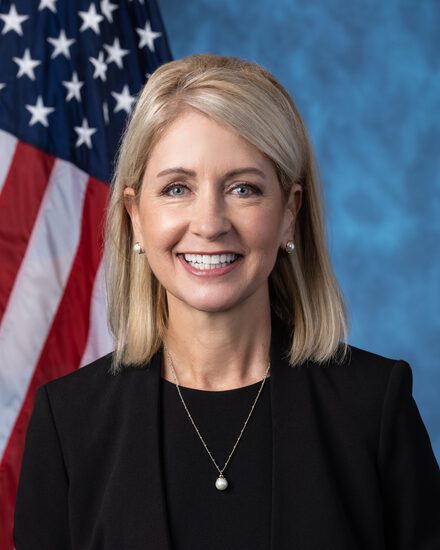
Rep. Mary E. Miller
Sponsored bills
Border Visibility and Security Act This bill directs the Department of Homeland Security (DHS) to install surveillance technology and take other actions with respect to the U.S.-Mexico border. DHS shall deploy the most practical and effective technology available to achieve situational awareness and operational control of the border. Such technology may include radar surveillance systems, tunnel detection technology, and unmanned aerial vehicles. DHS is authorized to waive legal requirements as necessary in order to implement the necessary surveillance technology along the border. DHS shall also (1) construct a navigable road along at least 700 miles of the southwest border, (2) permanently eradicate certain foliage that grows along the Rio Grande river, and (3) report to Congress a comprehensive strategy about the barriers and technologies needed to secure operational control along the border. Drug cartel funds that have been criminally forfeited to the U.S. government shall be reserved for security measures along the U.S.-Mexico border.
Sarah's Law This bill requires U.S. Immigration and Customs Enforcement (ICE) to detain an alien who is unlawfully present in the United States and has been charged with a crime that resulted in the death or serious bodily injury of another person. ICE shall make reasonable efforts to obtain information about the identity of any victims of the crimes for which such alien was charged or convicted. ICE shall provide the victim, or a relative or guardian of a deceased victim, with information about such alien, including name, date of birth, nationality, immigration status, criminal history, and a description of any related removal efforts.
Jump-Start the Economy with Jobs Act This bill requires each state that offers pandemic unemployment assistance (PUA) or pandemic emergency unemployment compensation (PEUC) to condition benefit eligibility for a long-term unemployed individual on an employer's confirmation that work is unavailable for the unemployed individual. Specifically, each state unemployment agency must request confirmation from the unemployed individual's most recent employer that the individual's position is not available at the time of the request. Unless the employer provides this confirmation, the state must terminate the individual's PUA or PEUC. The bill's provisions apply only to long-term unemployed individuals who have received PUA or PEUC for more than 30 weeks of unemployment.
This resolution designates National Pregnancy Center Week.
Stop CRT Act This bill grants Executive Order 13950 the force and effect of law. That order prohibits federal agencies and contractors from advancing specified policies or training related to race or sex.
Preventing Endless Armed Conflict and Engagement Act This bill establishes requirements related to an authorization for the use of military force. Specifically, the bill provides for the termination of any specific statutory authorization (or reauthorization thereof) not later than two years after the enactment of the authorization (or reauthorization). Further, a specific statutory authorization must specify (1) each nation, organization, or force engaged in active hostilities against the United States; (2) each country in which military force is authorized; and (3) the objective for such authorization. The Department of Defense must submit an annual report that includes (1) a list of each authorization for the use of military force, and (2) specified information related to each authorization (e.g., the number of military personnel deployed and the expected scope and duration of operations).
Combating Racist Teaching in Schools Act or the CRT Act This bill prohibits federal funds from being awarded to elementary or secondary schools or institutions of higher education that promote certain race-based theories or compel teachers or students to affirm belief in such theories in a manner that discriminates on the basis of race, color, or national origin.
Combatting Racist Training in the Military Act of 2021 This bill prohibits the Armed Forces and academic institutions of the Department of Defense from promoting specified anti-American and racist theories (e.g., that any race is inherently superior or inferior to any other race). Specifically, the bill prohibits including anti-American and racist theories or materials in curricula, reading lists, seminars, workshops, trainings, or other educational or professional settings in a manner that could appear as sponsorship, approval, or endorsement; contracting with, hiring, or otherwise engaging speakers, consultants, diversity trainers, and other persons for the purpose of advocating anti-American and racist theories; compelling members of the Armed Forces to affirm or profess belief in anti-American and racist theories; and segregating members of the Armed Forces by race in any setting, including educational and training sessions.
No Taxpayer Funding for the U.N. Population Fund This bill prohibits the use of funds to provide contributions directly or indirectly to the United Nations Population Fund (UNFPA). The UNFPA is a United Nations agency that supports access to sexual and reproductive health services, including voluntary family planning, maternal health care, and sexuality education.