

Maddy summaryThis bill would add pharmacist services to Medicare Part B coverage for beneficiaries, specifically covering pharmacist-led testing and treatment for illnesses like flu, COVID-19, or strep throat during public health emergencies. It defines covered services as those performed under state law, often requiring collaboration with a physician, and sets payment at 80% of the lesser of the actual charge or 85% of physician payment rates. Pharmacists would be prohibited from balance billing for these services, ensuring Medicare beneficiaries pay only their standard copayment. The changes would take effect January 1, 2026.
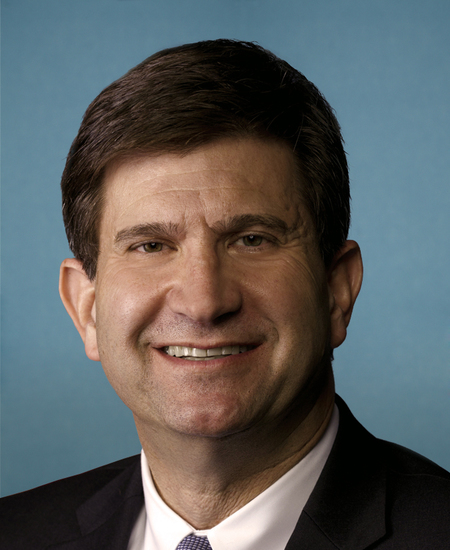
Rep. Bradley Scott Schneider
Sponsored bills
Maddy summaryThis bill authorizes the U.S. Mint to produce commemorative $5 gold and $1 silver coins marking the 25th anniversary of the September 11, 2001, terrorist attacks. The coins must feature designs honoring victims and first responders (including the inscription "Never Forget") and will be sold only during 2027-2028. All surcharges ($35 per gold coin, $10 per silver coin) collected from sales will fund the National September 11 Memorial and Museum at the World Trade Center, with no net cost to the federal government. The coins are legal tender but primarily intended for collectors, not circulation.
Maddy summaryThis concurrent resolution directs the President to withdraw U.S. military forces from active hostilities with Iran. The measure relies on the War Powers Resolution, requiring the President to end combat operations unless the forces are needed to defend the United States or its allies from an immediate attack. Any continued use of troops in such defensive scenarios must still follow specific reporting and notification rules, and full military engagement is only permitted if Congress explicitly authorizes it through a formal declaration of war or a specific authorization for force.
Dental Care for Veterans Act This bill expands eligibility for veterans for dental care provided by the Department of Veterans Affairs (VA). Specifically, the bill makes all veterans who are enrolled in the VA health care system eligible for VA-provided dental services. Currently, only veterans who have a service-connected dental issue or meet other narrow criteria are eligible for certain dental services. The bill phases in eligibility over four years based upon existing eligibility, degree of service-connected disability or other disability, prisoner of war status, award of a Purple Heart, financial need, or VA health care eligibility.
Maddy summaryThis bill creates a new federal tax on money received by former U.S. presidents, their immediate family members, or their controlled businesses from civil lawsuits against the government. Under the law, any settlement or verdict awarded to these individuals would be subject to a 100 percent tax, and the payments would not be counted as taxable income for other purposes. To enforce this, the bill requires trustees and administrators to file public reports detailing these payments and imposes a $10,000 penalty for failing to do so. These rules would apply to any funds received on or after May 20, 2026.
Maddy summaryThe IMPACT to Save Moms Act directs the Centers for Medicare & Medicaid Services to run a five-year demonstration project from 2027 to 2031, allowing states to test new payment models for maternity care under Medicaid and state child health plans. This initiative aims to improve health outcomes for pregnant and postpartum individuals, with a specific focus on reducing disparities among groups that experience higher rates of maternal mortality and severe complications. To achieve these goals, the project requires states to consider alternative payment structures that account for pregnancy risk levels, include diverse care teams with training on bias, and address social factors affecting health. The bill also mandates that the federal government evaluate the project's impact on health outcomes and spending, and submit a final report to Congress with recommendations on whether to expand the program nationwide.
Maddy summaryThe RISE Act introduces tax incentives to encourage small businesses to offer pension plans to their employees. It increases the startup tax credit for microemployers, allowing them to claim a larger credit for establishing a retirement plan starting in 2027. Additionally, the bill permits service providers who help set up these plans to receive a tax credit for the fees they waive to make the plans affordable. To prevent fraud, the law requires employers to certify that they have not previously received similar credits for the same group of workers. These changes aim to lower the financial barriers for small employers and their service partners to create retirement savings options.
Maddy summaryThis bill renames the existing IDEAS Program to the Senator Paul Simon Study Abroad Program and directs the Secretary of State to expand it to increase global education opportunities for U.S. college students. The program will award competitive grants to universities and consortia to support study abroad initiatives, with a specific focus on helping low-income students, students of color, and minority-serving institutions participate. Funding priorities include encouraging travel to nontraditional destinations, particularly developing countries, and ensuring that grant recipients have robust health, safety, and security plans for students overseas. The legislation sets a long-term goal of having at least one million undergraduate students study abroad annually while requiring the Department of State to submit annual reports on progress.
Maddy summaryThis bill directs the President to withdraw U.S. military forces from hostilities against Iran within 30 days of February 28, 2026 (the date troops were deployed), unless Congress authorizes continued action through a formal declaration of war or specific statute. It explicitly permits defensive actions, maintains non-combat troop presence in the region, and clarifies that intelligence-sharing activities related to Iran remain unaffected. The resolution does not authorize military force but aligns with the War Powers Resolution's requirement for congressional oversight of military deployments. It directly affects the President and military commanders responsible for implementing the withdrawal.
This resolution calls on elected officials, faith leaders, and civil society leaders to condemn and counter acts of anti-Semitism. The resolution also honors the contributions of Jewish-American servicemembers and commits to ensuring all Americans, including Jewish Americans, can worship without fear of violence or persecution.