

Maddy summaryThe Sickle Cell Care Expansion Act of 2023 (HR 3100) authorizes federal funding to expand access to sickle cell disease care and research. It creates scholarship and loan repayment programs ($150 million annually) for medical students and physicians specializing in sickle cell disease, requiring them to work in treatment or research for one year per scholarship year. The bill also funds community-based education grants ($50 million annually) for organizations to improve health literacy and access to services, and transition-of-care programs ($70 million annually) to support patients moving from pediatric to adult care, including mental health services and specialist training. These provisions directly affect sickle cell patients, healthcare providers, and community organizations serving affected populations.
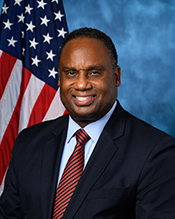
Rep. Jonathan L. Jackson
Sponsored bills
Maddy summaryThe PAST Act of 2023 amends the Horse Protection Act to ban specific devices used to cause pain (soring) in horses at shows, particularly affecting Tennessee Walking Horses, Racking Horses, and Spotted Saddle Horses. It defines prohibited "action devices" (like boots or chains causing friction) and requires licensed, conflict-free inspectors at events to enforce rules. The bill increases penalties for violations to up to $5,000 fines or 3 years in jail, and mandates longer disqualifications for repeat offenses (180 days → 1 year → 3 years). Horse show organizers, exhibitors, and participants must comply with these new inspection and penalty requirements.
Maddy summaryHR 3238, the Affordable Housing Credit Improvement Act of 2023, updates the Low-Income Housing Tax Credit (LIHTC) program to increase the availability of affordable housing across the United States. The bill makes several key changes including increasing state funding formulas, modifying tenant eligibility rules to better serve vulnerable populations (such as domestic violence victims and students), and expanding credit eligibility for projects in rural and Native American communities. Specific provisions raise the credit for properties serving extremely low-income households, clarify rules around tenant income increases, and require housing providers to protect victims of domestic violence. The bill also updates terminology from "low-income" to "affordable" throughout the tax code and enhances program transparency through data sharing requirements. These changes aim to make the LIHTC program more effective at creating and preserving affordable housing units for low-income households nationwide.
Maddy summaryThe HELPER Act of 2023 creates a new FHA mortgage insurance program specifically for first responders and K-12 teachers. It allows eligible first-time homebuyers in these professions to secure mortgages with 100% financing (no down payment required) for purchasing or repairing a primary residence. To qualify, applicants must be employed as law enforcement, firefighters, paramedics, or K-12 teachers, have completed housing counseling, and meet specific employment history requirements (e.g., 4 years in the role or disability-related release). The program authorizes $660,000 for fiscal year 2024 and $160,000 annually through 2030, with authority expiring after 5 years.
Maddy summaryThis bill requires state agencies administering the WIC program to publicly post details about infant formula bid solicitations online within 5 business days of posting the bid. Specifically, states must share the bid title, application website, contact information, and deadline via a central federal portal, which the Secretary must then publish publicly within 5 days. It directly affects state WIC agencies and the public by increasing transparency in how states purchase infant formula. The bill creates a new online information-sharing requirement under the Child Nutrition Act, without changing WIC eligibility or benefits.
Maddy summaryHCONRES 37 is a non-binding congressional resolution expressing that Congress views climate change as an emergency requiring a massive national mobilization. It states that human-caused climate change severely impacts U.S. economic well-being, health, safety, and national security, and urges the President to use existing authorities to accelerate climate action. The resolution does not create new laws or funding but emphasizes the need for urgent, equitable efforts to reduce emissions, address environmental injustice, and support vulnerable communities disproportionately affected by climate impacts. It cites rising global temperatures, extreme weather costs ($165 billion in U.S. disasters in 2022), and the Inflation Reduction Act as context, while clarifying it does not declare an actual national emergency.
Maddy summaryHRES 362 is a symbolic House resolution recognizing elementary and secondary school teachers' contributions to U.S. civic, cultural, and economic well-being. It specifically thanks teachers and encourages students, parents, school leaders, and officials to acknowledge National Teacher Appreciation Week (May 8-12, 2023). The resolution has no binding effect or policy changes - it solely promotes public appreciation for the teaching profession through a formal expression of gratitude. It directly affects teachers by affirming their societal value but does not alter laws, funding, or educational standards.
This bill nullifies a requirement for certain foreign travelers to show proof of being fully vaccinated against COVID-19 before being admitted into the United States. Specifically, this bill nullifies a U.S. Customs and Border Protection (CBP) rule that imposed this requirement for each traveler who is neither a U.S. national nor a lawful permanent resident arriving at land port of entry or ferry on the U.S.-Canada border. The bill also nullifies another CBP rule that applied this restriction to the U.S.-Mexico border. The bill also nullifies any subsequent decision by CBP or the Department of Homeland Security that imposes such a requirement.
Defending the Human Rights of Palestinian Children and Families Living Under Israeli Military Occupation Act This bill limits U.S. assistance to Israel and establishes reporting requirements related to Israel's activities in the West Bank and its expenditures for offshore procurement. (Offshore procurement involves spending U.S. security assistance from the Foreign Military Financing program on Israeli-origin rather than U.S.-origin defense articles.) Specifically, the bill prohibits the use of any funds that are made available for assistance to Israel to support (1) military detention, interrogation, abuse, or ill treatment of Palestinian children; (2) seizure, appropriation, or destruction of Palestinian property and forcible transfer of civilians in the Israeli-controlled West Bank; or (3) certain activities to facilitate unilateral annexation by Israel of West Bank territory. The Department of State must report on the nature and extent of such activities carried out by Israel. Further, the Government Accountability Office must submit to Congress a report on related topics, such as (1) identifying specific programs and items to which funds for offshore procurement in Israel have been allocated, (2) identifying all end-use monitoring to which Israel is subject with respect to U.S.-origin defense articles, and (3) assessing the extent to which offshore procurement funds have supported illegal Israeli settlement activity in the occupied West Bank.
Maddy summaryThis bill prohibits forced arbitration for race discrimination claims under federal, tribal, state, or local law. It makes pre-existing arbitration agreements unenforceable for disputes involving discrimination based on race, color, or national origin, allowing affected individuals to pursue cases in court instead. The law directly impacts employees, job applicants, and others facing alleged race discrimination who would otherwise be barred from court by mandatory arbitration clauses. It requires courts - not arbitrators - to decide if the law applies to a dispute, ensuring legal clarity for affected parties.