

Maddy summaryThis resolution commemorates the 70th anniversary of the United States Forest Service Institute of Pacific Islands Forestry, which has operated since 1956 to support tropical forest research in the Pacific region. The bill recognizes the institute's work in wildfire management, invasive species control, and ecosystem conservation, highlighting its role in providing scientific data for land restoration and climate resilience. It also acknowledges the importance of the institute's location on Hawaii Island and reaffirms congressional support for its ongoing operations and dedicated staff.
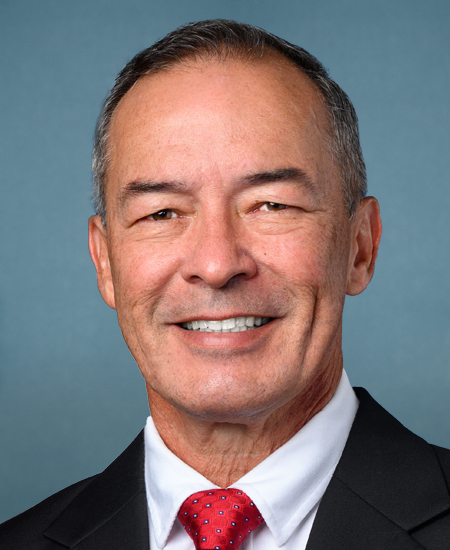
Rep. James C. Moylan
Sponsored bills
Maddy summaryHR 4398, the Veteran Burial Timeliness and Death Certificate Accountability Act, requires Veterans Affairs (VA) physicians or nurse practitioners to certify the death of a veteran who dies of natural causes within 48 hours of learning of the death. This directly affects veterans' families, who previously faced delays of up to eight weeks in burial and access to survivor benefits due to slow death certifications. The bill mandates annual reports to Congress on VA compliance with the 48-hour rule, including statistics on delays and their causes. The key change is establishing a strict timeline for death certification to prevent unnecessary delays in honoring veterans' final arrangements.
Maddy summaryThe Pacific Islands Liaison Initiative Act creates a new program within the Department of Homeland Security to strengthen law enforcement ties with Pacific Island nations. This initiative will deploy U.S. personnel to Honolulu and Guam to conduct joint operations, provide training, and share resources to help local countries fight transnational crime. The program is authorized to receive $5 million annually from 2027 through 2034 and requires the agency to submit yearly reports to Congress on its activities and funding.
Maddy summaryThe GRACE for Military Survivors Act extends the deadline for contributing military death benefits to Roth IRAs and Coverdell education savings accounts from one year to three years. This change directly benefits families of service members who receive these death benefits, giving them more time to save for retirement or education. The law applies to benefits received after the bill is enacted and includes a special rule allowing contributions made within a specific window for benefits received between 2001 and the enactment date. By amending the Internal Revenue Code, the bill ensures that eligible funds can be deposited into these tax-advantaged accounts without losing their value due to time limits.
Maddy summaryThis bill directs the National Institute of Standards and Technology to create task forces that develop technical standards for labeling content created by artificial intelligence. These groups will work with technology companies, social media platforms, and privacy experts to establish methods for watermarking images and videos, as well as tagging text, to help users distinguish AI-generated material from human-made content. The legislation requires these task forces to include representatives from various sectors, including developers, media organizations, and labor groups, and mandates regular reporting to Congress on their progress. Additionally, the bill emphasizes the need to protect user privacy when implementing these new tracking and labeling systems.
Maddy summaryThis bill authorizes the presentation of Congressional Gold Medals to the four crew members of the Artemis II mission to recognize their historic achievement in advancing human space exploration. The legislation directs the Speaker of the House and the President pro tempore of the Senate to arrange for the medals, which will feature the faces of the astronauts and be struck by the Secretary of the Treasury. In addition to the gold medals, the bill permits the minting and sale of duplicate bronze versions to help cover production costs, with any proceeds returned to the United States Mint Public Enterprise Fund.
Maddy summaryThis bill requires publicly traded companies and certain government agencies to report quarterly data on how artificial intelligence affects their U.S. workforce. Specifically, these organizations must disclose the number of employees laid off due to AI automation, new hires resulting from AI integration, unfilled positions caused by AI, and individuals receiving AI-related retraining. The Department of Labor will collect this information, analyze the net impact of these changes, and publish the reports on its website while also submitting them to Congress. Additionally, the bill establishes a process for the Department of Labor to determine which non-publicly traded companies should be included in these reporting requirements based on factors like company size and industry.
Maddy summaryThis resolution honors the life, military service, and congressional career of the late Representative Charles Bernard Rangel, specifically recognizing his contributions to the alliance between the United States and South Korea. The measure formally acknowledges his bravery during the Korean War, noting his Purple Heart and Bronze Star Medal awards for leading soldiers out of an encirclement, and highlights his decades of work strengthening U.S.-South Korea ties through trade policy and veteran advocacy. Additionally, the text expresses gratitude for a similar resolution passed by the South Korean National Assembly and reaffirms the House's commitment to honoring Korean War veterans and the enduring bilateral relationship.
Maddy summaryThis bill creates a new tax incentive to encourage the construction and renovation of affordable housing near public transportation hubs. It directly affects developers and investors by increasing the Low-Income Housing Tax Credit for buildings located within half a mile of rail, bus, harbor, or waterway stations in high-density zones. The credit amount is boosted to 150% of the standard value, rising to 155% for projects in Hawaii, Alaska, or U.S. territories, with limits on how many areas can be designated in each region. Additionally, the bill requires the Department of Housing and Urban Development to study geographic cost-of-living differences and propose changes to how tax credit funds are distributed among states.
Maddy summaryHR 5248 reorganizes the Department of State to better integrate economic policy with foreign policy by creating new leadership positions and bureaus focused on economic aspects of international relations. The bill establishes an Under Secretary for Economic Affairs to oversee economic growth, trade, energy, technology, and environmental policies, replacing the previous Under Secretary for Economic Growth, Energy and the Environment. It also creates a Chief Economist, Assistant Secretaries for Commercial Diplomacy, Water/Environment/Space Affairs, Energy Security, and Sanctions Policy, along with corresponding bureaus to coordinate these economic policy areas. The bill includes funding provisions for these new roles and updates existing references in law to reflect the new titles and responsibilities. This restructuring aims to improve coordination of economic policy across the Department of State to advance U.S. economic interests internationally.