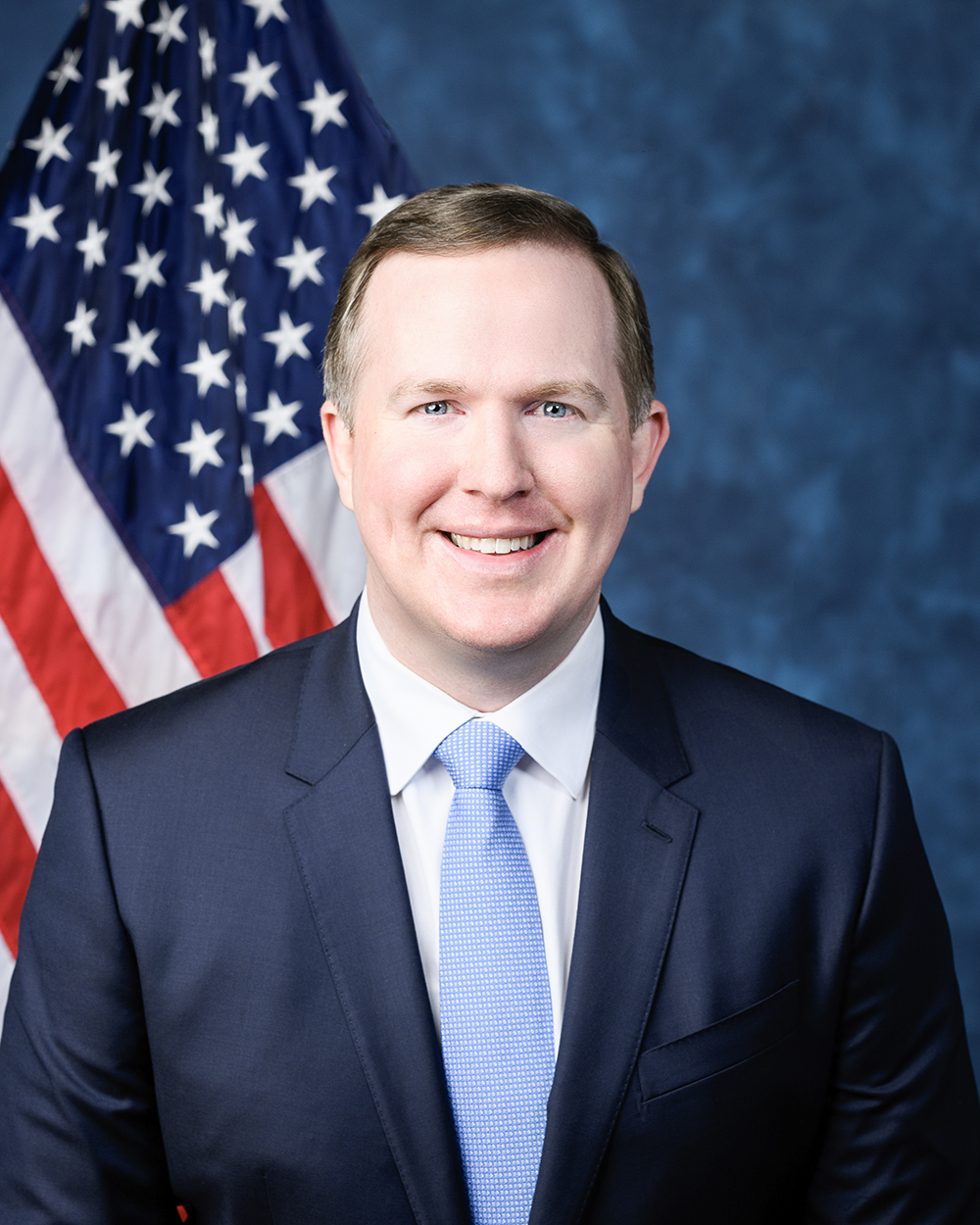
Photo of Brian Jack
R United States House · District 3 · Georgia On the 2026 ballot

Rep. Brian Jack

Compare
Total votes
650
all sessions
Attendance
100%
of floor votes
Higher than 97% of chamber peers
With party
97%
of cast votes
Near the chamber average
Bipartisan score
2%
crosses aisle rarely
Near the chamber average
Sponsored
126
bills & resolutions
Lower than 91% of chamber peers
Committees
9
assignments
126 bills and resolutions

Sponsored bills

Total
126
Primary
9
Co-sponsor
117
This page
126
matching current filters
Co-sponsor HR 5438
In committee · Florida House · Co-sponsor
Incentivize Savings Act

Maddy summaryThis bill modifies federal budget rules for unspent agency funds. It requires federal agencies to allocate 49% of unused funds to the next fiscal year, 49% toward paying the national debt, and 2% for retention bonuses (capped at 10% of an employee's base pay). Agencies must also limit future budget requests to the previous year's amount adjusted for inflation. The bill directly affects all executive branch agencies (excluding the Red Cross), altering how they manage leftover budget authority. It does not create new savings programs for individuals but changes government fiscal management procedures.

In committee Feb 4, 2026 1 co-sponsor
Co-sponsor HR 3699
In committee · Florida House · Co-sponsor
Energy Choice Act

Maddy summaryThis bill prevents state or local governments from banning or restricting energy connections (like installation, modification, or access) based on the type or source of energy, such as electricity, natural gas, or renewable fuels. It directly affects consumers choosing energy providers and energy companies seeking to offer services. The key provision prohibits local laws, regulations, or policies that limit energy services sold in interstate commerce, covering all energy types listed in the bill’s definitions. It does not create new programs but limits regulatory authority at the state or local level. The law aims to ensure open access to diverse energy sources without source-based restrictions.

In committee Feb 4, 2026 1 co-sponsor
Primary HRES 1032
Passed · Florida House · Lead sponsor
Providing for consideration of the Senate amendments to the bill (H.R. 7148) making further consolidated appropriations for the fiscal year ending September 30, 2026, and for other purposes; providing for consideration of the joint resolution (H.J. Res. 142) disapproving the action of the District of Columbia Council in approving the D.C. Income and Franchise Tax Conformity and Revision Temporary Amendment Act of 2025; and providing for consideration of the bill (H.R. 4090) to codify certain provisions of certain Executive Orders relating to domestic mining and hardrock mineral resources, and for other purposes.

Maddy summaryThis is a procedural resolution (HRES 1032) that sets rules for the House of Representatives to consider three separate legislative items. It allows the House to debate and vote on: (1) Senate amendments to the 2026 federal funding bill (H.R. 7148), (2) a resolution disapproving a D.C. tax law (H.J. Res. 142), and (3) a mining policy bill (H.R. 4090) with a specific amendment. The resolution waives most procedural objections and sets time limits for debate on each item. It does not change policy itself but governs the legislative process for these three bills.

Passed Feb 3, 2026 0 co-sponsors
Co-sponsor HR 7296
In committee · Florida House · Co-sponsor
SAVE America Act

Safeguard American Voter Eligibility Act or the SAVE America Act This bill requires individuals to provide documentary proof of U.S. citizenship when registering to vote, and requires photo identification to vote, in federal elections. Specifically, the bill prohibits states from accepting and processing an application to register to vote in a federal election unless the applicant presents documentary proof of U.S. citizenship. The bill specifies what documents are considered acceptable proof of U.S. citizenship, such as identification that complies with the REAL ID Act of 2005 that indicates U.S. citizenship. Further, the bill (1) prohibits states from registering an individual to vote in a federal election unless, at the time the individual applies to register to vote, the individual provides documentary proof of U.S. citizenship; and (2) requires states to establish an alternative process to demonstrate U.S. citizenship. Each state must take affirmative steps on an ongoing basis to ensure that only U.S. citizens are registered to vote, which shall include establishing a program to identify individuals who are not U.S. citizens using information supplied by certain sources. Additionally, states must remove noncitizens from their official lists of eligible voters. The bill (1) provides for a private right of action for certain violations, and (2) establishes criminal penalties for certain offenses. Individuals voting in federal elections must present an eligible photo identification document. An individual who votes by absentee ballot must submit a copy of their identification document with both the request for, and the submission of, the absentee ballot.


In committee Jan 30, 2026 1 co-sponsor
Co-sponsor HR 1295
In committee · Florida House · Co-sponsor
Reorganizing Government Act of 2025

Maddy summaryHR 1295, the Reorganizing Government Act of 2025, amends federal law to streamline executive branch operations. It requires all executive departments (like the Departments of Defense or Education) to eliminate unnecessary programs, reduce federal employee numbers, and cut burdensome regulations that increase compliance costs. The bill updates deadlines for reorganization plans from 1984 to 2026 and explicitly mandates that all government operations must serve the public interest. These changes apply broadly across the federal government, focusing on efficiency and cost reduction.

In committee Jan 27, 2026 1 co-sponsor
Co-sponsor HR 7230
In committee · Florida House · Co-sponsor
Buying American Cotton Act of 2026

Maddy summaryThis bill creates a tax credit for businesses selling products made with U.S.-grown cotton. The credit equals 24% of the cotton's market value if processed only in the U.S. or in countries with U.S. trade deals, or 18% for other processing locations. To qualify, cotton must be digitally traced from U.S. farms to finished products and certified by the USDA as meeting origin requirements. It directly affects clothing and textile manufacturers selling qualifying products in the U.S. market.

In committee Jan 22, 2026 1 co-sponsor
Co-sponsor HR 7156
In committee · Florida House · Co-sponsor
SCAM Act

Maddy summaryHR 7156, the SCAM Act, would expand grounds for revoking U.S. citizenship (denaturalization) for naturalized citizens who commit specific offenses within 10 years of becoming citizens. It targets individuals convicted of defrauding federal, state, or local governments (e.g., $10,000+ in public benefit fraud), affiliating with foreign terrorist organizations, or committing aggravated felonies or espionage. If convicted in these categories, the government could automatically revoke citizenship retroactively (as if it never existed) based on evidence that the person lacked good moral character or loyalty to the U.S. at the time of naturalization. This bill directly affects naturalized citizens who commit these offenses within a decade of gaining citizenship, with revocation triggering immediate deportability.

In committee Jan 20, 2026 1 co-sponsor
Co-sponsor HR 452
Signed into law · Florida House · Co-sponsor
Miracle on Ice Congressional Gold Medal Act

Miracle on Ice Congressional Gold Medal Act This act provides for the award of Congressional Gold Medals to the members of the 1980 U.S. Olympic men's ice hockey team in recognition of the team's achievement at the 1980 Winter Olympic Games.

Signed into law Dec 12, 2025 1 co-sponsor
Co-sponsor HR 4491
Passed · Florida House · Co-sponsor
SBA IT Modernization Reporting Act

Maddy summaryHR 4491, the SBA IT Modernization Reporting Act, requires the Small Business Administration (SBA) to implement specific recommendations from a 2024 GAO report about risks in its newly deployed IT systems. The bill mandates that SBA’s Administrator submit, within 180 days of enactment, a detailed implementation plan to Congress outlining how the agency will manage risks for all IT modernization projects. This plan must include 11 specific requirements, such as documenting risk sources, using GAO’s established guidelines for scheduling (GAO-16-89G) and cost estimation (GAO-20-195G), and involving cybersecurity experts in contractor selection. The SBA must also provide a briefing to congressional committees 30 days after submitting the plan.

Passed Dec 2, 2025 1 co-sponsor
Co-sponsor HR 6019
Passed · Florida House · Co-sponsor
To repeal certain provisions relating to notification to Senate offices regarding legal process on disclosure of Senate data, and for other purposes.

Maddy summaryHR 6019 repeals a requirement that Senate offices must be notified when legal requests seek Senate data. Specifically, it removes Section 213 of the 2026 appropriations act, which mandated that Senate offices be informed about legal processes requesting disclosure of Senate data. This change directly affects Senate offices by eliminating a procedural notification step for legal requests involving their data. The bill makes no other policy changes, solely removing this specific administrative requirement.

Passed Nov 20, 2025 1 co-sponsor
Showing 31 to 40 of 126 bills
Previous 1 3 4 5 13 Next