

Maddy summaryThe Pony Up Act requires the United States Postal Service (USPS) to reimburse individuals who were charged late fees or penalties due to delayed delivery of their bills or payment notices. If USPS delivers a bill notice less than 6 days before the payment due date (or payment after the due date), it must pay the exact amount of fees incurred. Individuals can apply for reimbursement via USPS website, mail, or in-person, with appeals available to a Judicial Officer within 30 days. The bill also mandates annual USPS reports on mail delivery delays by mail class and an audit to assess if certain mail types receive priority treatment.
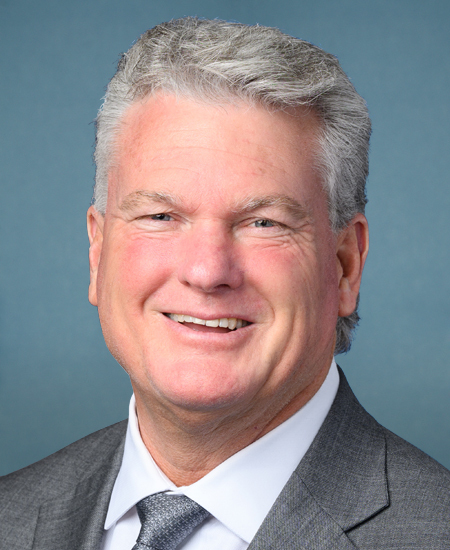
Rep. Mike Collins
Sponsored bills
Maddy summaryThe Laken Riley Act (HR 7511) would require federal authorities to detain non-citizens charged with or convicted of burglary, theft, larceny, or shoplifting offenses. It also creates new legal standing for state attorneys general to sue federal immigration officials in federal court if they believe immigration enforcement decisions (like releasing aliens or granting parole) cause financial harm exceeding $100 to the state or its residents. The bill amends immigration laws to expand detention requirements for certain property crimes and allows states to seek court orders to enforce immigration policies. It does not create new criminal penalties but modifies existing immigration enforcement procedures. The bill’s findings and political language about the Laken Riley case are not part of its policy provisions.
Maddy summaryHR 7505, the American Worker Protection Act of 2024, would change how H-1B visas are issued by requiring the Department of Homeland Security to prioritize applications based on the highest salary offered to foreign workers. This amendment to the Immigration and Nationality Act would reorder visa issuance from the current first-come-first-served system to rank applicants by the compensation rate stated in their visa applications. The bill directly affects employers seeking H-1B workers and foreign workers applying for these visas, as it would influence which applications are approved first. The key mechanism is the new requirement to process applications in descending order of salary rates, with implementation rules to be issued by the Secretary of Homeland Security after enactment.
Maddy summaryHRES 1031 is a non-binding House resolution declaring the U.S. southern border situation an "invasion," citing three specific claims: over 8 million migrant crossings since 2021, a 1,000% rise in watchlist entries, and drug-related deaths. It does not create new laws or affect individuals, as resolutions like this only express legislative sentiment. The bill formally states the House's viewpoint through these cited statistics without proposing policy changes. As a symbolic gesture, it has no legal force or impact on border policy.
Maddy summaryHR 7450, the Protecting Privacy in Purchases Act, prohibits payment card networks and covered entities (like payment processors) from requiring or assigning merchant category codes that specifically identify firearms retailers as different from general stores or sporting goods retailers. This directly affects firearms retailers and payment networks by preventing them from using business classification codes that could flag firearm sales. The bill establishes an enforcement process where the Attorney General investigates complaints, issues remediation notices, and can seek court injunctions for non-compliance, while preempting state or local laws on this issue. It does not create private lawsuits for individuals.
Maddy summaryHR 7049 repeals a Veterans Affairs directive requiring COVID-19 vaccinations for Veterans Health Administration (VHA) health care personnel. This bill directly affects VA medical staff by removing a specific policy implemented in 2022. The key provision mandates the Secretary of Veterans Affairs to formally cancel the directive (VHA Directive 1193.01) and prohibits issuing any substantially similar future rule. The bill focuses solely on reversing an existing administrative requirement, with no new benefits or obligations added.
Maddy summaryHR 7349, the Safe Passage on Interstates Act of 2024, makes it a federal crime to intentionally obstruct interstate highways. The bill prohibits deliberately slowing traffic, standing near vehicles, or endangering vehicle movement on interstate highways with the intent to block normal use. Violators face fines up to $15,000 and prison sentences up to 20 years, with harsher penalties for obstructing emergency vehicles or causing death. This law directly affects individuals who intentionally disrupt interstate traffic flow, aiming to protect the free movement of vehicles on the national highway system. The bill adds this new criminal provision to federal law without changing existing state traffic regulations.
Maddy summaryHJRES 114 is a joint resolution seeking congressional disapproval of a Federal Highway Administration (FHWA) rule that would have required tracking greenhouse gas emissions as part of assessing performance for the National Highway System. The rule, published in the Federal Register in December 2023, aimed to establish specific metrics for evaluating highway system performance, including emissions data. If approved, this resolution would nullify the rule, preventing the FHWA from implementing the emissions tracking requirement. This action directly affects how the FHWA measures highway system performance, specifically regarding environmental metrics.
This resolution expresses the sense of the House of Representatives that former President Trump did not engage in insurrection or rebellion against, nor give aid or comfort to the enemies of, the United States.
Maddy summaryHR 7183, the PROTECTS Act of 2024, prohibits federal funding from being used to provide or refer for specific gender transition procedures to individuals under 18. The bill defines prohibited procedures broadly to include surgeries (like hysterectomy, mastectomy, or genital reconstruction), puberty-blocking medications, and hormone treatments administered at supraphysiologic doses. It includes limited exceptions for medically necessary care, such as treating precocious puberty or correcting genetic disorders of sex development. The law directly affects minors seeking gender-affirming medical care covered by federal programs, restricting federal financial support for these services.