

Maddy summaryHR 5017, the Greyhound Protection Act of 2025, prohibits commercial greyhound racing, live lure training, open field coursing, and related betting across state lines. It bans activities like using live animals as bait, conducting interstate simulcast betting, and transporting greyhounds for racing purposes. The law amends the Animal Welfare Act to make these actions unlawful, with penalties including fines and up to 7 years in prison per violation. It applies to conduct occurring on or after October 1, 2027, and does not override existing state laws banning these activities. The bill directly affects greyhound racing industry participants and the animals involved in these practices.
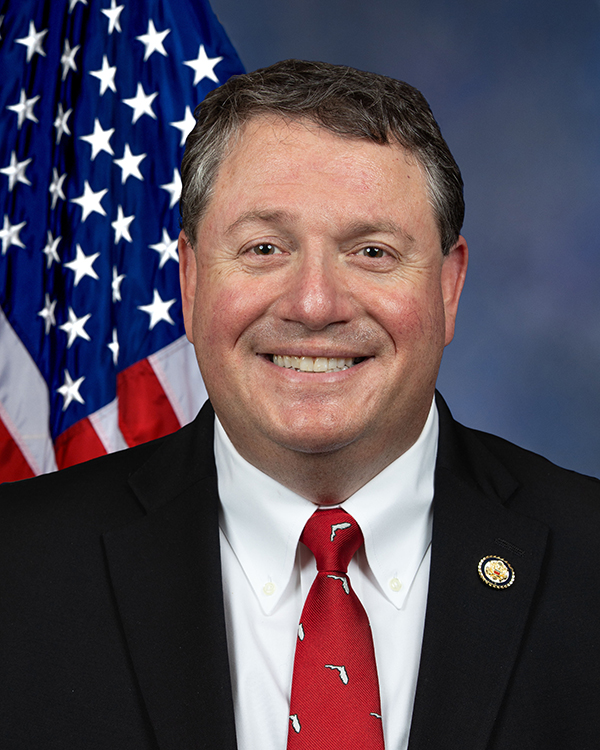
Rep. Randy Fine
Sponsored bills
Maddy summaryHR 2516, the Accreditation for College Excellence Act of 2025, prohibits accreditation agencies from requiring colleges to support specific political views, ideologies, or partisan positions. It explicitly prevents agencies from assessing institutions based on their commitment to any ideology or requiring adherence to statements of faith for religious institutions. The bill also limits federal criteria for accreditation to only what is necessary, ensuring colleges comply with their accreditor’s standards - not additional unrelated requirements. This directly affects all colleges seeking federal funding through accredited programs by clarifying permissible accreditation standards.
Maddy summaryThis bill amends the Fair Labor Standards Act to exclude the value of employer-provided child or dependent care services from overtime pay calculations. It directly affects employers who offer such care benefits, allowing them to exclude the cost of these services when determining overtime wages for eligible employees. The key change adds a new exclusion (paragraph (9)) to the overtime calculation rules, meaning the value of childcare or elder care provided by an employer is no longer counted toward an employee's regular rate for overtime purposes. The change applies to overtime pay required for workweeks beginning after the bill's enactment date.
Maddy summaryThe Greenland Annexation and Statehood Act authorizes the President to pursue annexation of Greenland from Denmark through negotiations and prepare for its potential admission as a U.S. state. After annexation, the President must submit to Congress a report detailing necessary federal law changes to expedite Greenland's statehood. Greenland would need to adopt a constitution that Congress deems republican in form and conforming to the U.S. Constitution as a prerequisite for statehood. The bill establishes a procedural framework but does not mandate annexation or statehood.
Maddy summaryThis bill requires prosecutors in jurisdictions with 100,000+ residents receiving federal funds to submit annual reports on how they handle specific serious crimes, including rape, domestic violence, child sexual abuse, and sex trafficking. The reports must detail case declines, bail decisions, plea agreements, sentencing outcomes, and whether defendants had prior offenses or were on sex offender registries. Prosecutors failing to report face withheld federal funds (25-50% of allocated money), while offices declining over half of eligible cases may need corrective plans. The data will be published publicly to increase transparency about prosecutorial practices for these offenses.
Maddy summaryHR 6854, the "No Welfare for Non-Citizens Act," would remove all federal public benefit eligibility for non-citizens under current law. It amends the 1996 welfare law by eliminating exceptions that previously allowed certain non-citizens (like "qualified aliens") to access benefits such as cash assistance and unemployment benefits. The bill repeals existing provisions that permitted limited eligibility and explicitly states non-citizens are ineligible for all federal public benefits. This change would directly affect non-citizens without specific immigration statuses, removing their access to programs like SNAP (food stamps) or Temporary Assistance for Needy Families (TANF) that were previously available under limited circumstances.
Maddy summaryAlyssa's Act of 2025 expands the Federal Clearinghouse on School Safety Evidence-based Practices to collect and analyze school safety data, including information on school shootings and emergency response effectiveness. The bill creates a National School Safety Data Center to track incidents, injuries, and response methods, while requiring emergency response maps for schools to meet specific digital standards for accessibility and real-time updates. It also establishes a program to develop and test panic alarm technology for schools, and mandates annual reports on school safety master plans developed by states and local educational agencies. The legislation requires coordination with the U.S. Secret Service's National Threat Assessment Center to align school safety practices with evidence-based approaches.
Maddy summaryThis bill amends the Higher Education Act to reform how accrediting agencies evaluate institutions of higher education. It establishes new criteria for accrediting agencies to demonstrate independence from trade associations, allows states to designate industry-specific quality assurance entities as accrediting agencies, and creates protections for religious institutions to maintain accreditation based on their religious mission. The bill requires accrediting agencies to use risk-based review processes that adjust oversight based on institutional performance, publicly share accreditation data, and provides religious institutions with a new process to challenge accreditation decisions they believe fail to respect their religious mission. These changes directly affect accrediting agencies, higher education institutions, and students by altering the accreditation evaluation process.
Maddy summaryThis bill requires TRICARE to cover fertility-related care, including in vitro fertilization (IVF), for active-duty military members and their dependents starting October 2027. It mandates up to three IVF cycles per year with single embryo transfers by default (unless medically necessary), eliminates cost-sharing barriers after an infertility diagnosis, and prohibits coverage for genetic screening, cloning, or artificial wombs. The law defines "infertility" based on medical guidelines and specifies covered treatments like egg/sperm retrieval, embryo preservation, and fertility medications. It does not apply to former service members or their dependents.
Essential Caregivers Act of 2025 This bill prohibits certain health care facilities from limiting the access of essential caregivers to residents of those facilities, including during designated emergency periods. Specifically, the bill generally prohibits Medicare skilled nursing facilities, Medicaid nursing facilities, Medicaid intermediate care facilities, and associated inpatient rehabilitation facilities from restricting the access of essential caregivers to residents of the facilities, including during emergency periods in which visitation rights are otherwise restricted. During emergency periods, facilities may restrict access for an initial period of up to seven days and for one additional maximum seven-day period (if the additional period is approved by the state health department). Facilities may restrict access for a total of 7 days (or 14 days with the approval of the state health department) during an emergency period. Essential caregivers must agree to comply with any safety protocols set by the facility, which may be no more stringent for caregivers compared to those for staff. Caregivers who fail to comply with these requirements may be denied access, subject to an appeals process.