

Maddy summaryThis bill adds Medicare coverage for multi-cancer early detection screening tests (blood or biological tests analyzing cell-free DNA) starting January 1, 2028. It directly affects Medicare beneficiaries aged 68 and older (starting in 2028, with the age limit increasing by 1 year annually), requiring tests to be FDA-cleared and deemed reasonable/necessary by the Secretary for early cancer detection across multiple organ sites. Payment will initially match current stool DNA test rates before 2031, then shift to a lower rate or new payment system after 2031, with limits preventing more than one test per year. The bill explicitly states it does not alter coverage for existing cancer screenings like breast, colorectal, or prostate cancer tests.
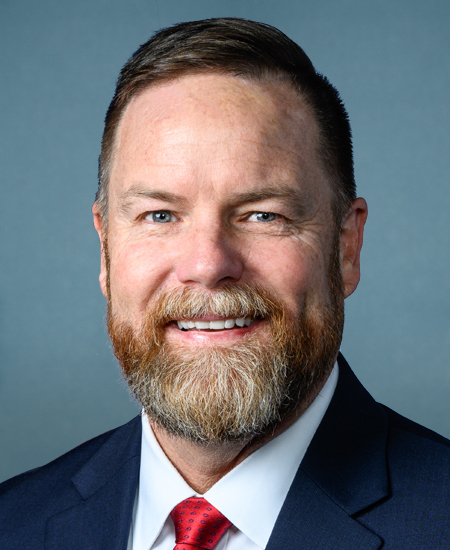
Rep. Aaron Bean
Sponsored bills
Maddy summaryThis bill would require all states to recognize valid concealed carry permits issued by other states, allowing permit holders to carry concealed handguns (excluding machine guns) in any state that either issues such permits or doesn't prohibit concealed carry. It directly affects law-abiding gun owners with valid permits from their home state, ensuring they can carry in states with similar permit systems or no prohibitions. Key provisions include treating valid permit documents as proof of legal carry (reducing officer stops), shifting the burden of proof to prosecutors if challenged, and allowing civil lawsuits for violations with attorney's fee awards. The bill does not override state laws restricting firearms on private property or government land, nor does it affect federal gun restrictions like those in section 922(q).
Maddy summaryHRES 719 is a House resolution honoring Charles "Charlie" James Kirk, the founder of Turning Point USA who was assassinated on September 10, 2025. The resolution condemns his assassination and all political violence, extends condolences to his family, and calls on Americans to reject violence while promoting civil discourse. It specifically recognizes Kirk's legacy as a defender of constitutional principles and his role in inspiring youth through free speech and faith-based civic engagement. As a commemorative resolution, it does not enact policy changes but formally expresses the House's stance on honoring his life and legacy.
Maddy summaryHR 5455, the Aviation Funding Stability Act of 2025, ensures continued operation of the Federal Aviation Administration (FAA) during government funding gaps. If Congress fails to pass regular appropriations or a continuing resolution before the new fiscal year begins, the bill allows the FAA to use existing funds from the Airport and Airway Trust Fund to maintain essential programs and airport infrastructure at the previous year’s funding level. This prevents shutdowns for FAA operations like air traffic control, airport grants, and safety programs for up to 30 days or until regular funding is enacted. The bill directly affects all FAA programs funded through the trust fund, including airport improvements and aviation safety initiatives, without creating new policies or altering funding levels.
Maddy summaryHRES 744 is a non-binding House resolution supporting the designation of September 21-27, 2025, as "Gold Star Families Remembrance Week." It honors families who lost members in military service (Gold Star Families) and families of veterans, recognizing their sacrifices. The resolution encourages Americans to observe the week through community service and by celebrating the lives of those who died defending the U.S. It does not create new laws or policies but formally recognizes these families annually. This is a commemorative measure, not a legislative change.
Maddy summaryHRES 729 is a symbolic resolution designating September 17, 2025, as "Constitution Day" to honor the 250th anniversary of the U.S. Constitution's signing (September 17, 1787). It does not create new laws or affect any specific group; instead, it urges the American public to observe the day with ceremonies and activities. The resolution emphasizes the Constitution's historical significance and its role in establishing American democracy. As a commemorative measure, it has no binding effect on policy or governance.
Maddy summaryThis bill ensures Medicare coverage for new medical devices designated as "breakthrough devices" during a 4-year period after FDA approval. To qualify, devices must meet specific criteria, including FDA priority review, clinical data from Medicare beneficiaries, and a safety review showing benefits outweigh risks. Medicare must finalize coverage decisions within 6 months of manufacturer applications and before the 4-year period ends. The law appropriates $10 million annually (2025-2030) for Medicare to administer this process.
Maddy summaryHRES 727 is a symbolic resolution designating October 14, 2025, as a "National Day of Remembrance for Charlie Kirk." It does not create new law but formally honors Charlie Kirk, founder of Turning Point USA and a prominent advocate for free speech and civic education, who died by assassination on September 10, 2025. The resolution encourages educational institutions and citizens to observe the day with activities promoting civic engagement, liberty, and democracy. It directly affects no specific group through policy changes, as it is a commemorative gesture without binding requirements.
Maddy summaryThis bill ensures continued pay for specific Department of Homeland Security (DHS) personnel and Coast Guard members during government shutdowns in fiscal years 2026-2027. It directly affects DHS law enforcement officers (including those in job series like 0083, 1801, and 1811), DHS administrative and payroll staff, and Coast Guard personnel. The bill authorizes emergency funding from the Treasury to cover their pay and allowances when regular appropriations are not in place. This funding expires on January 1, 2027, or earlier if Congress passes a new appropriations bill covering these costs.
Maddy summaryHR 5401, the Pay Our Troops Act of 2026, ensures military personnel, civilian Defense workers, and supporting contractors receive pay during government funding gaps in fiscal year 2026. It appropriates emergency funds for active-duty service members, reserves, and their supporting personnel (including Coast Guard staff under DHS) if regular appropriations aren't enacted by the end of the fiscal year. The bill provides necessary pay and allowances during any period when full-year funding is unavailable, covering both active service and support roles. Funding expires when regular appropriations are passed, a funding resolution is enacted, or January 1, 2027, whichever comes first. This is a procedural measure to prevent pay delays for military and support staff during fiscal year 2026 funding lapses.