

Maddy summaryThe Vote by Mail Protection Act of 2026 directly affects the federal government by nullifying Executive Order 14399, which previously required citizenship verification in federal elections. This legislation prohibits any federal agency from enforcing the order or using taxpayer funds to carry out its activities. By repealing the executive order, the bill removes the mandate for agencies to verify citizenship as a condition for voting in federal elections.
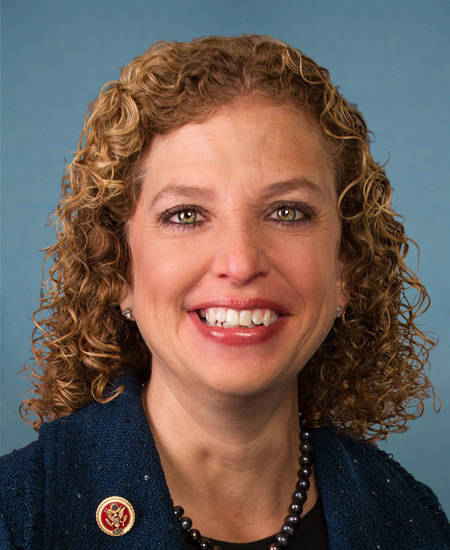
Rep. Debbie Wasserman Schultz
Sponsored bills
Maddy summaryThis resolution expresses the sense of the House of Representatives that antisemitic rhetoric from specific online personalities, including Hasan Piker and Candace Owens, is dangerous and contributes to hatred. It urges social media platforms to enforce their policies against hate speech and calls on public officials to condemn such conduct without exception. The bill does not impose new laws or penalties but instead highlights specific instances of alleged hate speech to emphasize the need for responsibility among influencers and technology companies.
Maddy summaryThis bill, titled the Protecting Human Rights and Public Health in Foreign Assistance Act, aims to cancel specific regulations issued by the Department of State. It directly affects the federal government by prohibiting any department or agency from enforcing, implementing, or proposing rules related to protecting life, combating discriminatory equity ideology, and combating gender ideology in foreign aid programs. The legislation treats these cancelled rules as if they never existed, effectively nullifying their impact on future foreign assistance policies.
Maddy summaryThis bill, known as the Lowering Utility Bills Act, aims to reduce electricity and natural gas costs by regulating how utility companies calculate their profits and what expenses they can pass on to customers. It requires transmission providers and investor-owned utilities to determine a reasonable profit range based on historical stock market returns from academics, large financial institutions, and major global banks, then generally limits their authorized profit to the lowest point in that range. Additionally, the legislation bans utilities from recovering specific costs in customer rates, including lobbying fees, political contributions, executive travel, and entertainment expenses. The bill also mandates that utilities prioritize lower-cost grid technologies in their planning and requires them to publicly justify any decision to use a higher profit rate than the standard minimum.
Maddy summaryThe Protecting Sibling Relationships in Foster Care Act creates a five-year pilot program to award up to five grants for developing specialized foster care programs focused on keeping siblings together. These grants are available to state agencies, tribal or local organizations, and community nonprofits that have proven expertise in managing foster care placements. Recipients must use the funds to create evidence-based programs specifically designed for groups of three or more siblings, including those with wide age gaps or complex needs like trauma or disabilities. To qualify, applicants must submit detailed plans describing how they will place siblings jointly and provide data on current placement challenges. The program is authorized a maximum of $10 million, and grantees are required to report on the number of children served, group sizes, placement methods, and outcomes.
Maddy summaryThe PRIMATE Act prohibits the importation of live nonhuman primates into the United States, with specific exceptions for accredited zoos and aquariums. Under this law, importers must certify that these animals will not be used for experiments, testing, or breeding for such purposes. U.S. Customs and Border Protection will deny entry to shipments containing these animals, and violators face civil penalties of up to $50,000 per violation or forfeiture of the animals. The Department of the Treasury is required to issue detailed regulations to enforce these rules within one year of the bill's enactment.
Maddy summaryHR 5543, the Baltic Security Assessment Act of 2025, requires the U.S. State and Defense Departments to submit a report within 180 days of enactment. The report will assess emerging military, cyber, hybrid, and political threats to Estonia, Latvia, and Lithuania, including the roles of Russia, Belarus, China, Iran, and other actors. It will also evaluate U.S. and NATO military presence in the region, opportunities for defense cooperation, and recommendations to strengthen deterrence, cybersecurity, and democratic resilience in the Baltic countries. This bill directly affects U.S. foreign policy and defense planning regarding the Baltics, but does not create new programs or funding.
Maddy summaryThis bill, known as the Post-Disaster Protection Act, extends the time limit for appealing federal disaster assistance decisions from 60 to 90 days. It directly affects individuals and communities seeking aid after natural disasters by amending the Robert T. Stafford Disaster Relief and Emergency Assistance Act. The change provides applicants with additional time to contest decisions regarding their eligibility or the amount of assistance they receive. This adjustment aims to give affected parties more time to review and challenge assistance determinations without rushing the appeals process.
Maddy summaryHRES 1196 is a House Resolution that formally designates April as "Cancer Prevention and Early Detection Month." The resolution expresses the House of Representatives' support for the goals and ideals of this month, affirming a national commitment to educating the public on disease prevention and commending advancements in multi-cancer early detection efforts.
Maddy summaryThis resolution expresses the sense of the House of Representatives that open water lifeguards qualify as first responders and emergency response providers. It recognizes their essential, lifesaving work and reaffirms their role in protecting lives, property, evidence, and the environment.