

Maddy summaryThe Employee Rights Act (HR 2700) amends key labor laws to strengthen employee rights in collective bargaining and privacy. It requires employers to use secret ballot elections for selecting bargaining representatives and to provide labor organizations with voter lists containing employee names and one form of contact information (chosen by the employee) within two business days of an election. The bill prohibits employers from using employee personal information for non-organizing purposes and mandates written authorization for using union dues on non-bargaining activities, with authorizations expiring after one year. Additionally, it clarifies joint employment standards to prevent misclassification and adds tribal sovereignty protections to labor law definitions.
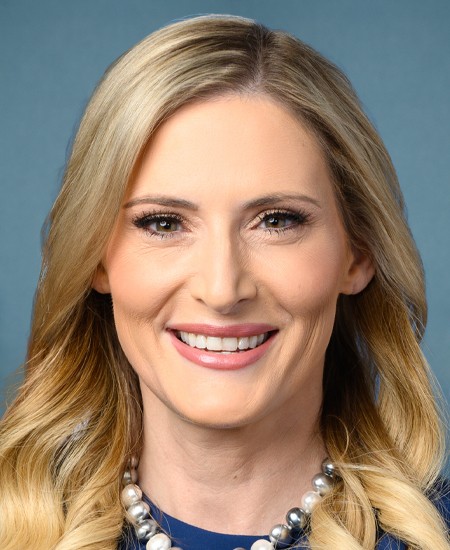
Rep. Laurel M. Lee
Sponsored bills
Fresh Start Act of 2023 This bill allows grants under the National Criminal History Improvement Program (NCHIP) to be used to implement a state law that provides for the automatic expungement or sealing of certain criminal records. The NCHIP provides grants to state and tribal governments to enhance the quality, completeness, and accessibility of criminal history record information and ensure the implementation of effective background check systems.
Maddy summaryHR 2826, the Save Local Business Act, clarifies when multiple businesses can be held jointly responsible for labor laws. It amends the National Labor Relations Act and Fair Labor Standards Act to state that a business is only a joint employer if it directly controls key employment terms like hiring, pay, schedules, or discipline for another business's workers. This directly affects franchisors, contractors, and similar business models that might previously have been deemed joint employers under broader interpretations. The bill aims to limit joint employer liability to cases where one business has clear, day-to-day control over essential worker conditions.
Maddy summaryHR 2743 prohibits large financial institutions (over $100 billion in assets) from denying banking services to lawful businesses based on subjective political reasons, industry type, or reputational concerns. It requires these institutions to use objective, risk-based assessments for service decisions and provide written justifications for denials. The law applies to banks, credit unions, and payment networks, with civil penalties for violations including fines up to $10,000 per incident. It specifically ensures businesses operating legally under federal law receive fair access to financial services without discrimination. The bill mandates that denials be based on documented risk factors, not political bias or category-based exclusion.
American Innovation and R&D Competitiveness Act of 2023 This bill eliminates the five-year amortization requirement for research and experimental expenditures, thus allowing continued expensing of such expenditures in the taxable years in which they are incurred.
Maddy summaryThe Puppy Protection Act of 2023 sets new standards for businesses that sell dogs (dealers), directly affecting pet stores and breeders operating under the Animal Welfare Act. It requires specific housing with space allowances based on dog size (e.g., 12-30 square feet per dog), temperature control (45-85°F), clean food twice daily, and daily exercise or socialization with humans/dogs for at least 30 minutes. The bill also mandates annual veterinary exams including dental care, strict breeding limits (e.g., age restrictions, maximum 2 litters in 18 months), and efforts to place retired breeding dogs in homes instead of selling them to other breeders. Regulations must be finalized within 18 months of enactment.
Maddy summaryHJRES 27 is a congressional resolution seeking to block a federal rule that redefined which waterways fall under the Clean Water Act's protections. It targets a rule submitted by the Army Corps of Engineers, Department of Defense, and Environmental Protection Agency (EPA) on January 18, 2023, which aimed to revise the "Waters of the United States" definition. The resolution would formally disapprove this rule under a specific federal procedure (Chapter 8 of Title 5), preventing it from taking effect. This would directly affect how federal agencies regulate pollution and development near water bodies, including wetlands and smaller streams.
Maddy summaryThe Project Safe Childhood Act modernizes the Project Safe Childhood program to combat online child sexual exploitation and abuse. It requires the Attorney General to develop best practices for investigating and prosecuting child sexual exploitation offenses, including contact sexual offenses and those involving child sexual abuse material. Each U.S. Attorney must create a district-specific strategic plan coordinating with law enforcement and prosecutors to identify victims and serious offenders, with a focus on victim-centered approaches. The bill authorizes $29.1 million annually for additional staff, training, and a national Safer Internet Day to raise public awareness about online child exploitation threats.
Maddy summaryThis bill amends tax law to allow charitable organizations to fund collegiate housing projects without losing their tax-exempt status. Specifically, it permits 501(c)(3) charities to make grants for building, improving, or maintaining housing properties where full-time students live, as long as the housing is connected to a college or university. Grants cannot fund fitness facilities, and the bill clarifies that housing must primarily serve students (not incidental social activities). It directly affects charitable organizations and universities seeking tax-qualified funding for student housing infrastructure.
Maddy summaryThis bill establishes a four-year pilot program providing free dental care to 1,500 veterans with type 2 diabetes who are enrolled in VA care but lack access to VA dental coverage, are aged 40-70, and have gum disease (periodontitis). It requires enrollment at five VA facilities, with one-third of participants having mild gum disease and two-thirds having moderate to severe cases, and mandates annual dental evaluations and health outcome tracking. The program aims to determine if timely dental treatment correlates with reduced complications from chronic conditions, collecting data for a congressional report. It does not change existing VA dental benefits but tests whether improved periodontal care lowers long-term healthcare costs for this specific veteran group.