

Maddy summaryThe Disaster Ready Infrastructure Act of 2026 requires federal transportation planning documents to identify infrastructure vulnerable to frequent natural disasters. Specifically, it mandates that both metropolitan and statewide plans list which facilities are at risk, which are critical for maintaining operations during or after a disaster, and what improvements are needed to keep them running. This change directly affects transportation planners and agencies responsible for creating these regional and state-level plans. By adding these specific identification steps to existing laws, the bill aims to ensure that disaster resilience is a formal part of transportation planning.
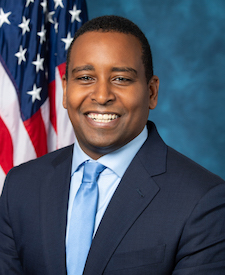
Rep. Joe Neguse
Sponsored bills
Maddy summaryThe Public Lands Integrity Act modifies the rules used to determine whether certain budget items are considered "extraneous" or outside the scope of a budget resolution. Specifically, it adds the sale, disposal, or transfer of federal lands to the list of actions that must be treated as extraneous under the Byrd Rule. This change directly affects how Congress evaluates and processes legislation involving the sale of public lands by making it more likely that such provisions will be excluded from budget reconciliation bills. The bill does not authorize the sale of any specific land but instead alters the procedural framework governing how these transactions are handled in the legislative process.
Maddy summaryThis bill expands tax-advantaged financing options for small businesses and farmers by updating the rules for qualified small issue bonds. It allows these bonds to fund the creation of intangible property like software, alongside traditional manufacturing, and raises the borrowing limits for eligible projects from $10 million to $30 million. Additionally, the legislation increases the maximum loan amount for first-time farmers from $450,000 to $1 million and adjusts the calculation for farm size eligibility to use an average rather than a median. These changes are designed to provide more accessible funding for a broader range of agricultural and manufacturing initiatives while including automatic inflation adjustments for future years.
Maddy summaryThe KIDS Act restricts U.S. immigration authorities from detaining children, individuals with cognitive disabilities, and their primary caregivers, with limited exceptions for criminal warrants. It also prohibits law enforcement from conducting immigration actions within 1,000 feet of sensitive locations such as schools, hospitals, places of worship, and disaster relief sites. If a violation occurs, the bill mandates the immediate release of wrongfully detained individuals and bars the use of information gathered during illegal enforcement actions in future court cases. Additionally, the law requires that any necessary detentions be reported to Congress within 24 hours and prioritizes placing children with parents or designated guardians.
Maddy summaryThis bill authorizes $5 billion annually for each fiscal year from 2026 to 2035 to fund affordable housing programs, but restricts these funds to areas designated by the Secretary of Housing and Urban Development as having high housing costs. It also requires the Secretary to conduct a comprehensive study on alternative ways to calculate income limits for urban housing assistance, with a final report due two years after enactment. The study will analyze how current income metrics affect rent affordability and explore options like using ZIP Code-level data to better support low- and middle-income families in expensive cities.
Maddy summaryThe Semiconductor Superiority Act expands the advanced manufacturing investment credit to include semiconductor facilities located in outer space, specifically low-Earth orbit. This provision allows companies to claim tax credits for equipment used in space-based manufacturing, even if some components are not physically located in orbit or are used for transporting crew and supplies. The bill also clarifies that flight control, crew habitation, and repair activities in space count as manufacturing functions for the purpose of this credit. Additionally, the law excludes rockets and launch vehicles from qualifying as eligible property under this new rule. These changes apply only to facilities and equipment placed in service after the act is enacted.
Maddy summaryThis bill would add pharmacist services to Medicare Part B coverage for beneficiaries, specifically covering pharmacist-led testing and treatment for illnesses like flu, COVID-19, or strep throat during public health emergencies. It defines covered services as those performed under state law, often requiring collaboration with a physician, and sets payment at 80% of the lesser of the actual charge or 85% of physician payment rates. Pharmacists would be prohibited from balance billing for these services, ensuring Medicare beneficiaries pay only their standard copayment. The changes would take effect January 1, 2026.
Maddy summaryThe Recycling Infrastructure and Accessibility Act of 2025 establishes a competitive federal grant program to fund projects improving recycling access in underserved communities. It authorizes $30 million annually (2025-2029) for grants to states, local governments, tribes, or public-private partnerships to build infrastructure like transfer stations, expand curbside collection, or reduce transport costs. Grants must be $500,000-$15 million, with 70% reserved for projects in communities lacking a materials recovery facility within 75 miles. The program requires grantees to report on implementation and outcomes, excluding funding for recycling education.
Maddy summaryThis bill authorizes the U.S. Mint to produce commemorative $5 gold and $1 silver coins marking the 25th anniversary of the September 11, 2001, terrorist attacks. The coins must feature designs honoring victims and first responders (including the inscription "Never Forget") and will be sold only during 2027-2028. All surcharges ($35 per gold coin, $10 per silver coin) collected from sales will fund the National September 11 Memorial and Museum at the World Trade Center, with no net cost to the federal government. The coins are legal tender but primarily intended for collectors, not circulation.
Maddy summaryThe Smithsonian American Women’s History Museum Act authorizes the creation of a new Smithsonian museum dedicated to women’s history, to be located within the National Mall Reserve in Washington, D.C. If the site is managed by another federal agency, the bill requires that agency to transfer the land after notifying Congress and relevant committees. The museum must ensure exhibits and programs accurately represent diverse women’s experiences by consulting a broad range of experts and community voices. The Smithsonian will submit biennial reports to Congress detailing how the museum meets these representation standards.