

Maddy summaryThis bill reauthorizes and expands the Cooperative Watershed Management Program, which provides federal grants to local communities and Indian tribes for watershed restoration and management projects. It updates the program's definition to explicitly include Indian tribes as eligible recipients and increases the maximum annual grant amount from $100,000 to $150,000 for a minimum of three years. The legislation also adds provisions allowing grant continuations for up to two additional years based on satisfactory performance and enables multiple grant applications per year to increase funding opportunities. Finally, it authorizes $40 million in federal funding annually for fiscal years 2027 through 2031 to support the program.
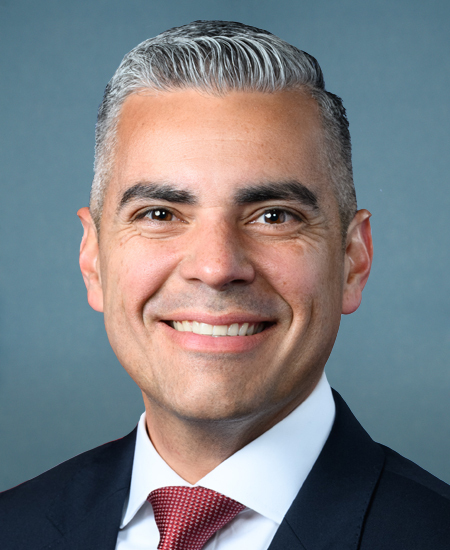
Rep. Juan Ciscomani
Sponsored bills
Enhanced Iran Sanctions Act of 2025 This bill imposes sanctions on certain foreign persons (individuals and entities) that are involved in Iran's petroleum sector as well as certain associated persons. The bill also requires or authorizes actions to facilitate the enforcement of sanctions on Iran. Specifically, the bill requires the President to impose visa- and property-blocking sanctions on any foreign person that, after the bill's enactment, knowingly engages in any transaction related to the processing, export, or sale of oil, condensates, gas, liquefied natural gas, or other petrochemical products in whole or in part from Iran. The President must also impose sanctions on certain foreign persons associated with a sanctioned individual or entity. For example, the President must sanction the subsidiaries and corporate officers of a sanctioned business. The bill provides certain exceptions to these sanctions, including specifying that sanctions do not apply to the importation of goods or to conducting or facilitating transactions for humanitarian assistance. The Department of State must establish an interagency working group that shall seek to establish a multilateral contact group to coordinate international efforts to enforce sanctions on Iran. The bill expands the State Department rewards program to authorize a reward payment to any individual who furnishes information leading to the identification of a person (1) subject to sanctions under this bill, or (2) that has attempted or is attempting to evade sanctions under this bill.
Lower Colorado River Multi-Species Conservation Program Amendment Act of 2025 This bill establishes an interest-bearing account for the nonfederal contributions for the Lower Colorado River Multi-Species Conservation Program, a cooperative effort between federal and nonfederal entities in Arizona, California, and Nevada. The program works to recover multiple species listed under the Endangered Species Act. Currently, the pace of funding exceeds the pace of work. The bill allows the nonfederal contributions deposited in the fund to be made available, without further appropriation, for the program in the future. However, amounts derived from interest earned on amounts in the fund are subject to the availability of appropriations.
Critical Mineral Consistency Act of 2025 This bill modifies the Energy Act of 2020 to expand the definition of critical minerals to include critical materials designated by the Department of Energy (DOE). Under current law, DOE's critical materials list contains certain materials that are essential for energy, including those on the critical minerals list of the U.S. Geological Survey (USGS). The USGS's list, which contains certain minerals that are essential to the nation's economic or national security, is not required to include the materials on DOE's list. Currently, both lists include minerals with a high risk of supply chain disruptions, and both DOE and USGS must conduct a variety of efforts to ensure a secure and reliable supply chain of the minerals. By expanding the definition of critical minerals , this bill requires the USGS to include on its list the materials on DOE's list. Within 45 days of DOE adding a mineral, element, substance, or material to its critical materials list, the USGS must update its list to include such mineral, element, substance, or material.
This bill designates the facility of the United States Postal Service located at 101 North Colorado Street in Chandler, Arizona, as the "Mayor Coy Payne Memorial Post Office Building".
Law-Enforcement Innovate to De-Escalate Act This bill removes less-than-lethal projectile devices (e.g., certain TASERs) from regulation under the Gun Control Act. The term less-than-lethal projectile device means a device that (1) is not designed or intended to expel (and may not be readily converted to discharge) commonly used ammunition or projectiles exceeding a velocity of 500 feet per second; (2) is designed and intended to be used in a manner not likely to cause death or serious bodily injury; and (3) does not accept (and cannot be readily modified to accept) an ammunition feeding device. The bill also requires the Bureau of Alcohol, Tobacco, Firearms and Explosives to determine whether a device satisfies the definition of a less-than-lethal projectile device within 90 days of a request.
Maddy summaryThis bill increases the annual stipend for books, supplies, and educational materials under the Post-9/11 GI Bill from $1,000 to $1,400, effective immediately. It also establishes a new automatic annual adjustment starting in fiscal year 2026, tying stipend increases to inflation using the Consumer Price Index (CPI). Specifically, the stipend will rise each year by the percentage difference between the current CPI and the previous year’s CPI. This directly affects veterans using the Post-9/11 Educational Assistance Program for their education expenses.
Maddy summaryThis bill extends medical coverage for 180 days after family caregivers stop providing personal care to veterans (unless dismissed for fraud), and adds employment support during this transition period. It provides up to $1,000 in reimbursement for certification fees, free training modules, and access to programs like Military OneSource and Veterans' Employment Services. The bill also requires studies on creating returnship programs for caregivers rejoining the workforce and on hiring former caregivers at VA facilities. Additionally, it mandates reports on retirement plan options for caregivers and VA efforts supporting their transition away from caregiving. The bill directly affects family caregivers designated under VA's program who are ending their caregiving role.
Maddy summaryHR 7417 reauthorizes and expands the WISEWOMAN program to include heart health screenings and education for low-income women. The bill directs the CDC to award grants for blood pressure and cholesterol screenings, health education, and referrals for heart disease prevention, building on existing breast and cervical cancer services. It specifically targets low-income women who are already served by the WISEWOMAN program or meet new eligibility criteria set by the Secretary. The expansion is funded with $250 million over five fiscal years (2027-2031), with services to be provided by current WISEWOMAN grantees or approved alternative providers.
Maddy summaryHR 7408 establishes the Water Project Navigators Program, which provides federal grants to eligible entities like states, tribes, local water districts, and nonprofits. The program funds "navigators" to help disadvantaged communities, rural areas, and tribal nations develop multi-benefit water projects that improve water access, climate resilience, and ecosystem health. Key provisions include prioritizing applications serving underserved communities, limiting federal funding to 75% of project costs (with waivers for financial hardship), and authorizing $15 million annually for fiscal years 2027-2032. Navigators assist with grant writing, project planning, and technical support to address water supply imbalances and infrastructure needs.