

Maddy summaryHRES 984 is a symbolic resolution designating January 9, 2026, as "National Law Enforcement Appreciation Day." It directly honors all federal, state, local, and tribal law enforcement officers across the United States for their service and sacrifices. The resolution expresses the House's support and gratitude, encourages public observance through ceremonies, and recognizes officers who have made the ultimate sacrifice. As a non-binding resolution, it does not create new laws or policies but serves as a formal expression of appreciation.
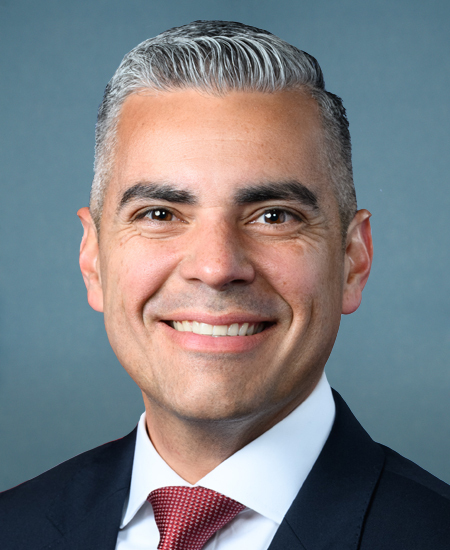
Rep. Juan Ciscomani
Sponsored bills
Maddy summaryHR 6981, the SHINE Act of 2026, creates a voluntary program to simplify permitting for residential renewable energy systems. It directs the Energy Secretary to develop an online platform and streamlined processes for local building departments to approve home solar panels, battery storage (2+ kWh), EV chargers (2+ kW), and hydrogen refueling. The program provides training, technical assistance, and prizes to encourage local governments to adopt these standardized permitting and inspection methods. The bill does not mandate adoption but allocates $20 million annually (2027-2030) to support the program’s rollout.
Maddy summaryThis bill requires the VA's Under Secretary for Health to establish specific processes for VA medical centers to obtain complete medical documentation after veterans receive care from community providers. It mandates developing guidance for documentation, setting performance goals for medical centers, and ensuring community care providers complete required training. The VA must also report progress to Congress every 120 days until implementation is complete. The bill directly affects VA medical centers and community healthcare providers participating in the VA's community care program.
Maddy summaryThis bill, the Yavapai-Apache Nation Water Rights Settlement Act of 2025, resolves long-standing water rights claims for the Yavapai-Apache Nation in Arizona by approving a settlement agreement and authorizing a new water infrastructure project. The legislation confirms the Nation's water rights to approximately 6,837 acre-feet per year from the C.C. Cragin Dam and Reservoir and establishes a pipeline to deliver this water to the reservation, along with a drinking water treatment facility. The bill also creates two separate trust funds to manage settlement payments and infrastructure costs, totaling over $900 million in federal funding. Additionally, the legislation requires the transfer of several parcels of land into federal trust for the Nation and includes provisions for the Nation to lease or exchange water rights within Arizona while prohibiting permanent sale of water.
Maddy summaryThis resolution (HRES 969) expresses support for designating the week beginning September 8, 2025, as "National Hispanic-Serving Institutions Week." It recognizes colleges and universities with at least 25% Hispanic undergraduate enrollment (known as Hispanic-Serving Institutions or HSIs) and their role in serving diverse, low-income students. The resolution does not create new policies or funding but encourages public observance through ceremonies and activities to honor HSIs’ contributions to higher education access and economic mobility. It applies symbolically to all 615+ HSIs across the U.S. and Puerto Rico.
Maddy summaryHR 4837, the Written Informed Consent Act, requires the Veterans Health Administration (VHA) to update its existing directive on informed consent to include additional medication classes. Specifically, it mandates that written informed consent must be obtained before prescribing antipsychotics, stimulants, antidepressants, anti-anxiety medications (anxiolytics), and narcotics (opioids) to veterans. This expansion directly affects veterans receiving these medications through the VA system, ensuring they are informed about specific treatment risks and alternatives. The key mechanism is amending VHA Directive 1005 to broaden its application beyond long-term opioid therapy to cover the newly listed medication types.
Maddy summaryHR 4594, the Military Learning for Credit Act of 2025, allows veterans using GI Bill benefits (Chapters 30, 33, 34, or 35) to cover costs for certain exams that grant college credit. It specifically permits using educational assistance for DSST, CLEP, National Career Readiness Certificate exams, and portfolio assessments of military training, with a $500 per exam cap. Veterans’ GI Bill entitlement is charged based on the exam cost relative to their monthly benefit rate, but this does not reduce benefits from the Department of Defense Tuition Assistance Program. The bill directly affects veterans seeking to convert military experience into college credits through approved programs.
Maddy summaryHR 472, the Restore VA Accountability Act of 2025, creates new disciplinary procedures for VA supervisors and management officials. It requires the VA Secretary to consider specific factors like the seriousness of misconduct and the employee's role when deciding on removal, demotion, or suspension, and limits the entire disciplinary process to 15 business days. The bill prevents courts from reviewing penalty amounts but allows review of whether procedures were followed correctly. It also strengthens whistleblower protections by requiring Special Counsel approval before disciplining employees who report misconduct, affecting VA supervisors and management officials but excluding senior executives and political appointees.
Maddy summaryHRES 963 is a non-binding House resolution condemning antisemitism amplified by AI platforms and urging tech companies to implement safeguards. It directly affects AI developers and social media companies by requiring them to adopt transparent safety measures, prevent algorithmic amplification of antisemitic content, and publicly report on antisemitic content prevalence and removal efforts. Key provisions include promoting "safety-by-design" standards, enabling researcher access to study antisemitic content dynamics, and supporting digital literacy programs to counter AI-generated hate. The resolution emphasizes aligning these efforts with constitutional protections while recognizing stakeholders working to combat antisemitism online.
Maddy summaryHR 6857 requires all colleges and universities receiving federal funds to prominently display a link to the Department of Education’s civil rights complaint portal on their website homepage and to post annual Title VI awareness materials in high-traffic campus locations (like student centers) and on campus websites. The bill mandates these institutions to annually report discrimination complaints (based on race, color, or national origin) to the Department of Education’s Inspector General. It also requires the Department to provide monthly congressional briefings on complaint volumes and resolution timelines, while the Inspector General must audit institutions with the highest complaint rates and study why some complaints go to schools versus the federal office. This directly affects every federally funded higher education institution in the U.S. by changing how they handle and report civil rights complaints.