

Afghan and Iraqi Allies Resettlement Improvement Act This bill addresses the settlement of Afghan and Iraqi special immigrant visa (SIV) holders. (Generally, SIV holders are individuals who received visas due to their work with the U.S. Armed Forces in Iraq or Afghanistan.) The Department of Health and Human Services must survey long-term outcomes, such as employment, housing, and educational attainment, of SIV holders as part of its annual survey of refugees. The Department of State must implement additional ways to deliver information in certain languages (i.e., Dari, Pashto, or Urdu) to prospective SIV holders about resettlement in the United States to assist with their adjustment process. The State Department and the Department of Defense must jointly establish a temporary program to offer SIV holders employment as translators, interpreters, and cultural awareness instructors.
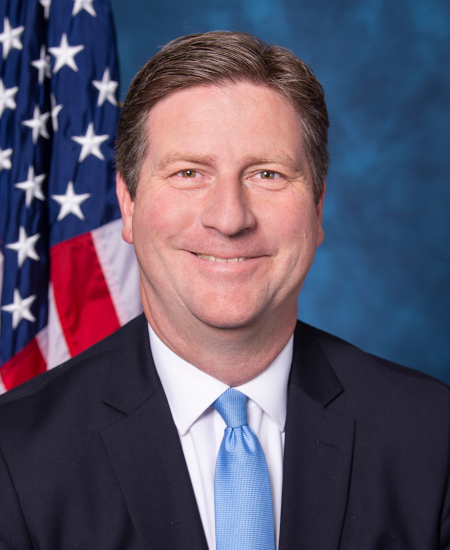
Rep. Greg Stanton
Sponsored bills
District Court Judgeships Act of 2021 This bill requires the appointment of additional U.S. district court judges and converts certain temporary district court judgeships into permanent judgeships. Specifically, the bill requires the appointment of 203 district court judges in specified judicial districts in Arkansas, Arizona, California, Colorado, Delaware, Florida, Georgia, Idaho, Illinois, Indiana, Louisiana, Maryland, Michigan, Minnesota, Missouri, North Carolina, Nebraska, Nevada, New Jersey, New Mexico, New York, Ohio, Oregon, Pennsylvania, South Carolina, Tennessee, Texas, Utah, Virginia, Washington, Wisconsin, and West Virginia. Additionally, the bill converts certain temporary district court judgeships to permanent judgeships in specified judicial districts in Alabama, Arizona, California, Florida, Kansas, Missouri, New Mexico, North Carolina, and Texas.
Higher Education Dream Act of 2021 This bill prohibits institutions of higher education that receive federal student aid from discriminating against Dreamer students (e.g., students who have been granted Deferred Action for Childhood Arrivals status) based on their immigration status, including charging out-of-state tuition to students who would qualify as residents of the state. The bill also makes Dreamer students eligible for federal financial aid. The bill prohibits the use or publication of certain identifiable information related to such students, subject to civil penalties.
Supreme Court Ethics Act This bill establishes a new statutory requirement for the Judicial Conference of the United States to issue a judicial code of conduct for judges and justices of U.S. courts, including Justices of the Supreme Court. Currently, the Judicial Conference issues a code of conduct for judges of U.S. courts (but not for Justices of the Supreme Court).
Daniel Anderl Judicial Security and Privacy Act of 2021 This bill generally prohibits federal agencies and private businesses from publicly posting the personally identifiable information (e.g., home addresses) of federal judges and their immediate family members. It also (1) requires information to be removed upon written request from the federal judge concerned, (2) prohibits data brokers from purchasing or selling such information, and (3) establishes programs to protect such information at the state and local level and to enhance security for judges.
America's Cultivation of Hope and Inclusion for Long-term Dependents Raised and Educated Natively Act of 2021 or the America's CHILDREN Act of 2021 This bill provides lawful permanent resident status to certain college graduates who entered the United States as children and addresses other immigration-related issues. Specifically, this bill allows an alien to apply for lawful permanent resident status if the alien (1) was lawfully admitted into the United States as a dependent child of an alien on a temporary worker visa, (2) was in the United States with such status for at least four years, (3) has graduated from an institution of higher education in the United States, and (4) is not deportable or otherwise inadmissible. In addition, the alien must have been lawfully present in the United States for at least 10 years at the time of the application. The bill also modifies various provisions related to the calculation of an alien's age for immigration purposes and the priority date of certain immigration-related applications.
Bankruptcy Venue Reform Act of 2021 This bill limits where a non-individual debtor (e.g., a corporate debtor) may file for bankruptcy. Specifically, these debtors must file in the district court for the district in which the principal place of business or principal assets of the debtor are located. Such a debtor may also file in a district where there is a pending bankruptcy case concerning an affiliate that has a certain level of control or ownership of the debtor (e.g., if the affiliate is a controlling shareholder of the debtor), if that pending case is in a proper venue under this bill. Under current law, these debtors may also file where they are domiciled (i.e., incorporated) or where there is a bankruptcy case pending concerning an affiliate, general partner, or partnership. For certain debtors who are issuers of securities, their principal place of business is defined in the bill as the address of the entity's principal executive office as provided in specified Securities and Exchange Commission filings.
Homeland Security Improvement Act This bill establishes various bodies and policies related to border security operations. It also limits when the Department of Homeland Security (DHS) may separate a child from a parent or legal guardian. The bill establishes the independent DHS Border Oversight Commission. The commission's duties shall include recommending policies to protect civil rights and improve the safety of U.S. Customs and Border Protection (CBP) and U.S. Immigration and Customs Enforcement (ICE) officers. The bill establishes the Office of the Ombudsman for Border and Immigration Related Concerns. The office shall independently receive and resolve complaints and requests for assistance regarding border security and immigration activities. The office shall have the power to provide redress, including immigration relief and monetary damages. The bill establishes the Border Community Liaison Office. The office's duties include consulting with communities in sectors on the northern and southern borders when developing policies and programs. DHS must ensure CBP officers receive continual education and training each year on topics including interaction with vulnerable populations and professional conduct standards. The bill imposes data collection requirements on law enforcement officials conducting border and immigration-related stops and searches. A child may not be removed from a parent or legal guardian at or near a port of entry or within 100 miles of the border except in certain instances, such as when a court determines that removal of the child is in the child's best interests. The bill requires various reports, including a Government Accountability Office report on the use of force by CBP and ICE.
Conrad State 30 and Physician Access Reauthorization Act This bill modifies the Conrad 30 Waiver program, which incentivizes qualified foreign physicians to serve in underserved communities. It also extends statutory authority for the program for three years from this bill's enactment. Aliens coming to the United States under a J-1 nonimmigrant visa to receive medical training typically must leave the country and reside for two years abroad before being eligible to apply for an immigrant visa or permanent residence. The Conrad program waives this requirement for individuals who meet certain qualifications, including serving for a number of years at a health care facility in an underserved area. The bill increases the number of waivers that a state may obtain each fiscal year from 30 to 35 if a certain number of waivers were used the previous year, and provides for further adjustments depending on demand. An alien physician may be employed at an academic medical center to meet the Conrad program's employment requirements if the alien's work is in the public interest, even if the medical center is not in an underserved area. Employment contracts for alien physicians under the Conrad program shall contain certain information, such as the maximum number of on-call hours per week the physician shall have to work. Certain alien physicians (along with the physician's spouse and children) shall be exempt from the direct annual numerical limits on immigration, including those physicians that have met certain requirements related to visas for physicians to serve in underserved areas.
Extreme Risk Protection Order Act of 2021 This bill establishes grants to support the implementation of extreme risk protection order laws at the state and local levels, extends federal firearms restrictions to individuals who are subject to extreme risk protection orders, and expands related data collection. Extreme risk protection order laws, or red flag laws, generally allow certain individuals (e.g., law enforcement officers or family members) to petition a court for a temporary order that prohibits an at-risk individual from purchasing and possessing firearms. Among its provisions, the bill directs the Office of Community Oriented Policing Services within the Department of Justice to establish a grant program to help states, local governments, Indian tribes, and other entities implement extreme risk protection order laws; extends federal restrictions on the receipt, possession, shipment, and transportation of firearms and ammunition to individuals who are subject to extreme risk protection orders; and requires the Federal Bureau of Investigation to compile (and later destroy) records from federal, tribal, and state courts and other agencies that identify individuals who are subject to extreme risk protection orders.