

Maddy summaryThis bill would make non-citizens deportable if they incite or participate in riots during civil unrest involving assaults on law enforcement or military personnel, or destruction of public property, and who were unlawfully present, had DACA, or were lawful permanent residents at the time of the offense. It permanently bars such individuals from reentering the U.S. or accessing any relief from deportation, including asylum, cancellation of removal, or future DACA benefits. During declared emergencies (such as national disasters or state emergencies), the law mandates expedited removal and mandatory detention for those covered, with no discretion for enforcement.
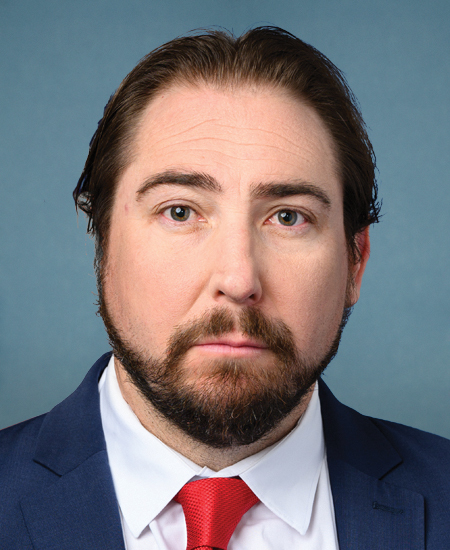
Rep. Elijah Crane
Sponsored bills
Maddy summaryHR 589, the FACE Act Repeal Act of 2025, would repeal a federal law (Section 248 of Title 18, U.S. Code) that prohibited obstructing access to reproductive health care facilities through physical means, intimidation, or violence. This repeal would eliminate the federal criminal penalty for such conduct, meaning federal prosecutors could no longer charge individuals under this specific law. The bill applies to all pending or future federal prosecutions related to these actions. It does not affect state laws that may still regulate access to reproductive health care facilities.
Maddy summaryThe Legacy Mine Cleanup Act of 2025 establishes a new Office within the Environmental Protection Agency (EPA) to coordinate cleanup efforts at abandoned hardrock mine sites, with special focus on sites on tribal lands like the Navajo Nation's uranium mines. It requires the EPA to annually identify priority mine sites for cleanup, develop interagency plans (including with tribal governments and agencies like Interior and Energy), and create a 10-year plan for Navajo Nation uranium mine sites by 2028. The bill mandates technical assistance for tribes and states, coordination on best practices for cleanup technologies, and regular reporting to Congress on progress. It does not create new regulatory authority but aims to improve existing cleanup coordination under current laws.
Maddy summaryThis bill prohibits businesses from deducting wages paid to undocumented workers when calculating taxable income. It creates a safe harbor for employers using the E-Verify program: if they confirm employment eligibility through E-Verify, they may still deduct those wages. The law directly affects employers who hire undocumented workers, removing a tax benefit for such payments. It also establishes new data-sharing between the IRS, DHS, and Social Security to enforce compliance, with a 6-year audit window for improper deductions.
Maddy summaryThis bill, titled "Make DOGE Permanent Act," amends the Federal Funding Accountability and Transparency Act of 2006 to provide Members of Congress (Senators and Representatives) with real-time access to federal award data. It requires the Office of Management and Budget to create a secure, separate online link for Congress to view updated information on federal spending, including payments to individual recipients and federal employees. The website must update in real time for this access, and the link must be established within six months of enactment. The bill directly affects congressional oversight capabilities but does not change public access to the same data.
Maddy summaryThis bill (HR 3675) codifies Executive Order 14290 into law, making it legally binding. It directly affects federal agencies responsible for distributing taxpayer funds, requiring them to cease subsidizing media organizations deemed "biased" under the order. The key mechanism is converting the executive order - previously issued by the President - into statutory law, giving it the force of a federal statute. The bill does not create new subsidy policies but mandates compliance with the existing order's requirements regarding media funding.
Maddy summaryHR 3625 prohibits all federal agencies from allocating funds to the National Endowment for Democracy (NED). It requires every agency defined under federal law to cease providing financial support to NED. This directly affects NED’s funding stream, eliminating federal contributions to its operations. The bill mandates an immediate halt to any agency funding for NED upon enactment.
Maddy summaryHR 67, the Modernizing Retrospective Regulatory Review Act, requires federal agencies to make their regulations available in machine-readable formats and use technology like AI to review existing rules. It directs agencies to identify outdated, redundant, or error-filled regulations more efficiently and submit detailed implementation plans within two years. The bill mandates that agencies develop strategies for using technology to assess rules for obsolescence, burden, or inaccuracies, and train staff on these tools. This affects all federal agencies with regulatory authority, aiming to improve the efficiency and accuracy of ongoing regulatory reviews.
Maddy summaryThis resolution (HRES 433) is a symbolic congressional statement condemning former FBI Director James Comey for a social media post described in the bill as inciting violence against President Trump. It claims Comey's post - featuring the phrase "86-47" with "cool shell formation" - seemed to call for eliminating the president, jeopardizing his security during a foreign trip. The resolution formally condemns this as "indefensible," urges barring Comey from future federal employment, and requests a DOJ investigation into his post. As a non-binding resolution, it does not change laws but reflects the sponsors' position on the matter. The bill focuses on the stated claims within its text, not on verified facts about the post or Comey's intent.
Maddy summaryThis bill amends the Fair Labor Standards Act to exempt certain employees in the outdoor recreation industry from overtime pay requirements. It specifically applies to employees primarily engaged in outdoor recreational outfitting (like equipment rentals) or guiding services, but only if their business meets one of two seasonal criteria: operating for fewer than seven months annually, or having average receipts for six months that don't exceed 33 1/3% of receipts during the other six months. The exemption applies to wages and overtime compensation for workweeks starting after the bill's enactment date. This change directly affects small seasonal outdoor recreation businesses and their employees who meet the specified operational thresholds.