

Maddy summaryHR 5393, the Southern Arizona Protection Act, nullifies a 2000 presidential proclamation that established the Ironwood Forest National Monument in Arizona. It prohibits the future creation or expansion of national monuments within the specific area depicted in the 2000 Ironwood Forest National Monument map, except with explicit approval from Congress. The bill directly affects land management decisions in that Southern Arizona region by restricting the use of the Antiquities Act, which allows presidents to designate national monuments. This changes the process by requiring Congressional action instead of presidential authority for monument designations in the specified area.
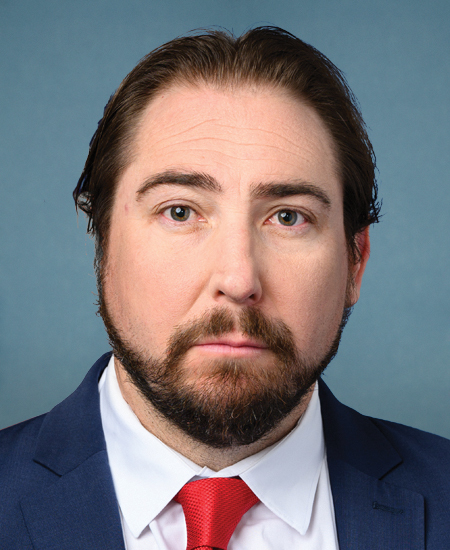
Rep. Elijah Crane
Sponsored bills
Maddy summaryThis bill would withhold 50% of federal highway funding from states that issue driver's licenses to people without proof of U.S. citizenship or legal residency status, starting in 2027. To comply, states must ban such licenses and allow local/state officials to share immigration status information with U.S. Customs and Border Protection. The Transportation Secretary would maintain a public database tracking each state's compliance with these requirements. The law directly affects state governments and their access to federal transportation funds, not individual drivers.
Maddy summaryHRES 539 is a formal House resolution censuring Representative LaMonica McIver (D-NJ) and removing her from the Committee on Homeland Security. It follows her federal indictment for allegedly assaulting and interfering with Homeland Security Investigations (HSI) officers at a Newark immigration facility on May 9, 2025. The resolution cites House Rule XXIII requiring members to "behave in a manner that shall reflect creditably on the House" and states her continued committee service would create a conflict of interest. The censure requires her to appear in the House well for the formal reading of the resolution. This is a disciplinary measure, not a policy change, based on pending criminal charges.
Maddy summaryThis bill prohibits Members of Congress, their spouses, and dependent children from owning or trading certain investments, including stocks, commodities, and derivatives (referred to as "covered investments"). It requires affected individuals to divest these investments within 90-180 days, with specific exemptions for Treasury bonds, diversified mutual funds, small business interests, and family trusts meeting strict conditions. Violations incur penalties of 10% of the investment's value plus disgorgement of profits, paid directly to the U.S. Treasury. The law applies to all covered individuals during federal service, with exceptions for investments acquired through inheritance or occupational trading (e.g., a spouse’s finance job).
Maddy summaryH.J.Res. 118 is a symbolic resolution proposing that September 12, 2025, be designated as "The Day of the Bible" in the U.S. It does not create new laws or affect specific groups. The resolution asks Congress to express support for the designation and encourages schools, civic groups, and communities to hold educational activities about the Bible's historical role. It also requires the President to issue an annual proclamation for this day, recognizing the 1782 approval of the Aitken Bible as a milestone in American history. The bill is purely ceremonial with no legal obligations.
Maddy summaryThis bill amends federal pay rules to provide hazard pay for specific federal firefighters. It requires that firefighters conducting prescribed burns (controlled fires for land management) and smokejumpers during training or operations receive the same hazard pay rate currently given to those fighting wildfires. The change applies to employees covered under Title 5 of U.S. Code, with implementation required within 90 days of enactment through Office of Personnel Management regulations. The policy directly affects federal wildfire management personnel performing these high-risk duties.
Maddy summaryThis bill would prohibit Members of Congress, their spouses, and dependent children from owning or trading stocks, bonds, commodities, futures, and other securities. Current members would have 180 days to divest existing holdings (2 years for hedge funds and venture capital), while new members would have 180 days from taking office to divest. Exceptions include widely held investment funds (if diversified and no conflict), Treasury securities, certain Alaska Native Claims Settlement Act shares, government retirement plans, and small business investments without conflicts. Violations could result in civil penalties up to $100,000 per violation or 10% of the asset's value, and members would need to submit annual certifications of compliance.
Maddy summaryThis bill repeals the Gun-Free School Zones Act of 1990 and makes technical amendments to Title 18 of the U.S. Code, specifically removing references to school zones in firearm offense provisions. It revises sections governing firearm restrictions (Section 922), definitions (Section 921), and penalties (Section 924) by renumbering and deleting specific paragraphs related to the repealed law. The bill directly affects federal firearm law enforcement and legal interpretations concerning school zones, but does not create new restrictions or protections. As a procedural repeal, it removes outdated language without altering current firearm regulations.
Maddy summaryThis bill expands whistleblower protections to cover disclosures about federal taxpayer funds used for unidentified aerial phenomena (UAP) research. It modifies existing laws to add "the use of Federal taxpayer funds to evaluate or research unidentified anomalous phenomenon material" as a protected disclosure category for federal employees, contractors, and intelligence community personnel. This means whistleblowers reporting potential misuse of funds for UAP research can now seek protection under current whistleblower statutes without fear of retaliation. The bill does not create new research programs but ensures existing protections apply to this specific funding context.
Maddy summaryHR 5054 amends federal law to clarify that using threats or violence to interfere with commerce (including labor disputes) is a crime, but exempts peaceful picketing and minor incidents during labor disputes. The bill specifically states that minor bodily injury, property damage, or threats related to such activities - when not part of coordinated violence - do not violate the law. It also specifies that state and local authorities, not federal prosecutors, handle cases involving these exempted activities. The law explicitly preserves existing labor protections under the National Labor Relations Act and other federal statutes.