

Maddy summaryThis bill modifies federal sentencing for youth under 18 who were trafficked, abused, or assaulted before committing a violent offense. It allows courts to sentence below statutory minimums and suspend portions of sentences to account for trauma, applying only to cases with clear evidence of prior victimization under specific laws (like sex trafficking). The law directs the U.S. Sentencing Commission to update guidelines to align with these changes, effective only for convictions after the bill’s enactment. It directly affects juvenile offenders with documented prior victimization, focusing on trauma-informed sentencing rather than standard penalties.
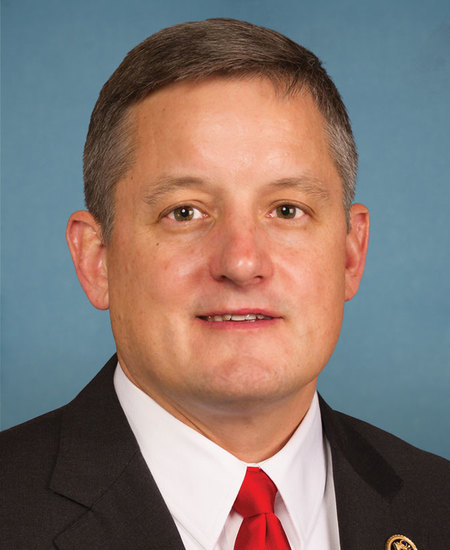
Rep. Bruce Westerman
Sponsored bills
Maddy summaryHR 4709, the U.S.-Israel Anti-Killer Drone Act of 2023, amends a reporting requirement in the National Defense Authorization Act to enhance U.S.-Israel cooperation on countering Iranian drone threats. The bill requires the Secretary of Defense to submit a report within 180 days detailing the status of joint efforts to develop and deploy counter-drone technologies, including assessments of current capabilities and proposed policy changes. It also increases funding for this cooperation from $40 million to $55 million annually. The bill directly affects U.S. and Israeli military operations by mandating formal coordination to address Iran’s growing arsenal of armed drones, which have been used against U.S. allies like Israel and Saudi Arabia. This is a procedural bill focused on improving existing coordination, not on new weapons or sanctions.
Maddy summaryHR 4721, the Main Street Tax Certainty Act, makes a permanent the 20% tax deduction for eligible small business owners under Section 199A of the tax code. This provision directly affects pass-through business owners (like S-corps, partnerships, and sole proprietorships) who qualify for the deduction. The bill achieves this by removing the temporary expiration language (subsection (i)) from the existing tax code provision. The key change is ending the need for annual congressional extensions of this deduction, providing long-term tax certainty for small businesses.
Maddy summaryHR 3952 limits the flags that can be flown over Department of Veterans Affairs (VA) facilities to just six specific flags: the U.S. flag, any state flag, any federally recognized tribal government flag, the VA department flag, any military branch flag, and the POW/MIA flag. This applies directly to all VA buildings and properties nationwide. The bill explicitly restricts all other flags, including political or commemorative flags, from being displayed on these facilities.
Maddy summaryThe Promising Pathway Act creates a new FDA review pathway for drugs treating serious or life-threatening conditions, allowing provisional approval within 90 days if they show substantial safety evidence and early efficacy comparable to existing treatments. It directly affects drug manufacturers (sponsors), patients with urgent medical needs, and insurers, requiring mandatory patient registries tracking outcomes and side effects with a 90% participation goal. The bill mandates that insurers cover these provisionally approved drugs as if fully approved (without denying coverage as "experimental") and requires sponsors to submit annual reports to Congress on registry data and approval progress. Provisional approval lasts up to 8 years (2 years initially, renewable up to three times) but requires market launch within 180 days and allows FDA withdrawal if safety concerns arise or efficacy falls below standard treatments.
Maddy summaryHJRES 44 is a congressional resolution seeking to block a 2021 rule by the Bureau of Alcohol, Tobacco, Firearms, and Explosives (ATF). The rule classified firearms with stabilizing braces as "short-barreled rifles," which would have required additional licensing and regulation. This resolution uses a specific legal process (under Title 5, U.S. Code) to formally disapprove the ATF rule, meaning the rule would no longer be in effect. It directly affects firearm owners, manufacturers, and dealers who would have been subject to the rule’s requirements.
Maddy summaryHRES 546 is a symbolic House resolution commemorating the one-year anniversary of the Supreme Court's June 24, 2022, Dobbs v. Jackson Women's Health Organization decision, which overturned Roe v. Wade. The resolution expresses support for the Court's ruling that the Constitution does not guarantee a right to abortion and celebrates the decision's impact on returning abortion policy authority to state legislatures. As a ceremonial resolution, it does not create new laws or directly affect any individuals or policies. The resolution focuses solely on marking the anniversary and affirming the position that unborn life should be protected.
Maddy summaryThis bill renames the U.S. Food for Peace program after Peter O'Brien and makes key changes to how agricultural aid is delivered. It prohibits using cash, food vouchers, or foreign-sourced food for aid (section 2d), requires that at least 50% of annual funds be used for procuring U.S. agricultural commodities (section 2b(5)), and mandates annual reports to Congress on fund usage (section 2b(6)). These changes directly affect U.S. farmers supplying aid and international recipients of food assistance. The bill focuses on strengthening domestic agricultural exports within the Food for Peace program while adding transparency requirements.
Maddy summaryHR 277 would require Congress to approve major federal regulations before they take effect. Major rules are defined as those with significant economic impact ($100 million+ annually), major cost increases for consumers or industries, or significant adverse effects on competition, employment, or innovation. Agencies must submit detailed information about these rules to Congress, including cost-benefit analyses, before they can take effect. Congress would have 70 session days to approve the rule with a joint resolution; if they don't act within that timeframe, the rule would not take effect. This would increase congressional oversight of federal regulations and require more detailed information about proposed rules before they become law.
Maddy summaryThe HALT Fentanyl Act expands the definition of fentanyl-related substances in the Controlled Substances Act to include many structurally similar compounds, making it easier to regulate new fentanyl analogs without individual listing. It defines these substances based on specific chemical modifications to fentanyl, with limited exceptions for substances already controlled or listed elsewhere. The bill also streamlines research procedures for schedule I substances by creating expedited registration processes and allowing multiple studies under one registration, while requiring the Attorney General to publish a list of substances meeting the new definition.