

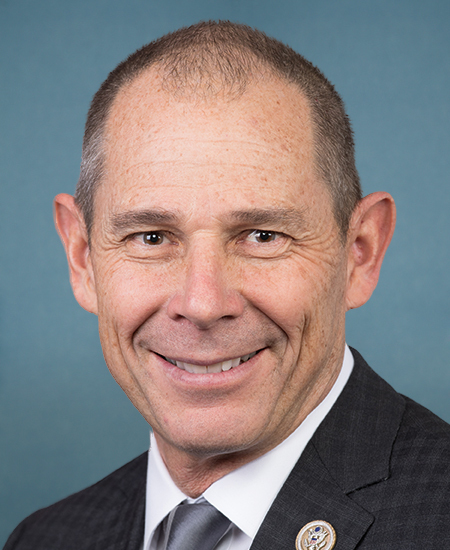
Photo of John R. Curtis
R United States Senate · Utah

Sen. John R. Curtis

Compare
Total votes
2,608
all sessions
Attendance
96%
94 missed
Near the chamber average
With party
94%
of cast votes
Near the chamber average
Bipartisan score
3%
crosses aisle rarely
Near the chamber average
Sponsored
755
bills & resolutions
Lower than 77% of chamber peers
Committees
13
assignments
755 bills and resolutions

Sponsored bills

Total
755
Primary
137
Co-sponsor
618
This page
755
matching current filters
Co-sponsor SRES 602
Passed · Delaware Senate · Co-sponsor
A resolution supporting the United States Olympic and Paralympic Teams in the 2026 Olympic and Paralympic Winter Games.

Maddy summarySRES 602 is a symbolic Senate resolution expressing support for the U.S. Olympic and Paralympic Teams (Team USA) competing in the 2026 Winter Games in Milano Cortina, Italy. It formally applauds Team USA athletes, coaches, and their supporters, commends Italy for hosting the event, and commits to ensuring safety for future U.S. host events (2028 Los Angeles Summer Games and 2034 Utah Winter Games). The resolution does not create new policies, funding, or obligations - it is purely a statement of congressional support. It directly affects Team USA athletes and organizers by acknowledging their efforts and achievements. This is a procedural resolution with no binding effect on government actions.

Passed Feb 25, 2026 1 co-sponsor
Co-sponsor SRES 612
In committee · Delaware Senate · Co-sponsor
A resolution acknowledging the fourth anniversary of Russia's illegal invasion of Ukraine, reaffirming support for the people of Ukraine, and emphasizing the importance of robust United States security guarantees within a transatlantic commitment to Ukraine's sovereignty.

Maddy summarySRES 612 is a non-binding Senate resolution acknowledging the fourth anniversary of Russia’s February 2022 invasion of Ukraine. It reaffirms U.S. support for Ukraine’s sovereignty and territorial integrity within its 1991 borders, condemns Russia’s attacks on civilians and infrastructure, and emphasizes the need for sustained U.S. and transatlantic security guarantees. The resolution does not create new laws or funding but expresses congressional support for Ukraine’s defense and calls for continued international cooperation. It specifically highlights Russia’s targeting of Ukrainian children and U.S. companies as part of its aggression. As a symbolic gesture, it has no legal effect on policy or funding.

In committee Feb 24, 2026 1 co-sponsor
Co-sponsor S 2503
Failed · Delaware Senate · Co-sponsor
ROTOR Act

Rotorcraft Operations Transparency and Oversight Reform Act or the ROTOR Act This bill addresses aviation safety by increasing requirements for aircraft tracking and communication using Automatic Dependent Surveillance-Broadcast (ADS-B) technology and expanding oversight. As background, ADS-B for broadcasting (Out) and receiving (In) transmits information (e.g., location and weather information) between aircraft and air traffic control. Under the bill, aircraft must generally operate with ADS-B In equipment to provide the aircraft with location information of other aircraft and traffic advisories. Current law does not require this equipment. Current Federal Aviation Administration (FAA) regulations allow aircraft performing a sensitive government mission to be excepted from requirements for using ADS-B Out equipment. This bill limits which flights may be considered sensitive government missions (e.g., not training flights) and requires additional reporting and notifications for the exception. The Government Accountability Office must review the use of the ADS-B Out exception and the Office of the Inspector General (OIG) of the Department of Transportation must annually audit FAA oversight of operations that use the exception. Further, the bill repeals a 2025 law that exempts certain military helicopters from the ADS-B Out requirements for the Washington, DC, metropolitan area. The bill also requires the OIG of the Army to audit the Army’s coordination with the FAA, the FAA to establish an office to coordinate airspace usage of military aircraft and review the safety of flight operations and routes around airports, and the FAA to enter into memoranda of understanding with military agencies for safety information sharing.

Failed Feb 24, 2026 1 co-sponsor
Co-sponsor S 3866
In committee · Delaware Senate · Co-sponsor
A bill to provide for updates to the Federal Aviation Administration type certification process to support development of new and novel technologies, and for other purposes.

Maddy summaryThis bill (S 3866) updates the Federal Aviation Administration’s (FAA) aircraft type certification process to accelerate approval for new aviation technologies like air taxis and advanced air mobility vehicles. It directly affects aircraft manufacturers, FAA staff, and infrastructure providers (such as vertiport operators) by requiring the FAA to publish clear timelines for certification milestones and establish standardized criteria for when the FAA issues formal "issue papers" about safety concerns. Key mechanisms include mandating a public transparency plan within 180 days, setting standard expected timelines for key certification steps (like responses to industry requests), and revising delegation rules to improve efficiency while maintaining safety. The bill aims to reduce delays for innovative aircraft without compromising safety standards, focusing on predictable processes for emerging technologies.

In committee Feb 12, 2026 1 co-sponsor
Co-sponsor S 3855
In committee · Delaware Senate · Co-sponsor
United States-Israel Framework for Upgraded Technologies, Unified Research, and Enhanced Security (FUTURES) Act of 2026

Maddy summaryThe FUTURES Act (S 3855) establishes a formal U.S.-Israel Defense Technology Cooperation Initiative to accelerate joint development and integration of defense technologies. It directs the U.S. Secretary of Defense to identify Israeli-origin technologies for rapid adoption into American military systems, focusing on areas like counter-drone systems, missile defense, AI, cyber security, and directed energy. The bill authorizes $150 million annually (2027-2029) for this initiative, requiring regular reports to Congress on progress, technology transitions, and industry partnerships. This policy directly affects U.S. defense contractors, Israeli defense firms, and military acquisition programs by creating new pathways to incorporate Israeli innovations into U.S. systems.

In committee Feb 12, 2026 1 co-sponsor
Co-sponsor S 2968
In committee · Delaware Senate · Co-sponsor
Outdoor Americans with Disabilities Act

Maddy summaryThis bill requires U.S. Forest Service and Bureau of Land Management to update travel plans for public lands, ensuring areas meet a new standard: at least 2.5 miles of accessible road per square mile for people with disabilities using motorized or off-road vehicles. It directly affects public land users, particularly those with mobility disabilities who rely on accessible routes for recreation. Key provisions include preventing road closures that would drop accessibility below the 2.5-mile threshold (unless for emergencies or safety), mandating public notice and hearings before closures, and requiring new roads to replace closed ones within a year. The law prioritizes maintaining access to activities like hiking, fishing, and wildlife viewing while balancing safety and environmental needs.

In committee Feb 12, 2026 1 co-sponsor
Primary S 2417
In committee · Delaware Senate · Lead sponsor
Star-Spangled Summit Act of 2025

Maddy summaryThe Star-Spangled Summit Act of 2025 grants a 10-year special use permit to maintain a U.S. flag at Kyhv Peak Lookout Point in Utah's Uinta National Forest. It prioritizes Robert S. Collins of Provo, Utah, or a qualified Utah County resident/nonprofit with flagpole maintenance experience for the permit, which exempts the holder from land use fees. The permit may be renewed for additional 10-year terms if the holder complies with maintenance conditions, and the bill exempts the permit from standard environmental review requirements.

In committee Feb 12, 2026 0 co-sponsors
Co-sponsor S 3832
In committee · Delaware Senate · Co-sponsor
Small Business Workforce Pipeline Act of 2026

Maddy summaryThis bill amends the Small Business Act to require Small Business Development Centers to provide direct assistance to small businesses on workforce programs. It specifically mandates that these centers disseminate information from the Department of Labor and other federal agencies about establishing and improving four key programs: work-based learning, federally registered apprenticeships, pre-apprenticeship programs, and job training programs. The bill directly affects small business concerns by connecting them to federal resources for workforce development. The key mechanism is adding a new provision (subparagraph W) that requires centers to actively share this information, making it easier for small businesses to access these training opportunities.

In committee Feb 11, 2026 1 co-sponsor
Co-sponsor S 1453
In committee · Delaware Senate · Co-sponsor
University of Utah Research Park Act

University of Utah Research Park Act This bill confirms the use by the University of Utah of approximately 593 acres of specified nonfederal land in Salt Lake City, Utah, as a university research park and for related university purposes (including development of student housing and a transit hub) as a valid public purpose.

In committee Feb 11, 2026 1 co-sponsor
Co-sponsor S 714
In committee · Delaware Senate · Co-sponsor
Critical Mineral Consistency Act of 2025

Critical Mineral Consistency Act of 2025 This bill modifies the Energy Act of 2020 to expand the definition of  critical minerals used by the U.S. Geological Survey (USGS) to include  critical materials designated by the Department of Energy (DOE). It also directs USGS to update its list within 45 days of DOE adding a  mineral, element, substance, or material to its critical materials list. Thus, the bill requires the lists to be treated consistently and makes critical materials eligible for the same benefits (e.g., financing support or clean energy tax credits) provided to critical minerals. By way of background, DOE's critical materials list contains certain materials that are essential for energy, including those on the critical minerals list of the USGS. The USGS's list, which contains certain minerals that are essential to the nation's economic or national security, is currently not required to include the materials on DOE's list.

In committee Feb 11, 2026 1 co-sponsor
Showing 101 to 110 of 755 bills
Previous 1 10 11 12 76 Next