

Maddy summaryThe Choice in Affordable Housing Act of 2025 aims to improve the Housing Choice Voucher program by increasing landlord participation, particularly in high-opportunity neighborhoods (census tracts with poverty rates below 20%). It authorizes one-time payments to landlords (up to 200% of monthly housing assistance), security deposit payments to reduce tenant barriers, and bonuses for public housing agencies that employ dedicated landlord liaisons. The bill establishes a $100 million annual fund (2025-2029) to support these initiatives through the Herschel Lashkowitz Housing Partnership Fund. This legislation directly affects low-income families using vouchers, landlords who participate in the program, and public housing agencies administering the program.
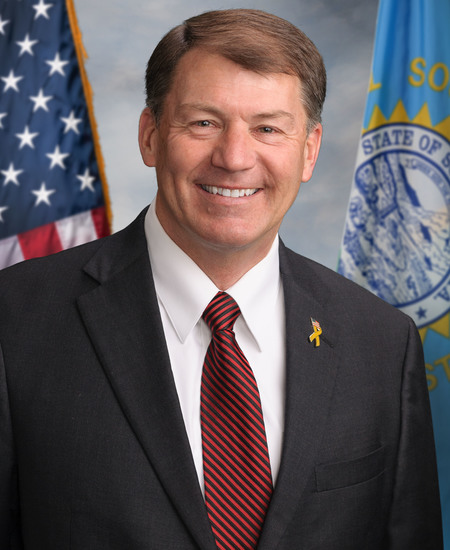
Sen. Mike Rounds
Sponsored bills
Maddy summaryS 903, the PASS Act, requires the Committee on Foreign Investment in the United States (CFIUS) to review foreign purchases of U.S. agricultural land or businesses near military installations or sensitive government facilities. It specifically targets transactions involving foreign entities acting on behalf of designated "covered countries" (China, Russia, Iran, and North Korea), prohibiting such deals unless the President grants a national interest waiver. The bill defines "agricultural land" broadly and mandates CFIUS to determine within 30 days if a transaction qualifies for review, with the President having authority to block purchases near security-sensitive sites. This law directly affects foreign investors from the listed countries seeking to acquire U.S. farmland or agribusinesses in areas near military bases or government properties.
Maddy summaryThis bill requires the U.S. Department of Agriculture (USDA) to develop and finalize a strategy for vaccinating poultry against serious bird flu (highly pathogenic avian influenza) within specific timeframes. Within 180 days of the bill becoming law, the USDA must create the strategy in consultation with the U.S. Trade Representative, ensuring it follows World Trade Organization rules. The strategy must be finalized one year after the bill's enactment. This directly affects the poultry industry by establishing a federal framework for disease prevention, while requiring compliance with international trade regulations.
Maddy summaryThe ACRE Act of 2025 excludes interest income from certain rural and agricultural loans from taxable income for specific lenders. It directly affects qualified lenders (like banks, farm credit institutions, and insurance companies) and borrowers securing loans for rural property, including single-family homes in rural areas or agricultural land. Key provisions allow lenders to not count interest on qualifying loans as taxable income, provided the loans are secured by eligible rural/agricultural property, don’t exceed $750,000 for single-family homes, and avoid "foreign adversary entities" (like China, Russia, or Iran). The bill also requires a Treasury report on the policy’s impact after five years.
Maddy summaryThis bill imposes U.S. sanctions on foreign individuals and entities involved in organ harvesting within China, as stated in its policy to address "state-sponsored organ harvesting" linked to Falun Gong persecution. Key mechanisms include requiring the President to create and update a list of sanctioned persons within 180 days, blocking their U.S. property, banning visas, and revoking existing visas for listed individuals. Exceptions cover humanitarian aid (e.g., food, medicine) and national security activities. It also mandates a report within one year on China’s organ transplant practices, including whether Falun Gong persecution constitutes an atrocity under existing law. The sanctions authority expires after five years.
Maddy summaryThis bill requires the VA Secretary to create rules so veterans can get a physical copy of Form 10-3452 (used for travel expense reimbursement claims) by mail or at any VA medical facility. It directly affects veterans who need to submit this form to claim reimbursement for travel costs related to healthcare. The key provision mandates that VA facilities must accept and process these physical forms submitted in person or by mail, ensuring veterans have accessible options beyond digital methods. This changes how veterans interact with the VA for this specific reimbursement process.
Maddy summaryThis bill amends federal education law to prohibit federally funded athletic programs from allowing individuals assigned male at birth to participate in sports designated for women or girls. It defines "sex" for this purpose as biological sex at birth, based on reproductive anatomy and genetics. The law directly affects schools, colleges, and sports organizations receiving federal funding. Violations would constitute a breach of Title IX, requiring programs to exclude individuals whose sex is male from women's or girls' athletic teams.
Maddy summaryThis joint resolution (SJRES 12) seeks to block an Environmental Protection Agency (EPA) rule that established procedures for a "Waste Emissions Charge" affecting petroleum and natural gas systems. Specifically, it targets the EPA's November 2024 rule (89 Fed. Reg. 91094) which outlined compliance methods like netting and exemptions for emissions charges. If passed, the resolution would formally disapprove the rule under federal law (Chapter 8 of Title 5, U.S. Code), preventing it from taking effect. The bill directly affects the oil and gas industry by removing a specific regulatory framework for emissions reporting and fees. This is a procedural disapproval measure, not a new policy.
Maddy summaryThe Disaster Management Costs Modernization Act (S 773) allows state and local governments receiving federal disaster relief funds to redirect unused money originally set aside for management costs toward disaster preparedness, recovery, or mitigation activities. Specifically, it defines "excess funds" as the difference between the authorized management cost amount and actual spending, making these funds available for up to five years after reallocation. The bill also requires a Government Accountability Office study to review past management costs during major disasters and assess if current funding levels are appropriate, without authorizing new funds. This change applies to grants for disasters declared after the bill's enactment.
Farmers Freedom Act of 2025 This bill excludes certain prior converted cropland from permit requirements under the Clean Water Act, including Section 404 permits for discharges of dredged materials into waters of the United States (WOTUS). The exclusion applies to areas that were converted to cropland prior to December 23, 1985. However, the bill does not exclude an area that has reverted to wetlands and has not been used for agricultural purposes in five years. In recent years, there has not been regulatory consistency about which cropland, such as cropland that has reverted to wetlands, is protected under the scope of the act as WOTUS. In 2020, the Environmental Protection Agency (EPA) and the U.S. Army Corps of Engineers issued the Navigable Waters Protection Rule that, among other provisions, defined prior converted cropland in order to specify which cropland is excluded from the scope of the act. However, the U.S. District Court for the District of Arizona vacated the rule in Pascua Yaqui Tribe v. EPA . In 2023, the EPA and the Army Corps of Engineers issued another rule that excluded prior converted cropland from the scope of the act, but they defined the exclusion more narrowly than the exclusion in the 2020 rule. Similar to the 2020 rule, this bill broadens the exclusion. The bill determines the scope of the exclusion by defining the term prior converted cropland in statute .