

Maddy summaryThis bill requires the U.S. Treasury Department to conduct a study and issue a report within one year of enactment, assessing financial risks posed by China's financial sector to U.S. and global financial stability. The study must evaluate China's economic data transparency, describe current U.S. protective policies, and recommend additional actions for international cooperation. The report will be submitted to relevant congressional committees, published online, and may include a classified annex. It does not create new laws or impose direct requirements on individuals or entities; it solely mandates an analytical review by U.S. agencies.
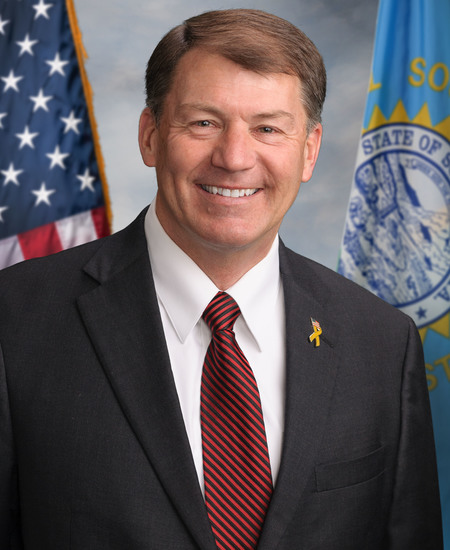
Sen. Mike Rounds
Sponsored bills
Maddy summaryThe Mining Schools Act of 2025 creates a Department of Energy grant program to fund mining education at eligible colleges and universities. It directly affects accredited mining engineering programs and specific public university departments in states with significant mining economies, aiming to recruit students and strengthen training in critical mineral extraction, environmental reclamation, and domestic supply chains. Grants - limited to 10 annually - must support curriculum focused on rare earth elements, recycling technologies, reducing environmental impacts, and meeting U.S. energy mineral needs. The program authorizes $10 million yearly for fiscal years 2026-2033, with oversight by a Mining Professional Development Advisory Board.
Financial Integrity and Regulation Management Act or the FIRM Act This bill prohibits the consideration of reputational risk by federal banking agencies when regulating, examining, or supervising a depository institution or credit union. The bill defines reputational risk as the potential for negative publicity or public attention to decrease confidence in the institution, lead to litigation, reduce revenues, or result in other adverse impacts to the institution. Agencies must report on the implementation of this bill.
Maddy summaryThe MedShield Act of 2025 establishes a new pandemic preparedness program under the Department of Health and Human Services (HHS), requiring the use of artificial intelligence to improve national biodefense. It directs HHS to create a system for real-time pathogen tracking, accelerate vaccine development, and optimize treatment distribution using AI tools, as outlined in Section 3(c). The program mandates annual funding of $300 million in 2025, increasing to $500 million by 2029 (Section 6), and requires a report to Congress within 180 days of enactment (Section 4). This bill directly affects federal agencies coordinating pandemic response and aims to create a continuous, integrated system for addressing biological threats, replacing ad-hoc efforts like Operation Warp Speed.
Maddy summaryThis bill expands the Work Opportunity Tax Credit to include military spouses. It adds "qualified military spouse" as a new category eligible for the credit, meaning employers who hire spouses of active-duty service members can claim the tax benefit. To qualify, a spouse must be certified by a local agency as married to an Armed Forces member at the time of hire. The change applies to hires occurring after the law's effective date, directly affecting military spouses seeking employment and employers who hire them.
Maddy summaryThis bill establishes a federal program to improve cybersecurity for rural water and wastewater systems. It directly affects rural water associations by providing technical assistance through "circuit riders" who assess security risks, develop protection protocols, and document cyber readiness. Key mechanisms include rapid threat assessments, developing security plans, and requiring annual reports on program activities. The program is funded at $10 million annually for fiscal years 2025-2029, with circuit riders needing specific cybersecurity certifications. This is a concrete policy change focused on strengthening infrastructure protection for rural communities.
Maddy summaryThis bill, the Major Richard Star Act (S 1032), allows veterans with combat-related disabilities to receive both their military retired pay and Veterans Affairs disability compensation simultaneously. It amends U.S. Code sections to remove the automatic reduction in retired pay that previously forced these veterans to choose between the two payments. The key change ensures veterans with combat-related disabilities qualify for full retired pay without offset against their VA disability benefits, effective for payments starting after the bill's enactment date. This directly affects veterans receiving military retired pay under Chapter 61 who also qualify for VA disability compensation for combat-related injuries.
Maddy summaryThe Home-Based Telemental Health Care Act of 2025 would authorize federal grants to expand mental health and substance use services for rural underserved populations and workers in farming, fishing, or forestry occupations. Grant recipients must deliver care via telehealth directly in patients' homes or comfortable settings, measure its effectiveness compared to in-person care, and improve infrastructure like broadband access and patient devices. The program requires annual reports on outcomes after three years and every two years, with up to $10 million allocated yearly from 2025 through 2029. This initiative aims to address geographic and occupational barriers to mental health care access.
Maddy summaryThe FOCA Act (S 1064) requires federal agencies to ensure open competition on construction projects by prohibiting them from mandating or banning contractors from entering into labor agreements (like union contracts) or discriminating against contractors based on such agreements. It directly affects federal contractors, subcontractors, and agencies awarding construction contracts or grants for projects involving federal funds. Key provisions ban specific bid specifications or project documents from requiring labor affiliations, apply to all contracts after enactment, and mandate updates to federal procurement rules within 60 days. The bill aims to reduce taxpayer costs, expand opportunities for small businesses, and maintain federal neutrality in labor relations for construction projects.
Maddy summaryThe INFORM Act of 2025 requires the U.S. Postal Service to provide advance notice to the public when making nationwide changes to postal services. Specifically, it mandates that the Postal Service submit proposed changes to the Postal Regulatory Commission and post detailed notices at affected post offices for at least 30 days after implementation. These notices must include specific details about the change, timelines, nationwide service impacts, public meeting information, and contact details for feedback. The bill directly affects the Postal Service’s operational procedures and the public who receive mail services nationwide.