

This bill waives certain eligibility requirements for hospitals participating in the 340B drug discount program (i.e., a program that allows entities to receive covered outpatient drugs at reduced prices from manufacturers) during the COVID-19 (i.e., coronavirus disease 2019) public health emergency. Specifically, the bill waives the required minimum proportion of low-income patients served for hospitals that began participating in the program during or prior to the COVID-19 emergency.
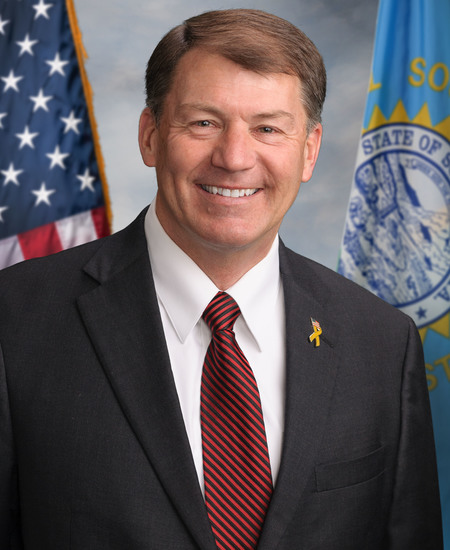
Sen. Mike Rounds
Sponsored bills
This resolution designates March 8-March 14, 2021, as Women of the Aviation Workforce Week and encourages educational and training institutions to recruit women to join the aviation workforce.
Gun Owner Registration Information Protection Act This bill prohibits federal funding of, or support for, state databases that list (1) firearms lawfully owned or possessed by individuals, or (2) individuals who lawfully own or possess firearms.
Hello Girls Congressional Gold Medal Act of 2021 This bill provides for the award of a single Congressional Gold Medal in honor of the female telephone operators of the Army Signal Corps, commonly known as the Hello Girls , in recognition of their military service, devotion to duty, and 60-year struggle for veterans' benefits and recognition as soldiers.
English Language Unity Act of 2021 This bill establishes English as the official language of the United States. It establishes a framework for implementation and enforcement, including by testing English as part of the naturalization process.
Strengthening Trade, Regional Alliances, Technology, and Economic and Geopolitical Initiatives concerning China Act or the STRATEGIC Act This bill contains provisions addressing China and foreign relations generally. The provisions include directing the Department of State to establish a program to facilitate dialogues between U.S. regulatory and technical agencies and their counterparts in partner countries to promote U.S. regulatory standards; authorizing the State Department to help U.S. companies address China-related supply chain management issues, including by relocating production to other countries; directing the President to establish an interagency working group to strengthen U.S. leadership in international standards-setting bodies for mobile telecommunications technology, including fifth generation (5G) technology; requiring the President to establish a process for a U.S. person to petition for sanctions against a foreign person involved in a significant act of intellectual property theft or the forced transfer of technology; prohibiting any individual who has directly represented the government of a country designated by the President as a country of national security concern from serving in a State Department position that requires Senate confirmation; directing the State Department to establish the Office of Integrity in the United Nations System to counter undue influence by authoritarian nations in the United Nations; and authorizing through FY2026 various State Department programs in Southeast Asia related to maritime security and diplomatic outreach activities.
Strengthening and Amplifying Vaccination Efforts to Locally Immunize all Veterans and Every Spouse Act or the SAVE LIVES Act This bill authorizes the Department of Veterans Affairs (VA) to furnish a COVID-19 (i.e., coronavirus disease 2019) vaccine to covered individuals during the COVID-19 public health emergency. Under the bill, covered individuals are veterans who are not eligible to enroll in the VA health care system; specified veterans who are eligible for hospital care, medical services, and nursing home care abroad; beneficiaries who are eligible for care due to a specified disability or death of a veteran; family caregivers of veterans who are participating in the VA's Program of Comprehensive Assistance for Family Caregivers; caregivers of veterans participating in the VA's Program of General Caregiver Support Services; caregivers of veterans participating in the VA's Medical Foster Home Program, Bowel and Bladder Program, Home Based Primary Care Program, or Veteran Directed Care Program; and the spouses of veterans. The VA must prioritize the vaccination of (1) veterans who are enrolled in the VA health care system, (2) veterans who fail to enroll but receive hospital care and medical services for specified disabilities in their first 12 months of separation from service, and (3) caregivers accompanying such prioritized veterans. Under the bill, the VA is authorized to offer a vaccine to the spouse of a veteran near the same time the veteran receives the vaccine.
Rural Hospital Closure Relief Act of 2021 This bill allows additional hospitals to qualify as critical access hospitals (CAHs) that receive special payment under Medicare. Currently, in order to qualify as a CAH under Medicare, a hospital must either (1) be located more than 35 miles (or 15 miles in mountainous regions or areas with only secondary roads) from another hospital, or (2) have been certified prior to January 1, 2006, by the state as a necessary provider of services in the area. The bill allows a hospital to also qualify if the hospital is a small, rural hospital that (1) serves a health professional shortage area, or a high number of low-income individuals or Medicare or Medicaid beneficiaries; (2) has experienced financial losses for two consecutive years; and (3) attests to having a strategic plan to address financial solvency. In addition, the Center for Medicare and Medicaid Innovation must test a new delivery and payment model for rural hospitals that promotes financially sustainable access to care and must establish a corresponding transition process for CAHs.
Death Tax Repeal Act of 2021 This bill repeals the estate and generation-skipping transfer taxes. It also makes conforming amendments related to the gift tax.
Promoting Infrastructure by Protecting Our Subcontractors and Taxpayers Act This bill revises the transportation infrastructure finance and innovation program to require the Department of Transportation (DOT) to ensure that the design and construction of a project carried out under the program must have appropriate payment and performance security, regardless of whether the obligor is a state, local government, agency or instrumentality of a state or local government, public authority, or private party. DOT may accept such payment and performance security requirements if it makes a written determination that the federal interest is adequately protected.