Suicide Prevention Lifeline Improvement Act of 2021 This bill reauthorizes through FY2027 and expands the requirements for the National Suicide Prevention Lifeline Program. Specifically, the Substance Abuse and Mental Health Services Administration (SAMHSA) must undertake efforts to raise awareness about the program and improve data collection and analysis of demographic information related to the program. In addition, SAMHSA must develop a plan to ensure the provision of high-quality service. The bill also directs the Government Accountability Office to study the program.
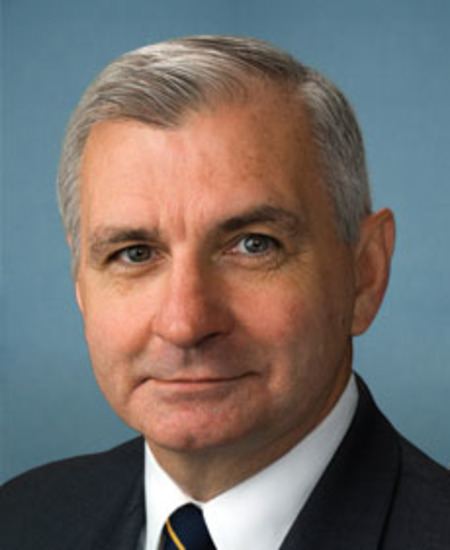
Sen. Jack Reed
Sponsored bills
This joint resolution proposes a constitutional amendment authorizing Congress and the states to set reasonable limits on the raising and spending of money by candidates and others to influence elections. The amendment grants Congress and the states the power to implement and enforce this amendment by legislation. They are allowed to distinguish between natural persons and corporations or other artificial entities created by law, including by prohibiting such entities from spending money to influence elections.
Do No Harm Act This bill prohibits the application of the Religious Freedom Restoration Act of 1993 (RFRA) to specified federal laws or the implementation of such laws. Currently, RFRA prohibits the government from substantially burdening a person's exercise of religion even if the burden results from a rule of general applicability, except in furtherance of a compelling governmental interest when using the least restrictive means. Under the bill, RFRA is inapplicable to laws or the implementation of laws that protect against discrimination or the promotion of equal opportunity (e.g., the Civil Rights Act of 1964); require employers to provide wages, other compensation, or benefits, including leave; protect collective activity in the workplace; protect against child labor, abuse, or exploitation; or provide for access to, information about, referrals for, provision of, or coverage for, any health care item or service. The bill prevents RFRA from being used to deny (1) goods or services the government has contracted, granted, or made an agreement to provide to a beneficiary of or participant in a program or activity funded by such government contract, grant, agreement, or other award; or (2) a person's full and equal enjoyment of a government-provided good, service, benefit, facility, privilege, advantage, or accommodation. In order for a person to assert a RFRA claim or defense in a judicial proceeding, the government must be a party to the proceeding.

This resolution expresses support for the goals of National Physician Suicide Awareness Day.
Cybersecurity Disclosure Act of 2021 This bill directs the Securities and Exchange Commission to issue final rules requiring a registered issuer of securities to disclose in its mandatory annual report or annual proxy statement whether any member of its governing body has expertise or experience in cybersecurity. If no member has such expertise or experience, the issuer must describe what other company cybersecurity aspects were taken into account by the persons responsible for identifying and evaluating nominees for the governing body.
For the People Act of 2021 This bill addresses voter access, election integrity and security, campaign finance, and ethics for the three branches of government. Specifically, the bill expands voter registration (e.g., automatic and same-day registration) and voting access (e.g., vote-by-mail and early voting). It also limits removing voters from voter rolls. The bill requires states to establish independent redistricting commissions to carry out congressional redistricting. Additionally, the bill sets forth provisions related to election security, including sharing intelligence information with state election officials, supporting states in securing their election systems, developing a national strategy to protect U.S. democratic institutions, establishing in the legislative branch the National Commission to Protect United States Democratic Institutions, and other provisions to improve the cybersecurity of election systems. Further, the bill addresses campaign finance, including by expanding the prohibition on campaign spending by foreign nationals, requiring additional disclosure of campaign-related fundraising and spending, requiring additional disclaimers regarding certain political advertising, and establishing an alternative campaign funding system for certain federal offices. The bill addresses ethics in all three branches of government, including by requiring a code of conduct for Supreme Court Justices, prohibiting Members of the House from serving on the board of a for-profit entity, and establishing additional conflict-of-interest and ethics provisions for federal employees and the White House. The bill requires the President, the Vice President, and certain candidates for those offices to disclose 10 years of tax returns.
Diversifying Investigations Via Equitable Research Studies for Everyone Trials Act or the DIVERSE Trials Act This bill requires activities to increase diversity in clinical trials. It also expands reporting by laboratories that test for and diagnose COVID-19 and requires a study on data collection and data sharing during public health emergencies. Specifically, the Food and Drug Administration (FDA) must issue guidance on decentralized clinical trials to promote meaningful demographic and geographic diversity in patient engagement, enrollment, and participation. Decentralized clinical trials include those executed through telemedicine or other digital technologies to allow for the remote collection and assessment of clinical trial data. The FDA may also work with foreign regulators to harmonize international regulations governing decentralized clinical trials and the use of digital health technology. In addition, the Department of Health and Human Services (HHS) may support community education, outreach, and recruitment activities for clinical trials of treatments for conditions that disproportionately impact populations underrepresented in clinical trials. The bill also specifies that drug or device manufacturers may provide, subject to some limits, free digital health technologies and other remuneration to patients in approved clinical trials without violating laws that address fraud and abuse in federal programs. Furthermore, laboratories that test for and diagnose COVID-19 must report additional demographic data, including information about social determinants of health. HHS must also contract with the National Academy of Medicine to study and propose a design for an interoperable platform to facilitate data sharing during public health emergencies.
Strengthening the Vaccines for Children Program Act of 2021 This bill modifies vaccination programs and coverage for children under Medicaid and the Children's Health Insurance Program (CHIP). Specifically, the bill expands and otherwise modifies the Vaccines for Children Program, which provides free vaccinations to individuals 18 years of age or younger who are uninsured or underinsured (i.e., with limited or no insurance for vaccines), are eligible for Medicaid, or are American Indians or Alaskan Natives. The bill expands the program to include children enrolled in CHIP. The Government Accountability Office must report on the related effects of the bill's changes. The bill also expands coverage under Medicaid to include vaccine counseling and educational services for children. It also temporarily increases the Federal Medical Assistance Percentage (i.e., federal matching rate) for states that conduct culturally appropriate outreach regarding the benefits of vaccinations for children.
This resolution designates August 16, 2021, as National Airborne Day.
This resolution addresses issues related to individuals with disabilities. Specifically, the resolution recognizes the importance of independent living for individuals with disabilities made possible by the enactment of the Americans with Disabilities Act of 1990 and encourages all Americans to celebrate the advancement of inclusion and equality of opportunity made possible by its enactment; pledges to continue to work on a bipartisan basis to identify and address the remaining barriers that undermine the national goals of equality of opportunity, independent living, economic self-sufficiency, and full participation for individuals with disabilities; pledges to work with states to improve access to home- and community-based services for individuals with disabilities; calls on the Department of Labor to provide information, resources, and technical assistance to enable individuals with disabilities to achieve economic self-sufficiency; and calls on the Department of Health and Human Services to provide information, resources, and technical assistance regarding such services that enable individuals with disabilities to live independently.