

Maddy summaryThe Do No Harm Act amends the Religious Freedom Restoration Act (RFRA) to clarify that RFRA does not apply when federal laws protect against discrimination (like the Civil Rights Act of 1964), guarantee workplace protections (such as the Family and Medical Leave Act), prevent child exploitation, or ensure health care access. It specifically prevents religious freedom claims from blocking enforcement of these existing laws. The bill directly affects individuals or entities attempting to use RFRA to challenge such federal protections in court. This amendment ensures that religious freedom arguments cannot override established civil rights, workplace, child safety, or health care regulations.
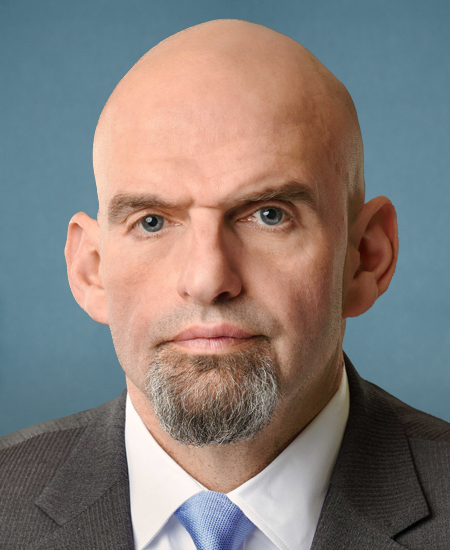
Sen. John Fetterman
Sponsored bills
Maddy summaryThe Health Equity for People with Disabilities Act amends Section 330 of the Public Health Service Act to ensure people with disabilities are explicitly included in federal health programs serving medically underserved populations. Key provisions require community health centers and related programs to provide accessible services - such as communication devices, aids, and disability-focused planning - while defining "disability" per the Americans with Disabilities Act. The bill updates existing program language to mandate inclusion without altering current funding mechanisms, ensuring people with disabilities have equal access to care under existing health initiatives.
Maddy summaryS.1190, the "End the Threat of Default Act," repeals the statutory debt ceiling (Section 3101 of Title 31, U.S. Code), eliminating the legal limit on federal borrowing. This directly affects how the U.S. Treasury manages debt issuance, as it removes the requirement for Congress to vote on raising the debt limit. The bill replaces all references to "debt subject to limit" with terms like "face value of obligations" to align with the repealed ceiling mechanism, preventing future government shutdowns or default risks tied to debt ceiling negotiations.
Maddy summaryThe Veterans Medical Marijuana Safe Harbor Act (S.1204) creates a federal "safe harbor" protecting veterans who use medical marijuana in states where it is legal, and allows VA physicians to discuss or recommend it under state law. It directly affects veterans in states with legal medical marijuana programs and their VA healthcare providers. Key provisions include prohibiting federal penalties for compliant veterans and requiring the VA to conduct research on medical marijuana's effects for pain management and PTSD treatment, with reports to Congress within two years. The bill sunsetted after five years but established a framework for evidence-based policy on veteran care.
Maddy summaryThis resolution recognizes the contributions of care workers in the U.S., including childcare providers, home health aides, and support staff for older adults and people with disabilities. It expresses support for designating April 2023 as "Care Worker Recognition Month" to honor their essential role in supporting families and communities. The resolution highlights care workers' impact on economic stability, family caregiving, and community well-being without creating new laws or funding. As a symbolic gesture, it does not impose legal requirements or alter existing policies.
Maddy summarySRES 154 is a symbolic Senate resolution supporting International Transgender Day of Visibility. It encourages the American public to observe this day through ceremonies and activities, celebrates transgender community achievements, and recognizes the community's fight for equality. The resolution has no legal effect or policy changes - it serves solely as a statement of support. It directly acknowledges transgender individuals' contributions and the ongoing challenges they face, including discrimination in employment, education, and healthcare. The resolution was introduced by multiple senators and refers to transgender representation in government and media as part of its context.
Maddy summarySRES 120 is a ceremonial Senate resolution designating March 23, 2023, as "National Women in Agriculture Day." It recognizes the significant contributions of women in U.S. agriculture, citing that they represent over one-third of agricultural producers and generated $148 billion in sales in 2017. The resolution encourages citizens to acknowledge women in the field and supports their roles as producers, educators, mentors, and leaders. As a symbolic gesture, it does not create new laws or funding but aims to highlight their impact on the agricultural workforce and food systems.
Maddy summaryS 1098, the Global Health, Empowerment and Rights Act, changes U.S. aid rules for foreign nongovernmental organizations (NGOs) receiving funding under the Foreign Assistance Act. It removes eligibility barriers for these NGOs if they provide health services (like counseling) using their own funds, as long as those services comply with local laws and would be legal in the U.S. It also eliminates extra restrictions on how foreign NGOs can use non-U.S. government funds for advocacy or lobbying, making these rules the same as those applied to U.S. NGOs receiving similar aid. This directly affects foreign health-focused NGOs working in international development and rights advocacy.
Maddy summaryThis bill amends the Clery Act to require colleges and universities to provide all campus safety reports, emergency response plans, and related materials in accessible formats for students and staff with disabilities - including those who are blind, deaf, or have cognitive or communication disabilities. Key provisions include mandating that emergency evacuation procedures account for disability needs, requiring campus security personnel to receive disability-inclusive training, and ensuring complaint processes (like sexual assault investigations) are accessible with accommodations like interpreters. It also requires prevention programs and all campus communications to be accessible and timely, with clear procedures for requesting accommodations. The bill directly affects all institutions covered by the Clery Act, aiming to make campus safety information and resources equitable for people with disabilities.
Maddy summaryS 1086, the Disability and Age in Jury Service Nondiscrimination Act, prohibits federal courts from excluding potential jurors based on disability or age. The bill amends federal jury law to ensure individuals with disabilities or older adults are not disqualified if they can serve with reasonable accommodations, such as accessible facilities or modified procedures. It specifically adds "disability, age" to existing protections against exclusion and requires courts to consider accommodations for jurors with infirmities. This change directly affects prospective federal jurors with disabilities or age-related needs who were previously excluded under broad "infirmity" rules. The bill applies only to federal jury service, not state courts.