

Maddy summaryThis bill requires U.S. companies exporting advanced integrated circuits (high-performance chips used in AI/data centers) to "countries of concern" (including China, Hong Kong, and Macau) to first offer them to U.S. customers for 15 days. Companies must certify they have no backlog of U.S. orders for similar chips and aren’t providing better terms to foreign buyers. It also creates a "trusted U.S. person" program, allowing certain companies to export without licenses if they meet security, U.S. manufacturing sourcing, and ownership requirements. The law directly affects chip exporters, U.S. tech companies purchasing these chips, and foreign entities seeking access to advanced semiconductors.
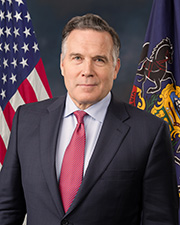
Sen. David McCormick
Sponsored bills
Maddy summaryS 3109 (TRAFFIC Act of 2025) permanently disqualifies individuals convicted of human trafficking from obtaining or holding transportation-related licenses and certifications. It amends federal laws governing merchant mariners (46 U.S.C. § 7512), locomotive operators (49 U.S.C. § 20135), train conductors (49 U.S.C. § 20163), commercial drivers (49 U.S.C. § 31310), pilots (49 U.S.C. § 44703), and other transportation authorizations. The bill prohibits issuing these licenses to anyone convicted of offenses under federal human trafficking law (18 U.S.C. Chapter 77) or substantially similar state/local/Tribal laws. This applies directly to transportation workers seeking or holding credentials for operating vehicles, vessels, or aircraft.
Maddy summaryThe ISLET Act (S 3105) clarifies that transplants using islets from deceased donors are not classified as drugs, biological products, or human cells/tissues under federal law. This removes regulatory barriers for these transplants, which treat conditions like diabetes, by preventing them from being subject to rules meant for other medical products. The bill requires the Department of Health and Human Services to update relevant regulations within one year and report progress to Congress within six months. It directly affects medical facilities and researchers performing islet transplants by creating a dedicated regulatory pathway for these life-saving procedures.
Maddy summarySRES 459 is a non-binding Senate resolution honoring the C5+1 diplomatic platform, which connects the U.S. with Central Asian nations (Kazakhstan, Kyrgyzstan, Tajikistan, Turkmenistan, and Uzbekistan). It recognizes the deepening partnership between the U.S. and these nations, highlighting their shared security cooperation, support for U.S. operations in Afghanistan, and collaboration on energy, critical minerals, and counterterrorism. The resolution formally affirms the C5+1’s strategic value for regional stability and expresses appreciation for expanded economic and security coordination. As a symbolic gesture, it does not create new laws or obligations but reflects congressional support for this diplomatic channel.
Maddy summaryThis bill allows the President to extend "normal trade relations" (NTR) treatment - meaning most-favored-nation tariff rates - to products from specific countries, effectively removing special tariffs that would otherwise apply under Title IV of the 1974 Trade Act. It directly affects covered countries (excluding Belarus, Cuba, and North Korea) by enabling them to receive standard U.S. trade rates for their exports. The key mechanism is the President's authority to determine when Title IV no longer applies to a country and formally proclaim the extension of NTR treatment, which terminates Title IV's application for that country upon implementation.
Maddy summaryThe SAFE KIDS Act voids surrogacy contracts between U.S. surrogates and foreign nationals from designated "entities of concern" (like sanctioned countries), with limited exceptions for married U.S. couples. It criminalizes surrogacy brokers who facilitate such contracts, imposing fines or up to one year in prison. If a contract is voided, custody decisions for the child are determined by state courts based on the child's best interests, not the invalid agreement. The law directly affects U.S. surrogates, foreign nationals seeking surrogacy, and surrogacy brokers, targeting exploitation and potential trafficking risks.
Maddy summaryThis bill amends the Homeland Security Act of 2002 to require federal agencies to detect and identify nitazenes - synthetic opioids - alongside fentanyl and xylazine in drug detection protocols. It directly affects law enforcement agencies and laboratories using federal detection equipment, updating their technical standards to include nitazenes. The key change is adding "nitazenes" to the list of substances covered under existing detection requirements. This is a procedural update to existing law, not a new regulatory mandate.
Maddy summarySRES 409 is a symbolic Senate resolution commemorating the 74th anniversary of the 1951 U.S.-Philippines Mutual Defense Treaty. It expresses support for the U.S.-Philippines security alliance amid China's actions in the South China Sea, including territorial claims and confrontations with Philippine vessels. The resolution reaffirms the treaty's application to attacks on Philippine military assets and condemns China's "unprovoked aggression" in the region. As a non-binding resolution, it does not enact new policy but formally underscores the alliance's importance.
Maddy summaryThe Nitazene Sanctions Act (S 3080) targets synthetic opioids called nitazenes, which are significantly more potent than fentanyl and can be produced using widely available chemicals, often linked to Chinese chemical manufacturers. It requires the U.S. State Department and Justice Department to submit a report within 120 days detailing China’s role in producing nitazene precursors and a strategy to address this, including working with Chinese authorities and European allies. The bill amends the Fentanyl Sanctions Act to explicitly include nitazenes in controlled substance definitions and authorizes sanctions against Chinese entities or officials that fail to prevent opioid trafficking or support precursor production. It also extends the Fentanyl Sanctions Act’s enforcement period from 5 to 10 years. The law directly affects Chinese chemical companies, government agencies, and officials involved in precursor production or trafficking, with sanctions potentially targeting financial institutions and government entities.
Maddy summaryS 3076, the Nitazene Control Act, permanently classifies nitazenes and related 2-benzylbenzimidazole opioids as Schedule I controlled substances under the federal Controlled Substances Act. This affects anyone possessing, distributing, or researching these substances, as it bans them without specific exemptions. The bill broadly defines the prohibited substances to cover all structural analogs (including modifications to the molecular structure) and those that activate the mu-opioid receptor. It also removes temporary scheduling for these compounds, making their Schedule I status permanent upon enactment. This policy change aims to prevent new illicit analogs from entering the drug supply and reduce overdose risks linked to these potent synthetic opioids.