

Maddy summaryS 1369, the Protecting Global Fisheries Act of 2026, authorizes the U.S. government to impose sanctions on foreign vessels and entities involved in illegal, unreported, or unregulated (IUU) fishing or the illegal trade of endangered species. The bill targets foreign persons or vessels responsible for IUU fishing or illegal wildlife trade, including those acting on behalf of governments like China’s, with sanctions such as asset blocking, travel bans, port access denial, and financial restrictions. It requires the President to submit annual reports to Congress on sanctions implementation and mandates a detailed assessment of China’s IUU fishing activities and global enforcement efforts. The law includes exceptions for humanitarian aid, safety-related vessel provisions, and compliance with international agreements.
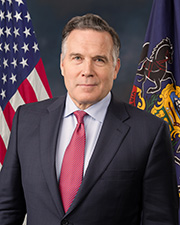
Sen. David McCormick
Sponsored bills
Fighting Trade Cheats Act of 2026 This bill increases penalties for, and establishes additional enforcement mechanisms related to, fraudulent and grossly negligent violations of U.S. customs laws. Specifically, the bill increases the maximum civil penalty for a fraudulent violation to three times the domestic value of the merchandise. (Currently, the maximum penalty is the domestic value of the merchandise.) It prohibits a person who commits a fraudulent violation from importing merchandise into the United States for a five-year period. Additionally, the bill increases the maximum civil penalty for a grossly negligent violation to the lesser of (1) 3 times the domestic value of the merchandise; or (2) 10 times the lawful duties, taxes, and fees. (Currently, the maximum penalty is the lesser of the domestic value of the merchandise or four times the lawful duties, taxes, and fees.) It prohibits a person who commits a grossly negligent violation from importing merchandise into the United States for a two-year period. Further, the bill applies these importation bans to an affiliated person (e.g., a family member or employee) of the person who committed the fraudulent or grossly negligent violation. The bill establishes a private right of action for an interested party (e.g., a manufacturer) affected by customs fraud or grossly negligent violations. The bill prohibits any person (or an affiliated person) who commits a fraudulent or grossly negligent violation from participating in the U.S. Customs and Border Protection's Importer of Record program, and further requires revocation of their importer of record numbers.
Maddy summaryThe Drone Espionage Act (S 1809) amends existing law to explicitly include video recordings alongside photographs in the prohibition against taking or transmitting defense information. This technical update to Title 18, U.S. Code, Section 793 clarifies that video footage of defense-related information - such as from drones or other devices - falls under espionage laws, just like photographic images. The bill directly affects individuals or entities recording defense information via video, expanding the scope of prohibited activities under current espionage statutes. It does not create new penalties but ensures modern recording methods are covered by existing legal protections.
Maddy summaryThe ePermit Act requires federal agencies to adopt standardized digital systems for environmental reviews and authorizations, creating a unified online portal for project sponsors to submit documents, track progress, and access real-time data. It mandates data standards for consistent information sharing, automated tools for screening projects and managing public comments, and a deadline for full implementation by December 2027. The bill directly affects federal agencies (like the EPA and Army Corps of Engineers), project developers seeking permits, and the public by replacing fragmented paper-based processes with a transparent, digital platform. Key provisions include requiring agencies to report on current systems within 90 days, implement minimum functional tools within 180 days, and prioritize vendor-neutral interoperability to reduce delays and redundancy.
Maddy summaryThe SCAM Act requires online platforms that accept payment for advertisements to verify advertiser identities (including government ID and business documentation) and implement systems to detect and remove scam ads within 72 hours of reporting. It mandates platforms to conduct investigations, remove verified fraudulent ads within 24 hours, and maintain active impersonation detection programs. The law directly affects major social media and digital advertising platforms by imposing new verification and monitoring obligations to prevent deceptive ads targeting consumers. Enforcement falls to the Federal Trade Commission, treating violations as unfair or deceptive practices under existing law.
This resolution supports the designation of 2026 as the International Year of the Woman Farmer and recognizes the critical role of women in agriculture. The resolution also encourages citizens to celebrate the impact these women have on the food systems and agricultural workforce of the United States by encouraging and empowering women to pursue careers in agriculture and cultivate leadership opportunities.
Maddy summaryThis bill requires companies that synthesize DNA or RNA (like those selling synthetic nucleic acids) to screen customer orders for dangerous sequences and verify customer identities. It mandates a federal system to maintain a list of "sequences of concern" (DNA patterns that could create harmful pathogens), with regular updates based on public input and rapid additions for emerging threats. The bill also creates a "biotechnology governance sandbox" for testing new security tools and streamlines federal oversight by having agencies coordinate under one plan to reduce duplication. These rules apply directly to biotech manufacturers and distributors of gene synthesis equipment, aiming to prevent misuse while supporting innovation.
Safeguard American Voter Eligibility Act or the SAVE America Act This bill requires individuals to provide documentary proof of U.S. citizenship when registering to vote, and requires photo identification to vote, in federal elections. Specifically, the bill prohibits states from accepting and processing an application to register to vote in a federal election unless the applicant presents documentary proof of U.S. citizenship. The bill specifies what documents are considered acceptable proof of U.S. citizenship, such as identification that complies with the REAL ID Act of 2005 that indicates U.S. citizenship. Further, the bill (1) prohibits states from registering an individual to vote in a federal election unless, at the time the individual applies to register to vote, the individual provides documentary proof of U.S. citizenship; and (2) requires states to establish an alternative process to demonstrate U.S. citizenship. Each state must take affirmative steps on an ongoing basis to ensure that only U.S. citizens are registered to vote, which shall include establishing a program to identify individuals who are not U.S. citizens using information supplied by certain sources. Additionally, states must remove noncitizens from their official lists of eligible voters. The bill (1) provides for a private right of action for certain violations, and (2) establishes criminal penalties for certain offenses. Individuals voting in federal elections must present an eligible photo identification document. An individual who votes by absentee ballot must submit a copy of their identification document with both the request for, and the submission of, the absentee ballot.
Maddy summaryThis bill lowers the market value threshold for companies to qualify as "well-known seasoned issuers" (WKSI) under securities law, from $700 million to $400 million. Companies with at least $400 million in total market value of their shares held by outside investors would now qualify for WKSI status, allowing them to use simplified SEC registration processes for new stock offerings. The bill also requires the Securities and Exchange Commission to annually report on withdrawn applications related to WKSI eligibility. This change directly affects public companies seeking streamlined access to capital markets by reducing the size barrier for WKSI status. The policy shift aims to expand eligibility for smaller public companies under existing securities regulations.
Maddy summaryThis bill requires the U.S. Senate to provide advice and consent for any international climate agreement that involves legally binding domestic emissions reductions (like the Paris Agreement), treating such agreements as treaties under the Constitution. It directly affects the executive branch and federal agencies by blocking the use of federal funds to implement or comply with these agreements unless Senate approval is first obtained. The key mechanism is changing the process for entering climate agreements from executive action to a formal treaty ratification process. This would prevent the U.S. government from joining or rejoining international climate deals without Senate confirmation. The bill does not alter the content of climate agreements but changes how they are approved and funded.