Keeping Critical Connections Act of 2021 This bill provides funds with which the Federal Communications Commission shall reimburse small business broadband providers for costs incurred during the COVID-19 (i.e., coronavirus disease 2019) emergency period to voluntarily (1) provide free or discounted service to students in need of distance learning capacity, or (2) refrain from disconnecting low-income households that cannot afford to make a full payment.
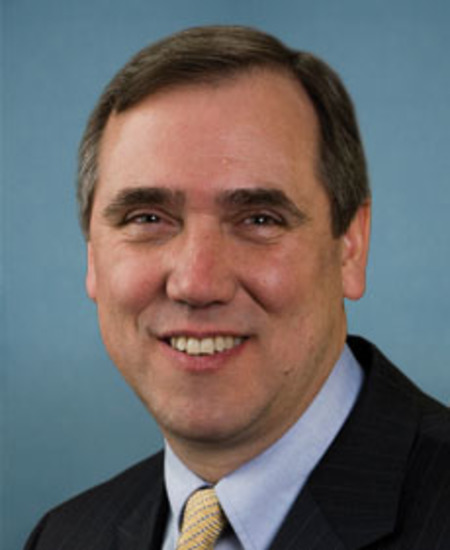
Sen. Jeff Merkley
Sponsored bills
Stop Underrides Act This bill requires the installation of rear, side, and front underride guards on certain trucks and trailers. Specifically, the Department of Transportation (DOT) must require the installation of rear, side, and front underride guards on the following a trailer or semi-trailer that is more than 10,000 pounds, and a single unit truck for which the bottom of the carriage is greater than 22 inches above the ground and that is more than 10,000 pounds. For rear and side underride guards, DOT must require adherence to a performance standard that requires the guards to be able to prevent intrusion from the body or frame of a trailer, semi-trailer, or truck into the passenger compartment of the motor vehicle that contacts the guard while traveling at 35 miles per hour. In addition, DOT must require drivers to (1) conduct a pre-trip inspection of the underride protection system on their vehicles; (2) identify rusted metal compromising structural integrity, cracked welds, or missing or loose fasteners; and (3) complete any necessary repairs. DOT must establish a Committee on Underride Protection to oversee the ongoing underride guard rulemaking process. DOT must publish data on victims of truck underride crashes.

Non-Opioids Prevent Addiction In the Nation Act or the NOPAIN Act This bill temporarily establishes separate payments for certain non-opioid treatments under the Medicare prospective payment system for hospital outpatient department services and the payment system for ambulatory surgical center services. The bill applies to pain management treatments that are able to replace or reduce opioid consumption, as shown through clinical trials or data.
This joint resolution eliminates the deadline for the ratification of the Equal Rights Amendment, which prohibits discrimination based on sex. The amendment was proposed to the states in House Joint Resolution 208 of the 92nd Congress, as agreed to in the Senate on March 22, 1972. The amendment shall be part of the Constitution whenever ratified by the legislatures of three-fourths of the states.
This resolution declares that mothers, especially mothers of color, have been pushed to the brink of economic, social, and emotional collapse during the COVID-19 (i.e., coronavirus disease 2019) pandemic because of the existing economic and social inequalities that women have long faced. The resolution also states that any relief and long-term recovery package to address the COVID-19 crisis should recognize and rebuild moms in the workforce by including certain policies such as establishing a robust paid leave plan; rebuilding and stabilizing the child care industry; providing recurring child benefits—expanded and improved child tax credit and earned income tax credit—to help reduce child poverty and provide economic security for families; establishing an expanded unemployment insurance program that benefits struggling workers, including those experiencing long-term unemployment; and providing access to mental health support for mothers. Finally, the resolution declares that employers and policymakers must prioritize addressing the economic cliff facing mothers and make permanent the policies set forth in this resolution so that mothers are protected against any future economic calamities.
This resolution designates February 1-February 5, 2021, as National School Counseling Week.
This resolution supports the designation of February 2021 as Career and Technical Education Month to celebrate career and technical education across the United States.
Federal Death Penalty Prohibition Act This bill prohibits the imposition of a death penalty sentence for a violation of federal law. A person sentenced to death before enactment of this bill must be resentenced.
Federal Adjustment of Income Rates Act or the FAIR Act This bill modifies pay rates for federal employees in 2022. Specifically, the bill increases rates under the statutory pay systems and for prevailing rate employees by 2.2%, and increases locality pay by 1%.
Ban Conflicted Trading Act This bill prohibits a Member of Congress or certain congressional officers or employees from (1) purchasing or selling specified investments, (2) entering into a transaction that creates a net short position in a security, or (3) serving as an officer or member of any board of any for-profit entity.