Constitutional Concealed Carry Reciprocity Act of 2021 This bill allows a qualified individual to carry a concealed handgun into or possess a concealed handgun in another state that allows its residents to carry concealed firearms. A qualified individual must (1) be eligible to possess, transport, or receive a firearm under federal law; (2) carry a valid photo identification document; and (3) carry a valid state-issued concealed carry permit, or be eligible to carry a concealed firearm in his or her state of residence.
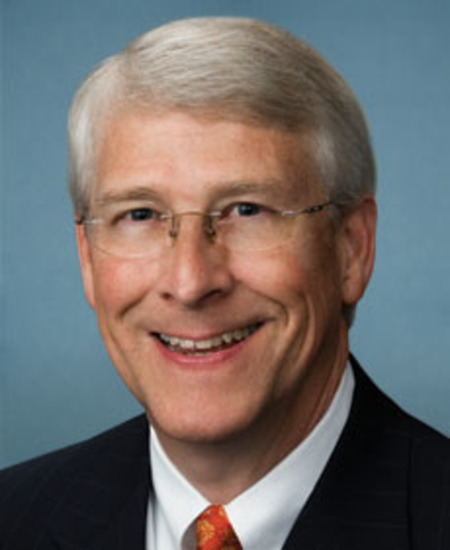
Sen. Roger F. Wicker
Sponsored bills
Improving Spectrum Coordination Act of 2021 This bill requires the Federal Communications Commission (FCC) and the National Telecommunications and Information Administration (NTIA) to periodically update the Memorandum of Understanding on Spectrum Coordination, which establishes procedures to promote the efficient use of the radio spectrum, including related to joint spectrum planning and frequency coordination. Among other updates, the FCC and the NTIA must (1) outline processes for addressing technical, procedural, and policy differences regarding frequency allocation and related conditions and standards; (2) create a process for the resolution of nonroutine policy disputes; (3) clarify the role of the NTIA; and (4) outline processes for spectrum planning and international spectrum coordination.
This resolution recognizes and honors the late Gilbert Metz as the last survivor of the Holocaust in Mississippi. The resolution also recognizes the declining awareness of the atrocities committed during the Holocaust and commends the educators who teach about the Holocaust and all genocide.
This resolution recognizes the efforts of the Trump Administration and Operation Warp Speed in the development of the COVID-19 (i.e., coronavirus disease 2019) vaccine. Operation Warp Speed is an interagency partnership that coordinates federal efforts to accelerate the development, acquisition, and distribution of medical countermeasures for COVID-19.
Supplying Help to Infrastructure in Ports, Yards, and America's Repair Docks Act of 2021 or the SHIPYARD Act This bill provides supplemental appropriations to the Department of Defense (DOD) for improving naval shipyard infrastructure. The bill designates the funding as emergency spending, which is exempt from discretionary spending limits. DOD must make this funding directly available to the Department of the Navy. Funds must be used for specified purposes, including for public and private shipyard facilities, docks, dry docks, capital equipment improvements, and dredging efforts needed by shipyards.
K2 Veterans Care Act of 2021 This bill establishes a presumption of service-connection for certain diseases becoming manifest in a veteran who served on active duty at Karshi-Khanabad (K2) Air Base in Uzbekistan between January 1, 2001, and December 31, 2005. Specifically, there must be a presumption of service-connection for veterans who manifest illnesses that have a positive association with exposure to jet fuel, volatile organic compounds, high levels of particulate matter, depleted uranium, asbestos, or lead-based paint, as determined by the National Academies of Sciences, Engineering, and Medicine (NASEM). Under a presumption of service-connection, specific conditions diagnosed in certain veterans are presumed to have been caused by the circumstances of their military service. Health care benefits and disability compensation may then be awarded. Veterans who served at K2 Air Base during the specified period are eligible for Department of Veterans Affairs hospital care, medical services, and nursing home care for an illness that has been determined by NASEM to have a positive association with exposure to jet fuel, volatile organic compounds, high levels of particulate matter, depleted uranium, asbestos, or lead-based paint.
Veterans Burn Pits Exposure Recognition Act of 2021 This bill requires the Department of Veterans Affairs (VA) to concede, for the purposes of health care benefits and wartime disability compensation, that a veteran was exposed to certain toxic substances, chemicals, and hazards from burn pits if such veteran served on active duty in a covered location during a specified time frame (unless there is affirmative evidence to establish that the veteran was not exposed during such service). A burn pit is an area used for burning solid waste in open air without equipment. Specifically, the bill covers the following locations and corresponding time periods: Iraq between August 2, 1990, and February 28, 1991, as well as from March 19, 2003, until burn pits are no longer used in this location; Southwest Asia (including Kuwait, Saudi Arabia, Oman, and Qatar) from August 2, 1990, until burn pits are no longer used in these locations; and Afghanistan, Syria, Jordan, Egypt, Lebanon, Yemen, and Djibouti from September 11, 2001, until burn pits are no longer used in these locations. Under the bill, if an exposed veteran submits insufficient evidence to establish a service-connection for purposes of disability compensation, the VA shall provide a medical examination and request a medical opinion regarding a causal link between the disability and a toxin, chemical, or hazard.

Rural STEM Education Act This bill directs the National Science Foundation (NSF) to support research regarding STEM (science, technology, engineering, and mathematics, including computer science) education in rural schools. The NSF must award grants to institutions of higher education or nonprofit organizations for (1) research and development to advance innovative approaches to support and sustain high-quality STEM teaching in rural schools, (2) research and development of programming to identify the barriers rural students face in accessing high-quality STEM education, (3) development of innovative solutions to improve the participation and advancement of rural students in grades Pre-K through 12 in STEM studies, and (4) research on online STEM education courses for rural communities. The NSF may establish a pilot program of regional cohorts in rural areas to provide peer support, mentoring, and hands-on research experiences for rural STEM educators of students in grades Pre-K through 12 in order to build an ecosystem of cooperation among educators, researchers, academia, and local industry. The NSF shall enter into an agreement with the National Academy of Sciences under which the National Academy agrees to evaluate aspects of STEM education and workforce development in rural areas. The National Institute of Standards and Technology must award prizes to stimulate research and development of creative technologies in order to deploy affordable and reliable broadband connectivity to unserved rural communities. The Office of Science and Technology Policy must establish a broadband research and development working group to address national research challenges and opportunities for improving broadband access and adoption across the United States.
Teacher Education for Computer Science Act or the Teach CS Act This bill authorizes the Department of Education to award grants to institutions of higher education for establishing and maintaining teacher education programs for computer science. It also includes computer science as an eligible education category with respect to receiving various teacher preparation grants and graduate fellowships.
Abortion Providers Loan Elimination Act This bill makes abortion providers ineligible to receive a loan under the Paycheck Protection Program, which was established to support small businesses in response to COVID-19. This prohibition shall not apply to hospitals or entities that exclusively provide abortions (1) where the pregnancy is the result of rape or incest, or (2) where the pregnancy endangers the life of the mother. The Inspector General of the Small Business Administration must report on the number of paycheck protection loans made to the Planned Parenthood Federation of America and to other abortion providers.