

Maddy summaryThe Promoting Access to Broadband Act of 2026 directs the Federal Communications Commission to create two grant programs for states to improve access to the Lifeline broadband subsidy. The first program provides funding to help states inform low-income residents who qualify for the Lifeline benefit but are not yet enrolled about how to apply and what the program offers. The second program funds states to connect their local benefit databases with the National Lifeline Eligibility Verifier, ensuring that receipt of other government assistance is properly recorded for eligibility checks. To receive these grants, states must submit detailed plans outlining their outreach strategies and expected reach, with the FCC prioritizing areas with more eligible individuals and diverse geographic regions. The bill also requires the FCC to report on the programs' effectiveness to Congress within three years and authorizes funding for the first five fiscal years.
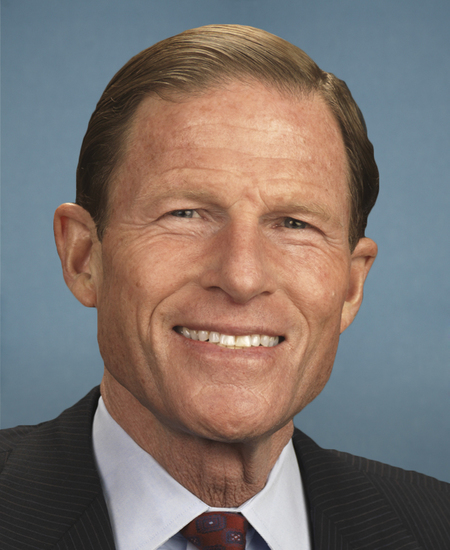
Sen. Richard Blumenthal
Sponsored bills
Maddy summaryThe Puppy Protection Act of 2026 amends the Animal Welfare Act to impose stricter housing and care standards on dog dealers. It requires dealers to provide dogs with solid flooring, sufficient indoor space based on size, and temperature control between 45 and 85 degrees Fahrenheit. The bill also mandates daily nutritious food, unrestricted outdoor exercise for most dogs over 12 weeks, and at least 30 minutes of daily social interaction with humans. Additionally, it establishes specific rules for breeding, such as limiting the number of litters a female dog can produce and requiring health screenings before breeding. These new requirements must be implemented through final regulations issued by the Secretary within 18 months of the law's enactment.
Maddy summaryThis bill, known as the Protecting Human Rights and Public Health in Foreign Assistance Act, directs federal agencies to ignore three specific final rules issued by the Department of State. It explicitly prohibits any government department from implementing, enforcing, or creating new policies similar to these existing rules, effectively treating them as if they never existed. The targeted regulations concern protecting life, combating discriminatory equity ideology, and addressing gender ideology within foreign aid programs. By nullifying these rules, the legislation removes the current administrative requirements related to these topics from U.S. foreign assistance activities.
Maddy summaryThis bill, known as the Carlton H. Ingram Veterans' Benefits Protection Act, amends the Department of Veterans Affairs' disability rating system to ensure that a veteran's disability level is assessed without considering the positive effects of medication or treatment. The key provision requires the VA to establish a baseline disability rating that reflects the veteran's condition before treatment, ensuring compensation is based on the underlying disability rather than improvements from medical care. Veterans seeking compensation for additional disabilities caused by or worsened by their treatment for service-connected conditions remain eligible for benefits under this change. The legislation aims to provide a more accurate reflection of a veteran's true disability status when determining compensation levels.
Maddy summaryThe National Veterans Strategy Act of 2026 requires the President to establish measurable metrics for veteran well-being - covering health, employment, education, and social engagement - and develop a national strategy every four years to align federal, state, local, nonprofit, and private sector efforts toward improving veteran outcomes. This strategy must be developed with input from veterans, government agencies, and stakeholders like veterans' organizations and businesses, and it will guide how benefits and services are delivered to address gaps in veteran success. The bill mandates annual reports to Congress tracking progress, spending, and barriers, with a requirement for the President to update the strategy every four years based on public input and evaluation. It directly affects all veterans by creating a coordinated framework for service delivery, though specific benefits or programs are not defined by the bill itself.
Maddy summaryS 3395, the Mammography Access for Veterans Act of 2025, permanently expands telehealth mammography services for veterans by ending the previous pilot program restrictions. It requires the Department of Veterans Affairs to provide at least one mammography option - full-service, tele-screening, or mobile - in every state and Puerto Rico within two years. All programs must comply with accessibility standards for veterans with paralysis, spinal cord injuries, or other disabilities. This directly affects veterans needing breast cancer screenings, particularly those in rural areas or with mobility challenges.
Maddy summaryThis bill modernizes the Veterans Affairs appeals process for benefit claims. It requires veterans to submit evidence within 90 days of a notice of disagreement (for both hearing and non-hearing cases), limits evidence considered beyond that timeframe, and adds flexibility for veterans to withdraw appeals or switch case tracking systems without losing progress. The bill also mandates clearer decision notices detailing issues, evidence considered, and reasons for denials, and requires the VA to create an integrated system for processing appeals across agencies. Finally, it establishes annual reports on appeal outcomes and directs third-party reviews to improve decision quality and reduce remands.
Maddy summaryThis bill (S 3098, Presumptive CLARITY Act of 2025) requires the Department of Veterans Affairs (VA) to publish a public website listing conditions and veteran groups the VA is considering for "presumptive service connection" related to toxic exposure during military service. It mandates the VA to detail the decision process, current status of each condition/cohort, and how the public can submit comments. This directly affects veterans seeking disability benefits for health issues linked to military toxic exposure (like burn pits or Agent Orange). The VA must begin publishing this information within 180 days of the bill becoming law.
Maddy summaryThis bill requires the Department of Veterans Affairs (VA) to identify and report fraud in disability benefit claims, directly affecting VA claim processors and veterans who submit disability forms. Key provisions include establishing a process for VA staff to flag suspicious forms, conducting regular audits of all submitted forms, and informing applicants if their forms raise fraud concerns. The VA must report suspected fraud to investigators like the Inspector General, but cannot change benefit decisions based solely on an investigation - only if fraud is proven in court. The VA must also submit annual reports to Congress on these efforts. (Bill: S 3000, "FRAUD in VA Disability Exams Act of 2025")
Maddy summaryThis Senate resolution formally welcomes King Charles III and Queen Camilla to the United States for a state visit where the King will address a joint session of Congress. The document highlights the long-standing diplomatic and security partnership between the two nations, noting shared values and cooperation on issues like defense and technology. It also marks the occasion as the first time a British monarch has addressed Congress since 1991, coinciding with the 250th anniversary of American independence.