

Protecting the Dignity of Unborn Children Act of 2021 This bill establishes a new criminal offense for recklessly disposing of or abandoning fetal remains in a landfill or in any navigable waters of the United States. The term fetal remains means any part (except a cremated part) of a deceased human fetus following an abortion. A violator is subject to a fine, up to three years in prison, or both.
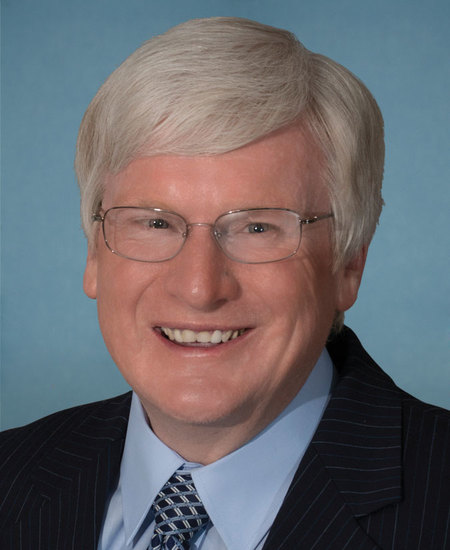
Rep. Glenn Grothman
Sponsored bills
Security And Fairness Enhancement for America Act of 2021 or the SAFE for America Act of 2021 This bill eliminates the diversity immigrant program, which makes immigrant visas available to individuals from countries with low rates of immigration to the United States.
No Asylum for Criminals Act of 2021 This bill bars an individual who has been convicted of a crime from receiving asylum, with limited exceptions. Specifically, the Department of Homeland Security may designate political offenses committed outside of the United States that shall not be considered a crime for this purpose. Currently, an individual shall be barred from receiving asylum for only certain types of criminal convictions, such as if the individual is convicted for (1) an aggravated felony, or (2) a particularly serious crime and as a result deemed a danger to the United States.
Pregnant Women Health and Safety Act of 2021 This bill establishes requirements for physicians who perform abortions and abortion clinics. Specifically, the bill requires a physician who performs an abortion (1) to have admitting privileges at a nearby hospital; and (2) at the time of the abortion, to notify the patient of the hospital location where the patient can receive follow-up care if complications arise. A physician who fails to comply is subject to criminal penalties—a fine, a prison term of up to two years, or both. A woman who undergoes an abortion may not be prosecuted. The bill also requires an abortion clinic, in order to receive federal funds or assistance, to (1) be licensed by the state in which it is located, and (2) be in compliance with federal standards for ambulatory surgical centers.
Reducing the Demand for Human Trafficking Act of 2021 This bill modifies the requirements regarding trafficking victim services grants. Specifically, it creates a preference for applicants who use the grant funds to investigate and prosecute individuals who solicit or purchase commercial sex.
This joint resolution proposes a constitutional amendment prohibiting total outlays for a fiscal year from exceeding total receipts for that fiscal year unless Congress authorizes the excess by a three-fifths roll call vote of each chamber. The prohibition excludes outlays for repayment of debt principal and receipts derived from borrowing. The amendment requires roll call votes of (1) three-fifths of each chamber of Congress to increase the public debt limit, and (2) a majority of each chamber for legislation increasing revenue. It also requires the President to submit a balanced budget to Congress annually. Congress is authorized to waive these requirements when a declaration of war is in effect or if the United States is engaged in a military conflict which causes an imminent and serious military threat to national security.
This joint resolution proposes an amendment to the Constitution to require that the Supreme Court consist of nine Justices.
Adoption Information Act This bill requires federally funded family planning programs to provide each person who inquires about their services with specified information about adoption centers in their state. The Department of Health and Human Services must provide the programs with pamphlets containing the required information.
Birthright Citizenship Act of 2021 This bill limits birthright citizenship by redefining what it means to be subject to the jurisdiction of the United States. Currently, a person born in the United States and subject to U.S. jurisdiction is entitled to citizenship. Under the bill, a person is subject to U.S. jurisdiction if he or she is born to a parent who is (1) a U.S. citizen or national, (2) a lawful permanent resident residing in the United States, or (3) an alien performing active service in the Armed Forces. The bill does not affect the citizenship or nationality status of any person born before the bill's enactment date.
ADA Compliance for Customer Entry to Stores and Services Act or the ACCESS Act This bill addresses access to public accommodations for persons with a disability. The bill requires the Department of Justice (DOJ) to develop a program to educate state and local governments and property owners on strategies for promoting access to public accommodations for persons with a disability. The bill authorizes an aggrieved person, after taking specified actions, to commence a civil action based on the failure to remove an architectural barrier to access an existing public accommodation. Specifically, the aggrieved person must have provided the owners or operators a written notice specific enough to identify the barrier and specify the circumstances under which public accommodation access was denied. The owners or operators must have (1) failed to provide the person a written description outlining improvements that will be made to improve the barrier, or (2) failed to remove the barrier or make substantial progress after providing such a description. The Judicial Conference of the United States must develop a model program to promote alternative dispute resolution mechanisms to resolve claims involving architectural barriers to access for public accommodations. Finally, the bill requires DOJ to complete a study of whether certain web content standards or information services for individuals with disabilities provided telephonically provide the same accommodations as would be available on a website.