

Maddy summaryHR 7213, the *Safeguarding Benefits for Americans Act of 2026*, requires U.S. citizenship or nationality for eligibility for most federal assistance programs (like SNAP, housing aid, or Medicaid). It mandates applicants to submit a written declaration under penalty of perjury and provide documentary proof (e.g., birth certificate, SSN) verified through Social Security Administration and DHS databases. The bill affects individuals applying for or receiving federal benefits, with exceptions for children in households where at least one member meets the requirement (e.g., children in SNAP or elderly housing programs). It takes effect 1 year after enactment, requiring all current recipients to meet the new rules within 2 years.
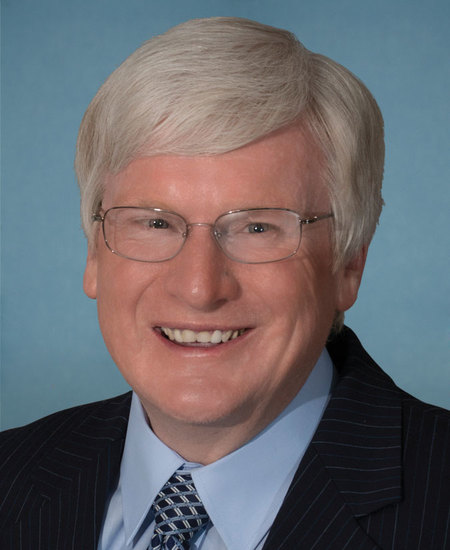
Rep. Glenn Grothman
Sponsored bills
Maddy summaryHR 7156, the SCAM Act, would expand grounds for revoking U.S. citizenship (denaturalization) for naturalized citizens who commit specific offenses within 10 years of becoming citizens. It targets individuals convicted of defrauding federal, state, or local governments (e.g., $10,000+ in public benefit fraud), affiliating with foreign terrorist organizations, or committing aggravated felonies or espionage. If convicted in these categories, the government could automatically revoke citizenship retroactively (as if it never existed) based on evidence that the person lacked good moral character or loyalty to the U.S. at the time of naturalization. This bill directly affects naturalized citizens who commit these offenses within a decade of gaining citizenship, with revocation triggering immediate deportability.
Maddy summaryHR 7137, the Shutdown Fairness Act, requires federal agencies to pay covered employees (including most federal workers and military personnel) and covered contractors their regular pay during government shutdowns. It appropriates funds from the Treasury to cover standard employee compensation and contractor payments for work performed during a lapse in regular appropriations, ensuring pay continues without delay (within 7 days if a shutdown is ongoing at enactment) and aligns with regular pay schedules. The bill applies only to individuals employed or with accepted offers before the shutdown began and mandates that these payments be charged to future appropriations. It does not change agency obligations under existing contracts or authorize new spending beyond the specified shutdown period.
Maddy summaryThis bill creates new federal criminal penalties for intentionally coercing minors (under 18) through interstate means (like mail or online platforms) to engage in harmful acts. It specifically prohibits forcing minors to commit self-harm (including suicide attempts), animal cruelty, abusive nonsexual conduct, sexually explicit acts, or obscene speech. Violations carry fines and prison terms of up to 10 years, with harsher penalties (up to 20 years or life) if serious injury or death results. The law directly protects minors from coercion by perpetrators using interstate communication or commerce, with enforcement under existing federal criminal code.
Maddy summaryHR 2516, the Accreditation for College Excellence Act of 2025, prohibits accreditation agencies from requiring colleges to support specific political views, ideologies, or partisan positions. It explicitly prevents agencies from assessing institutions based on their commitment to any ideology or requiring adherence to statements of faith for religious institutions. The bill also limits federal criteria for accreditation to only what is necessary, ensuring colleges comply with their accreditor’s standards - not additional unrelated requirements. This directly affects all colleges seeking federal funding through accredited programs by clarifying permissible accreditation standards.
Maddy summaryThis bill amends the Fair Labor Standards Act to change how tipped employees' wages are calculated. It removes the previous requirement that tipped workers must "customarily and regularly receive more than $30 a month in tips" to qualify for the lower cash wage rate. Instead, it requires that the combined cash wage plus tips must equal or exceed the standard federal minimum wage for the pay period chosen by the employer (ranging from daily to monthly). The bill directly affects restaurant servers, bartenders, and other tipped workers who receive cash wages plus tips. It simplifies wage calculations for employers while ensuring tipped employees earn at least the full minimum wage when tips are included.
Maddy summaryHRES 984 is a symbolic resolution designating January 9, 2026, as "National Law Enforcement Appreciation Day." It directly honors all federal, state, local, and tribal law enforcement officers across the United States for their service and sacrifices. The resolution expresses the House's support and gratitude, encourages public observance through ceremonies, and recognizes officers who have made the ultimate sacrifice. As a non-binding resolution, it does not create new laws or policies but serves as a formal expression of appreciation.
Maddy summaryThis bill clarifies and expands the definition of "public charge" for immigration purposes, affecting non-citizens applying for visas, admission, or adjustment of status. It defines a public charge as someone receiving certain government benefits (including SNAP, Medicaid, housing assistance, and income support programs) for more than 12 months within any 36-month period. The determination considers factors like age, health, assets, education, and family status in a holistic assessment, while exempting refugees, asylees, and military dependents. The bill requires the government to publish a comprehensive list of covered benefits within 180 days of enactment.
Maddy summaryHR 4837, the Written Informed Consent Act, requires the Veterans Health Administration (VHA) to update its existing directive on informed consent to include additional medication classes. Specifically, it mandates that written informed consent must be obtained before prescribing antipsychotics, stimulants, antidepressants, anti-anxiety medications (anxiolytics), and narcotics (opioids) to veterans. This expansion directly affects veterans receiving these medications through the VA system, ensuring they are informed about specific treatment risks and alternatives. The key mechanism is amending VHA Directive 1005 to broaden its application beyond long-term opioid therapy to cover the newly listed medication types.
Maddy summaryThis bill amends federal student privacy laws (FERPA and PPRA) to allow parents (or eligible students aged 18+ or emancipated minors) to directly sue schools in federal court for privacy violations, without first exhausting government complaint processes. It applies to violations involving education records (FERPA) or student surveys (PPRA), such as unauthorized sharing of personal information. The law requires schools to address privacy complaints within 90 days but creates a new civil action pathway for affected individuals. This directly impacts parents and students in K-12 and college settings who believe their school mishandled private educational data.