

Maddy summaryThe Celiac Safety Act of 2026 officially classifies gluten-containing grains as a major food allergen under federal law, directly impacting the food industry and individuals with celiac disease or gluten intolerance. This change requires manufacturers to label products containing wheat, rye, barley, or their crossbred hybrids with the same prominence as other major allergens like milk. The new labeling requirements will not take effect until 18 months after the law is enacted, giving businesses time to adjust their packaging and production processes.
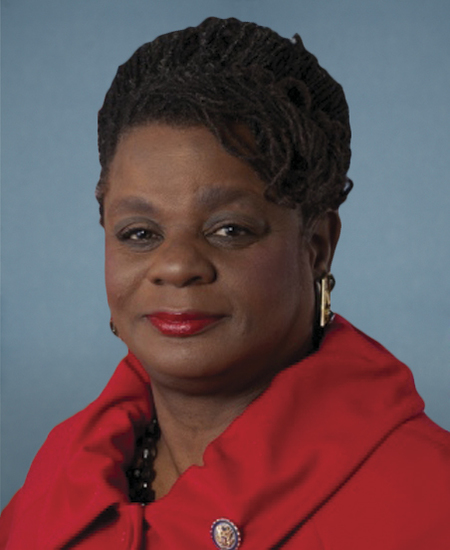
Rep. Gwen Moore
Sponsored bills
Maddy summaryThis resolution formally recognizes the negative effects of menstrual stigma on women, girls, and other menstruating people and expresses support for designating May as National Menstrual Health Awareness Month. It highlights the importance of normalizing menstruation, improving access to products and sanitation facilities, and expanding education and clinical research on menstrual health conditions. The bill does not create new laws or funding but serves as a symbolic statement to promote awareness and gender equity regarding menstrual health.
Maddy summaryThis joint resolution seeks to officially reject a final rule issued by the Department of Education regarding federal student loan programs. If passed, the measure would prevent the new regulations from taking effect, leaving the previous rules in place. The bill directly impacts borrowers, lenders, and the Department of Education by nullifying the specific changes outlined in the "Reimagining and Improving Student Education" proposal. It is a procedural action that uses the Congressional Review Act to disapprove the agency's policy without altering the underlying law.
Maddy summaryThis resolution expresses the House of Representatives' desire to eliminate child poverty and establish a national target to guide future policy. It recognizes the significant drop in poverty during 2021 caused by expanded federal support, such as the Child Tax Credit, and calls for making these investments permanent. The document highlights disparities affecting Black, Hispanic, and immigrant children, as well as those living in U.S. territories, and advocates for increased federal spending on early childhood education and essential services like nutrition and housing. Ultimately, it encourages states and localities to adopt policies that align with these goals to ensure all children have access to basic necessities and educational opportunities.
Maddy summaryThis bill, titled the No Presidential Self-Serving Lawsuits Act of 2026, prevents the current or former President of the United States from filing civil lawsuits against the federal government. It specifically invalidates an existing settlement agreement between a former President and the Internal Revenue Service and bars the use of federal funds to create compensation for such lawsuits. Additionally, the legislation authorizes the Treasury Secretary to recover any money already spent in violation of these new restrictions. The primary goal is to stop a President from using taxpayer money to settle legal disputes with the government they lead.
Maddy summaryThe SAFE for Survivors Act of 2026 expands federal protections for individuals affected by domestic violence, dating violence, sexual assault, stalking, and other forms of gender-based violence. The bill mandates that employers provide victims with up to 40 work days of leave per year, including at least 10 paid days, to address safety needs such as seeking legal help, relocating, or obtaining medical care. It also prohibits insurers from discriminating against victims by denying coverage, raising premiums, or terminating policies based on their status as survivors, while banning the disclosure of their personal information without consent. Additionally, the legislation allows victims to receive unemployment compensation if they leave their jobs due to violence and requires employers to make reasonable workplace accommodations to ensure their safety.
Maddy summaryThis bill, the Provider Reimbursement Stability Act of 2026, aims to create more predictable payment adjustments for physicians and other healthcare providers under the Medicare program. It directly affects medical practices and providers who receive reimbursement for services through the physician fee schedule. The legislation increases a threshold for certain budget neutrality calculations from $20 million to $54.3 million in 2027, with automatic increases every five years thereafter. It also requires the government to correct payment estimates when actual service usage differs significantly from projections, mandates regular updates to cost calculations for practice expenses, and limits how much Medicare payment rates can change from year to year to a maximum of 2.5 percent.
Maddy summaryHR 3234, the "Keeping Deposits Local Act," amends the Federal Deposit Insurance Act to adjust how banks calculate reciprocal deposits that don't count as "funds obtained through a deposit broker." It establishes tiered percentage thresholds based on a bank's total liabilities: 50% for banks under $1 billion, decreasing to 40% for $1-10 billion, 30% for $10-250 billion, 20% for $250 billion-$1 trillion, and 2% for banks over $1 trillion. This change directly affects commercial banks, particularly smaller institutions, by allowing them to hold a larger share of deposits without triggering stricter broker-related regulations. The bill aims to simplify compliance for community banks while maintaining oversight for larger financial institutions.
Maddy summaryThe Smithsonian American Women’s History Museum Act authorizes the creation of a new Smithsonian museum dedicated to women’s history, to be located within the National Mall Reserve in Washington, D.C. If the site is managed by another federal agency, the bill requires that agency to transfer the land after notifying Congress and relevant committees. The museum must ensure exhibits and programs accurately represent diverse women’s experiences by consulting a broad range of experts and community voices. The Smithsonian will submit biennial reports to Congress detailing how the museum meets these representation standards.
Maddy summaryThis concurrent resolution directs the President to withdraw U.S. military forces from active hostilities with Iran. The measure relies on the War Powers Resolution, requiring the President to end combat operations unless the forces are needed to defend the United States or its allies from an immediate attack. Any continued use of troops in such defensive scenarios must still follow specific reporting and notification rules, and full military engagement is only permitted if Congress explicitly authorizes it through a formal declaration of war or a specific authorization for force.