

Small Business Succession Planning Act This bill requires the Small Business Administration (SBA) to establish a program to assist small businesses with developing and implementing business succession plans. The bill also provides a tax credit for a business that establishes a succession plan or that successfully carries out such a plan. A business succession plan identifies who will assume the ownership responsibilities of a small business upon the owner's death or retirement, and it includes an operational description of the small business to ensure the continuation of operations. To carry out the program, the SBA must develop and make publicly available a toolkit to assist small business with succession planning. Further, it must train resource partners on the toolkit, educate small businesses about the program, and ensure that each SBA district office and each resource partner employs someone to counsel small businesses on using the toolkit.
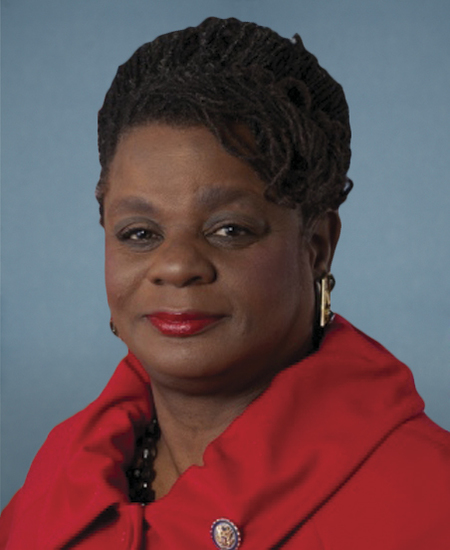
Rep. Gwen Moore
Sponsored bills
Electric Bicycle Incentive Kickstart for the Environment Act or the E-BIKE Act This bill allows a refundable tax credit for 30% of the cost of a qualified electric bicycle. The credit is limited to $1,500 per taxpayer less all credits allowed for the two preceding taxable years. A qualified electric bicycle is a two-wheeled vehicle that is, among other things, equipped with an electric motor of less than 750 watts that is capable of propelling such vehicle.
"Six Triple Eight" Congressional Gold Medal Act of 2021 This bill directs the Speaker of the House of Representatives and the President pro tempore of the Senate to arrange for the award of a Congressional Gold Medal in honor of the women of the 6888th Central Postal Directory Battalion (commonly known as the Six Triple Eight) in recognition of their pioneering military service, devotion to duty, and contributions to increase the morale of personnel stationed in the European theater of operations during World War II. The medal shall be given to the Smithsonian Institution and made available for display and research.
This bill establishes programs and requires research to diversify the perinatal workforce and advance respectful maternal care delivery models. Specifically, the Department of Health and Human Services (HHS) must award grants to education and training programs to grow and diversify the professions that make up the perinatal workforce. HHS must also disseminate guidance on respectful maternal care delivery. This guidance must cover, among other topics, recruiting and retaining maternity care providers from diverse backgrounds and incorporating trained midwives and other perinatal health workers into maternity care teams. In addition, the National Institutes of Health must study best practices for culturally congruent maternity care. This is care that is in agreement with the preferred cultural values, beliefs, languages, worldview, and practices of health care consumers and other stakeholders. The Government Accountability Office must also report on certain aspects of perinatal health care professions. The report must focus on barriers to entering those professions for low-income and minority women.
Protecting Moms and Babies Against Climate Change Act This bill establishes grants and directs other activities to address health risks associated with climate change, particularly for members of racial and ethnic minority groups, pregnant or postpartum individuals, and children younger than age three. Specifically, the Department of Health and Human Services (HHS) must establish a program to award grants to partnerships of community-based organizations and other entities to identify and address climate-change-related risks to these individuals at a county level. HHS must also establish a program to award grants to health professional schools and training programs to integrate training on identifying risks associated with climate change for patients, with a focus on those intending to become pregnant, in curricula and continuing education programs. In addition, the National Institutes of Health (NIH) must establish the Consortium on Birth and Climate Change Research. The consortium must coordinate research on climate-change-related risks conducted and supported by various NIH institutes and offices. The Centers for Disease Control and Prevention must also develop a strategy to identify areas where there is a high risk of adverse maternal and infant health outcomes due to climate change.
Moms Matter Act This bill establishes two grant programs to address maternal mental health conditions and substance use disorders, with a focus on racial and ethnic minority groups. First, the Substance Abuse and Mental Health Services Administration must award grants for maternal behavioral health services. Eligible grantees include state, tribal, and local governments; health care providers; and organizations that serve pregnant and postpartum individuals. Second, the Department of Health and Human Services may award grants to grow and diversify the maternal mental and behavioral health workforce by establishing or expanding schools and training programs.
Horse Transportation Safety Act of 20 21 This bill prohibits a person from transporting a horse in interstate commerce in a motor vehicle (except a vehicle operated exclusively on rail or rails) containing two or more levels stacked on top of one another. The bill prescribes civil penalties for knowing violations of such prohibition.
Tech to Save Moms Act This bill supports the use of technology to improve, and address disparities in, maternal health outcomes. Specifically, the Center for Medicare and Medicaid Innovation may test telehealth models to screen and treat common pregnancy-related complications for Medicaid enrollees. In addition, the Department of Health and Human Services must award grants to evaluate and expand the use of technology-enabled collaborative learning models by entities that provide services to pregnant and postpartum individuals in medically underserved areas or from certain populations, and reduce racial and ethnic disparities in maternal health outcomes by increasing access to digital tools. The National Academies of Sciences, Engineering, and Medicine must also study the use of technology in maternal health care.
Medicaid Reentry Act of 2021 This bill allows Medicaid payment for medical services furnished to an incarcerated individual during the 30-day period preceding the individual's release. The Medicaid and Children's Health Insurance Program (CHIP) Payment and Access Commission must report on specified information relating to the accessibility and quality of health care for incarcerated individuals, including the impact of the bill's changes.
Innovative Maternal Payment And Coverage To Save Moms Act or the IMPACT to Save Moms Act This bill requires the Centers for Medicare & Medicaid Services to establish the Perinatal Care Alternative Payment Model Demonstration Project to allow states to test payment models for maternity care, including postpartum care, under Medicaid and the Children's Health Insurance Program (CHIP). Additionally, the Medicaid and CHIP Payment and Access Commission must report on specified information relating to the continuity of coverage for pregnant and postpartum women under Medicaid and CHIP.