

Family and Medical Insurance Leave Act or the FAMILY Act This bill entitles every employee to a family and medical leave insurance (FMLI) monthly benefit payment of two-thirds of the employee's regular pay, limited to a maximum of $4,000, for not more than 60 days of qualified caregiving. The bill establishes the Office of Paid Family and Medical Leave within the Social Security Administration to administer the FMLI program. An FMLI benefit payment must be coordinated with any periodic benefits received under a state or local temporary disability insurance or family leave program. The bill imposes a tax on employers, employees, and self-employed individuals to fund FMLI benefits. It also establishes the Federal Family and Medical Leave Insurance Trust Fund to hold tax revenues.
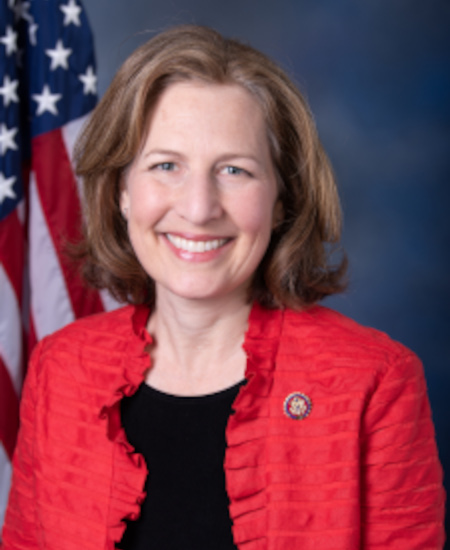
Rep. Kim Schrier
Sponsored bills
Community Immunity During COVID-19 Act of 2021 This bill requires the Centers for Disease Control and Prevention (CDC) to award grants to health departments to increase rates of recommended immunizations during the COVID-19 (i.e., coronavirus disease 2019) public health emergency. The CDC must also develop, in consultation with specified entities, guidance for health care providers on counseling patients about COVID-19 vaccines.
Aviation Manufacturing Jobs Protection Act of 202 1 This bill makes available payroll assistance to eligible aviation employers impacted by the COVID-19 (i.e., coronavirus disease 2019) public health emergency. Specifically, aviation employers demonstrating at least a 15% decline in revenues and economic conditions that justify assistance may enter an agreement with the Secretary of the Treasury to receive up to 50% of the amount of total compensation for the 25% of its workforces most at risk of permanent reduction or furlough, excluding senior executive and highly-compensated employees. Assistance under this program is available through April 30, 2023, and Treasury must establish an application process and minimum eligibility requirements for participation in the program not later than 10 days after the enactment of this bill.
Health Care Affordability Act of 2021 This bill revises the tax credit for health care premium assistance to expand the eligibility of low-income taxpayers for such credit and reduce the cost of health care premiums.
USPS Fairness Act This bill repeals the requirement that the U.S. Postal Service annually prepay future retirement health benefits.
Stop COVID-19 Test Surprise Medical Bills Act of 2021 This bill modifies provisions requiring health insurance plans to cover COVID-19 (i.e., coronavirus disease 2019) diagnostic testing services at no cost, without prior authorization, and without medical management requirements. The bill specifies that a plan may not make determinations about the circumstances surrounding individuals' tests, such as why they sought testing or whether they showed symptoms of COVID-19. The bill also specifies that plans may encourage individuals to obtain tests from lower priced providers as long as such efforts do not delay, or impede access to, testing. The bill also requires the Department of Health and Human Services (HHS) to survey and report on the cash prices of testing services and the compliance of providers with the requirement to publish such prices. Additionally, HHS, jointly with the Department of the Treasury and the Department of Labor, must issue guidance clarifying the process for submitting claims for testing services.
Protecting Access to Post-COVID-19 Telehealth Act of 2021 This bill makes permanent several telehealth flexibilities that were initially authorized during the public health emergency relating to COVID-19 (i.e., coronavirus disease 2019), particularly with respect to Medicare coverage of telehealth services. For example, the bill permanently allows federally qualified health centers and rural health clinics to serve as the distant site (i.e., the location of the health care practitioner) for telehealth services under Medicare. Payment must be made in the same manner as for non-telehealth services, rather than in accordance with a separate methodology determined by the Centers for Medicare & Medicaid Services (CMS). The bill also permanently allows beneficiaries to receive Medicare telehealth services at any site, regardless of type or location, and grants the CMS general authority to waive any other requirements during any emergency period.
Global Health, Empowerment and Rights Act This bill establishes that a foreign nongovernmental organization shall not be disqualified from receiving certain U.S. international development assistance solely because the organization provides medical services using non-U.S. government funds if the medical services are legal in both the United States and the country in which they are being provided. Such foreign organizations shall not be subject to requirements relating to their use of non-U.S. funds for advocacy or lobbying activities, other than those that apply to U.S. nongovernmental organizations. Current U.S. policy prohibits various foreign assistance from going to a foreign nongovernmental organization unless it agrees to not perform or actively promote abortions.
Special Districts Provide Essential Services Act This bill makes special districts eligible for the Coronavirus Relief Fund and the Municipal Liquidity Facility program. Specifically, the bill makes special districts eligible for payments from amounts paid to states from any new appropriations to the fund. A special district must submit a request for payment to the state with information demonstrating that the special district has experienced or is likely to experience during the COVID-19 (i.e., coronavirus disease 2019) emergency reduced revenue or operational funding derived from provided services, taxes, fees, or other sources of revenue; reduced indirect funding from the federal government, the state, or a unit of general government below the state level; or as a result of the COVID-19 emergency, increased expenditures necessary to continue operations. The Board of Governors of the Federal Reserve System shall include special districts as eligible issuers in the Municipal Liquidity Facility program, which was created in response to the COVID-19 emergency to buy municipal securities.
Raise the Wage Act of 2021 This bill increases the federal minimum wage for regular employees over a 5-year period, for tipped employees, and for newly hired employees who are less than 20 years old. The bill sets forth a schedule of annual increases in the federal minimum wage for individuals with disabilities. The Department of Labor shall no longer issue special certificates for the payment of subminimum wages to such individuals after the final wage increase under this bill for such individuals takes effect. Labor shall provide, upon request, technical assistance and information to employers to (1) help them transition their practices to comply with wage increases and other requirements under this bill for individuals with disabilities, and (2) ensure continuing employment opportunities for such individuals. The bill eliminates the separate minimum wage requirements for tipped, newly hired, and disabled employees. After a specified period, these employees shall be paid the same minimum wage as regular employees. Labor must publish any increase in the minimum wage in the Federal Register and on its website 60 days before it takes effect.