

Small Business Succession Planning Act This bill requires the Small Business Administration (SBA) to establish a program to assist small businesses with developing and implementing business succession plans. The bill also provides a tax credit for a business that establishes a succession plan or that successfully carries out such a plan. A business succession plan identifies who will assume the ownership responsibilities of a small business upon the owner's death or retirement, and it includes an operational description of the small business to ensure the continuation of operations. To carry out the program, the SBA must develop and make publicly available a toolkit to assist small business with succession planning. Further, it must train resource partners on the toolkit, educate small businesses about the program, and ensure that each SBA district office and each resource partner employs someone to counsel small businesses on using the toolkit.
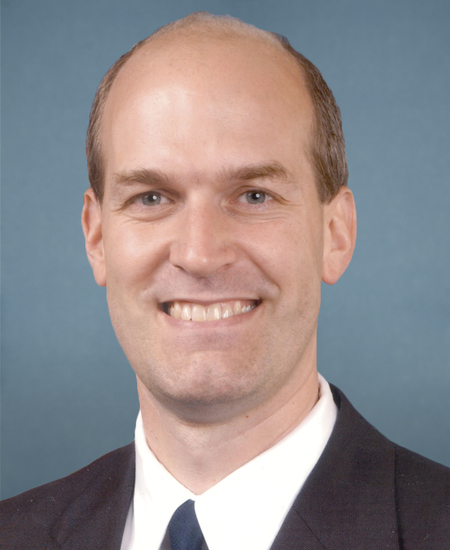
Rep. Rick Larsen
Sponsored bills
Electric Bicycle Incentive Kickstart for the Environment Act or the E-BIKE Act This bill allows a refundable tax credit for 30% of the cost of a qualified electric bicycle. The credit is limited to $1,500 per taxpayer less all credits allowed for the two preceding taxable years. A qualified electric bicycle is a two-wheeled vehicle that is, among other things, equipped with an electric motor of less than 750 watts that is capable of propelling such vehicle.
"Six Triple Eight" Congressional Gold Medal Act of 2021 This bill directs the Speaker of the House of Representatives and the President pro tempore of the Senate to arrange for the award of a Congressional Gold Medal in honor of the women of the 6888th Central Postal Directory Battalion (commonly known as the Six Triple Eight) in recognition of their pioneering military service, devotion to duty, and contributions to increase the morale of personnel stationed in the European theater of operations during World War II. The medal shall be given to the Smithsonian Institution and made available for display and research.
American Family Act of 2021 This bill modifies the child tax credit to (1) make the credit fully refundable, (2) increase the amount of the credit and allow an additional credit for children who are under six years of age, (3) require the amount of the credit to be adjusted annually for inflation, and (4) require the Department of the Treasury to establish a program for making advance payments of the credit on a monthly basis.
Gym Mitigation and Survival Act of 2021 or the GYMS Act of 2021 This bill establishes a grant program to provide economic support to eligible fitness facilities in response to the COVID-19 (i.e., coronavirus disease 2019) pandemic. Specifically, the bill authorizes the Small Business Administration to make initial and supplemental grants to privately owned fitness facilities that primarily provide health or fitness services and that do not offer golf, hunting, sailing, or riding facilities. The total amount of grant funds for a recipient may not exceed $25 million, and the recipient must use these funds for payroll costs, rent or mortgage obligations, and other ordinary and necessary business expenses.
Family and Medical Insurance Leave Act or the FAMILY Act This bill entitles every employee to a family and medical leave insurance (FMLI) monthly benefit payment of two-thirds of the employee's regular pay, limited to a maximum of $4,000, for not more than 60 days of qualified caregiving. The bill establishes the Office of Paid Family and Medical Leave within the Social Security Administration to administer the FMLI program. An FMLI benefit payment must be coordinated with any periodic benefits received under a state or local temporary disability insurance or family leave program. The bill imposes a tax on employers, employees, and self-employed individuals to fund FMLI benefits. It also establishes the Federal Family and Medical Leave Insurance Trust Fund to hold tax revenues.
Scientific Integrity Act This bill revises provisions regarding the release of scientific research results by federal agencies. Each agency that funds, conducts, or oversees scientific research must (1) adopt and enforce a scientific integrity policy that includes requirements such as that scientific conclusions are not based on political considerations, and (2) submit such policy to the Office of Science and Technology Policy (OSTP) for approval. Each agency must make such policy available to the public and submit such policy to Congress. Agencies and the OSTP must periodically review the policies. The Government Accountability Office shall review implementation of the policies. Each agency shall (1) appoint a Scientific Integrity Officer, (2) establish a process for dispute resolution consistent with the scientific integrity policy, and (3) establish a specified training program for current and new employees.
Aviation Manufacturing Jobs Protection Act of 202 1 This bill makes available payroll assistance to eligible aviation employers impacted by the COVID-19 (i.e., coronavirus disease 2019) public health emergency. Specifically, aviation employers demonstrating at least a 15% decline in revenues and economic conditions that justify assistance may enter an agreement with the Secretary of the Treasury to receive up to 50% of the amount of total compensation for the 25% of its workforces most at risk of permanent reduction or furlough, excluding senior executive and highly-compensated employees. Assistance under this program is available through April 30, 2023, and Treasury must establish an application process and minimum eligibility requirements for participation in the program not later than 10 days after the enactment of this bill.
Transportation Alternatives Enhancements Act This bill revises the surface transportation block grant program (Transportation Alternatives Program) of the Department of Transportation (DOT). The bill requires DOT to set aside 10% of apportioned funds under the program each fiscal year for states, and allows states to allocate funds to counties, metropolitan planning organizations (MPOs), regional transportation planning organizations, and local governments. Funds may be used for certain projects or activities, including the construction, planning, and design of infrastructure-related projects and systems that will provide safe routes for nondrivers, such as children, older adults, and individuals with disabilities, to access daily needs. MPOs that serve an urbanized area with a population of 200,000 or fewer are eligible for funding under the program. The bill also adjusts funding limits for states to improve the ability of applicants to access funding in an efficient and expeditious manner.
Remote Seafood Employee Meals Tax Parity Act This bill provides that the 50% limitation on the tax deduction for business meals shall not apply to meals provided on certain fishing vessels or at certain fish processing facilities.