

Washington, D.C. Admission Act This bill provides for the establishment of the State of Washington, Douglass Commonwealth, and its admission into the United States. The state is composed of most of the territory of the District of Columbia (DC), excluding a specified area that encompasses the U.S. Capitol, the White House, the U.S. Supreme Court building, federal monuments, and federal office buildings adjacent to the National Mall and the U.S. Capitol. The excluded territory shall be known as the Capital and serve as the seat of the government of the United States, as provided for in Article I of the Constitution. The state may not impose taxes on federal property except as Congress permits. The bill provides for the DC Mayor to issue a proclamation for the first elections to Congress of two Senators and one Representative of the state. The bill eliminates the office of Delegate to the House of Representatives. The bill applies current DC laws to the state. DC judicial proceedings and contractual obligations shall continue under the state’s authority. The bill also provides for specified federal obligations to transfer to the state upon its certification that it has funds and laws in place to assume the obligations. These include maintaining a retirement fund for judges and operating public defender services. The bill establishes a commission that is generally comprised of members who are appointed by DC and federal government officials to advise on an orderly transition to statehood.
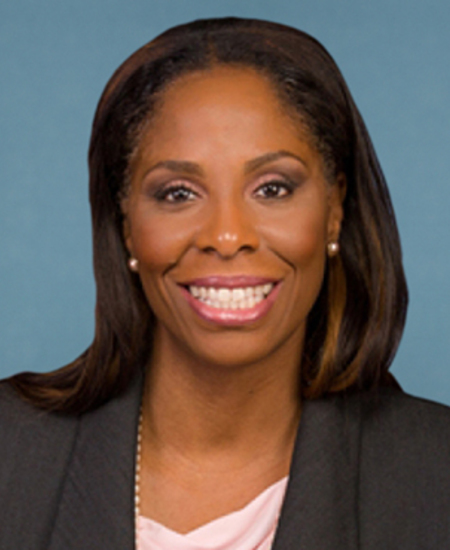
Rep. Stacey E. Plaskett
Sponsored bills
Maddy summaryThe Treat and Reduce Obesity Act of 2023 expands Medicare coverage for obesity treatment by allowing a wider range of healthcare providers - including nurse practitioners, dietitians, psychologists, and community-based counseling programs - to deliver intensive behavioral therapy for obesity, provided they coordinate with primary care providers. It also adds Medicare Part D coverage for medications used to treat obesity or for weight loss management in overweight individuals with related health conditions like diabetes or high blood pressure. These changes directly affect Medicare beneficiaries, particularly older adults (65+), who face higher obesity rates and associated costs, including $50 billion annually in Medicare spending for obesity-related care. The bill requires annual reports to Congress on implementation to improve coordination of obesity care across federal health programs.
Maddy summaryThis bill, HR 1097 (Everett Alvarez, Jr. Congressional Gold Medal Act of 2023), authorizes the award of a Congressional Gold Medal to Everett Alvarez, Jr., in recognition of his service as a U.S. Navy pilot and Vietnam War prisoner of war. It directly honors Alvarez, who was the first U.S. pilot shot down in the Vietnam War, spent over 8.5 years in captivity, and later served in the Peace Corps and Veterans Administration. The bill’s key mechanism is directing the U.S. Mint to strike a gold medal bearing his name and image, with bronze duplicates available for sale to cover costs. It does not create new policies or affect any group beyond the honoree.
Maddy summaryHR 10503, the REVIVE VI Act, exempts certain income earned by Virgin Islands corporations from U.S. tax on foreign income (GILTI). It directly affects Virgin Islands corporations providing services within the territory and specific U.S. shareholders (individuals, trusts, estates, or certain pre-2023-owned C corporations). The bill creates a new tax exemption for "qualified Virgin Islands services income," defined as compensation for labor performed in the Virgin Islands by a local corporation, attributable to services from within the territory, and connected to a Virgin Islands business. This change modifies the Internal Revenue Code to exclude this specific income from global intangible low-taxed income calculations for eligible entities.
Maddy summaryThis bill amends existing federal laws to authorize the USDA Forest Service to fund native seed and seedling programs. It allows the agency to provide contracts, grants, or agreements to state forestry agencies, local nonprofits, and universities for collecting native seeds and producing seedlings. These funds will support habitat restoration projects by enabling the collection of native seeds and the production of seedlings for replanting degraded lands. The key mechanism is creating a formal process within current law to streamline these conservation activities, directly affecting state and local conservation groups working on ecosystem recovery.
Maddy summaryThis bill extends preferential duty-free access for Haitian goods under the Caribbean Basin Economic Recovery Act. It changes the program's duration from 16 to 23 succeeding one-year periods, moving the end date from 2025 to 2030. The key mechanism adjusts specific timeframes in the law to maintain tariff benefits for Haitian exports. This directly affects Haitian exporters and U.S. importers of Haitian products by preserving their current duty-free status for longer. The policy change is a straightforward extension of existing trade benefits without altering eligibility criteria.
Maddy summaryHR 6790 establishes National Institutes of Health centers to advance research, early detection, and public awareness of rare kidney diseases, with a focus on rural and underserved communities. It mandates a federal study on genetic testing barriers, treatment patterns, and public awareness for rare kidney diseases affecting disproportionately impacted populations, including barriers to insurance coverage and access to specialists. The bill also funds nephrology training programs to increase specialists serving these communities and requires experiments to delay or prevent the need for dialysis and transplants. Total funding of $7 million is authorized for fiscal years 2024-2028 to support these research, education, and early intervention efforts.
Maddy summaryThis bill extends federal welfare program eligibility to the Northern Mariana Islands (CNMI), granting its residents access to the same family assistance benefits previously available only to U.S. states. It authorizes an annual federal grant of $1.631 million to the CNMI for its family assistance program, requiring the territory to submit a 3-year plan outlining benefit delivery, avoiding duplicate aid, and promoting employment opportunities for recipients. The bill also adjusts matching grant formulas to include the CNMI ($2.131 million annually) and provides $5 million for initial child support program development. These changes directly affect CNMI residents and its government by integrating the territory into federal welfare administration under existing Social Security Act provisions.
Maddy summaryThis bill directs the Architect of the Capitol to create a time capsule for the U.S. Semiquincentennial (250th anniversary of independence). Congressional leadership will determine its contents, including representative materials about the Semiquincentennial, copies of key legislative milestones, and a message to future Congress. The capsule will be sealed on the Capitol's West Lawn by July 4, 2026, and remain unopened until July 4, 2276, when it will be presented to the 244th Congress for their consideration. The bill is procedural and does not affect citizens or change existing laws.
Maddy summaryThis bill increases funding for child care programs by authorizing $10 billion for fiscal year 2024 and subsequent years with annual increases tied to inflation. It creates new $5 billion annual grants specifically to improve child care workforce, supply, quality, and access in underserved areas, requiring states, territories, and Indian Tribes to use these funds for specific activities like workforce development, facility improvements, and expanding services for vulnerable children. The bill mandates recipients to prioritize services for dual language learners, children with disabilities, rural communities, and low-income families, while requiring detailed reporting on how funds are used and their impact on child care access and quality. It directly affects low-income families relying on child care assistance, child care providers, and the states and tribes administering these programs. The bill takes effect on October 1, 2023.