

Maddy summaryThis bill would restrict the Department of Energy from providing financial assistance to regulated investor-owned electric utilities that raise residential electricity rates above the level set on January 1, 2026. For the first year after enactment, the Secretary of Energy cannot give aid to any utility that increases rates for home customers. During the following two years, financial assistance is only allowed if the utility keeps compensation for its five highest-paid employees at or below 2026 levels and reduces their pay twice as much as the rate increase. The bill also requires utilities to submit reports to the Department of Energy detailing employee compensation changes if they receive funding.
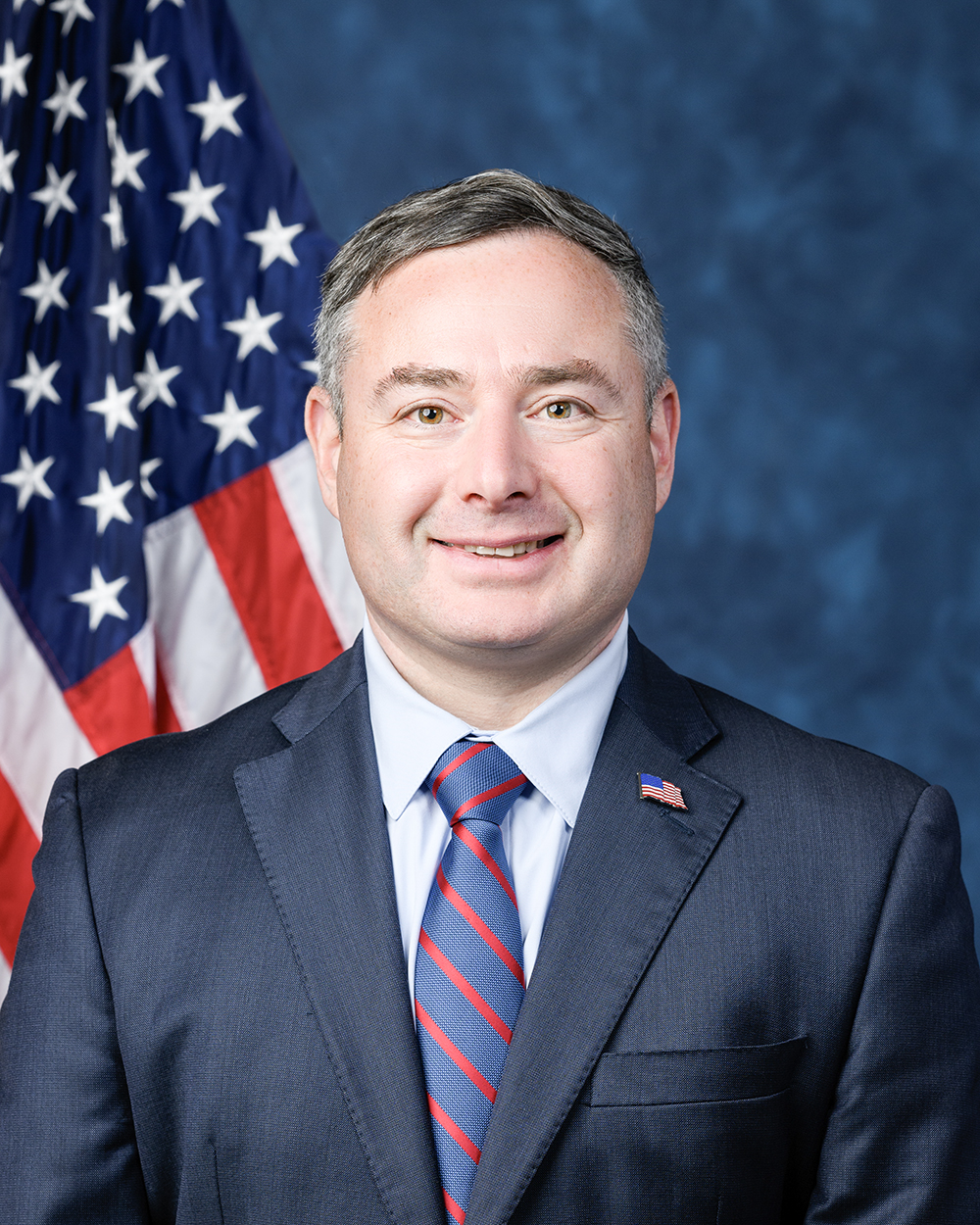
Rep. Eugene Simon Vindman
Sponsored bills
Maddy summaryThe Gas Prices Relief Act of 2026 would temporarily suspend federal gasoline taxes and the Leaking Underground Storage Tank Trust Fund financing rate from its enactment until October 1, 2026, aiming to reduce costs for consumers who purchase gasoline. Specifically, it sets the federal excise tax on gasoline to zero during this period. To prevent funding shortfalls, the bill directs the Treasury to transfer equivalent amounts from the general fund to the Highway Trust Fund and the Leaking Underground Storage Tank Trust Fund. It also includes a policy that the tax reduction should be passed on to consumers and empowers the Secretary of the Treasury to ensure this, potentially through monetary penalties for producers and dealers who do not reduce prices.
Maddy summaryThis bill, titled the Taiwan Energy Security and Anti-Embargo Act of 2026, aims to enhance Taiwan's energy security by increasing U.S. liquefied natural gas exports to Taiwan and improving the resilience of its energy infrastructure. The legislation authorizes U.S. government agencies to coordinate with Taiwan on energy projects, provide technical assistance for cybersecurity and physical security improvements, and establish a joint U.S.-Taiwan Energy Security Center. It also directs an assessment of redirecting U.S. LNG exports currently sent to China to Taiwan and encourages Taiwan to maintain and expand its nuclear power capabilities. Additionally, the bill provides for insurance on vessels transporting critical goods to Taiwan and clarifies that the measures do not alter the U.S. One China policy.
Maddy summaryThis bill would require infant formula manufacturers to conduct standardized testing for specific pathogens and microorganisms in both their facilities and finished products. It mandates that companies report positive test results to the FDA within one business day and retain records of these findings for inspections. The legislation also requires the FDA to notify congressional committees within one business day of receiving positive test results or issuing certain inspection classifications. Additionally, the bill establishes clear inspection standards that apply to all infant formula products regardless of where they are made.
Maddy summaryHRES 1107 is a House resolution urging the President to issue a proclamation flying the U.S. flag at half-staff to honor Rev. Jesse Jackson. The resolution recognizes his civil rights leadership, including founding the Rainbow PUSH Coalition and his presidential campaigns in 1984 and 1988, which advanced racial equality and economic justice. This symbolic gesture directly affects the President (as the one who would issue the proclamation) and the public, who would observe the flag at half-staff.
Maddy summaryThe America's Living Library Act establishes a 10-year pilot program within the Department of the Interior to collect and sequence the whole genomes of plants, animals, fungi, and microbes found in up to 25 National Park System units. This program aims to create a publicly available genomic database for scientific research and to store physical samples long-term at the Smithsonian Institution and Department of Agriculture. The bill mandates interagency coordination, Tribal consultation, and includes provisions for expedited data access for U.S.-based artificial intelligence development, while strictly prohibiting the transfer or export of physical samples outside the United States. Significant funding is authorized for these activities from fiscal years 2027 to 2031, directly affecting federal agencies involved in conservation, research, and data management.
Maddy summaryThis bill, known as the Guarantee Access to Arts and Music Education Act of 2026, amends the Elementary and Secondary Education Act to expand federal funding for arts and music programs in public schools. It directly affects school districts and educators by allowing Title I funds to support sequential, standards-based instruction in dance, media arts, theater, visual arts, and music. The legislation requires these programs to be taught by certified educators and aligns them with state academic standards to ensure quality instruction. Additionally, the bill allows targeted assistance schools to use federal funds for supplies, professional development, and equipment needed for arts and music education.
Maddy summaryThis bill, the PrEP Access and Coverage Act of 2026, requires most health insurance plans to cover HIV prevention medication without charging patients any out-of-pocket costs. It directly affects people with private insurance, government health programs like Medicare and Medicaid, military health care, and the Indian Health Service. The law mandates that insurance companies cannot require pre-approval for these medications, cannot charge deductibles or copayments for them, and cannot deny or charge higher premiums for life, disability, or long-term care insurance based on someone taking HIV prevention medication. The bill also creates a new public education campaign to increase awareness about HIV prevention options and provides federal funding to states and community organizations to expand access to these services.
Maddy summaryThe INCREASE Housing Affordability Act creates a new tax credit for converting commercial buildings (like offices) into residential housing. Property owners who convert eligible buildings can claim a tax credit equal to 15% of qualified conversion costs, with limits of $200,000 per residential unit or $10 million per building. The bill also provides bonus credits for projects with rent-restricted units for lower-income residents (10-20% more credit) and for paying prevailing wages (15% more credit). To qualify, buildings must have been nonresidential for at least 15 years and undergo substantial conversion (with expenditures exceeding adjusted basis or $15,000).
Maddy summaryThis bill, known as the Direct File Act of 2026, would establish a government-run online system allowing taxpayers to prepare and file their individual income tax returns for free. The legislation prohibits the Treasury Department from entering into agreements that restrict its ability to provide tax preparation or filing services, and it voids any existing contracts with such restrictions. The program would use IRS data to simplify filing, include customer support, be available in multiple languages, and allow users to file even if they are not required to. It also enables taxpayers in participating states to file state and local returns alongside their federal returns, with funding provided to states that meet certain standards.