

Maddy summaryHR 5526, the Biosimilar Red Tape Elimination Act, streamlines the U.S. Food and Drug Administration’s (FDA) process for approving biosimilar drugs that can be used interchangeably with brand-name biologic medications. It establishes a 60-day transition period after enactment to clarify when biosimilars are deemed "interchangeable" with reference drugs, preserving existing exclusivity periods for products licensed before the law’s passage. This affects pharmaceutical manufacturers developing biosimilars, the FDA (which must update its guidance within 18 months), and healthcare systems seeking lower-cost treatment options. The bill removes redundant language from existing laws and ensures the FDA’s approval standards for biosimilars remain unchanged, focusing on regulatory clarity rather than altering drug safety or efficacy requirements.
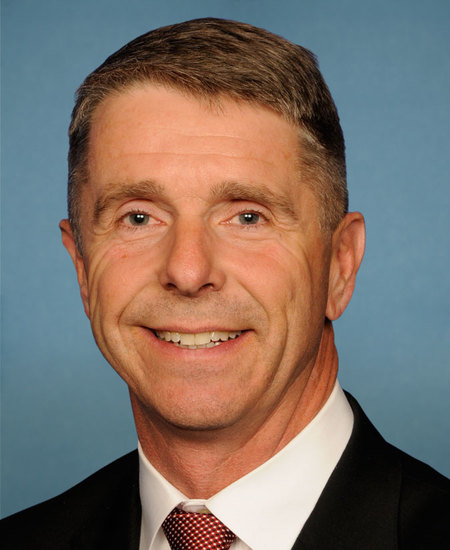
Rep. Robert J. Wittman
Sponsored bills
Maddy summaryThis bill requires health plans and insurers to create a clear, timely process for patients or doctors to request exceptions when step therapy protocols (which force patients to try cheaper drugs first) might harm them. It mandates approval for exceptions in six specific cases, such as when prior treatments failed, delaying care risks severe harm, or the required drug causes adverse reactions. Plans must respond within 72 hours (24 hours for emergencies) and cover the requested drug for at least one year if approved. Additionally, health plans must report annual data on exception requests, approvals, denials, and reasons to the government for transparency.
Maddy summaryThe GRID Power Act requires the Federal Energy Regulatory Commission (FERC) to create new rules within 180 days that streamline the process for connecting new "dispatchable power" projects - like natural gas plants or battery storage - to the electricity grid. It allows transmission providers (such as utilities and grid operators) to propose prioritizing these projects in the interconnection queue if they demonstrate how the projects improve grid reliability or resilience, with public input required before submission. FERC must review such proposals within 60 days and approve or deny them, while also mandating regular reports on grid conditions and periodic rule updates every five years to address evolving challenges. This bill directly affects transmission providers and new power project developers by accelerating connections for reliable energy sources that help prevent blackouts.
Maddy summaryHRES 744 is a non-binding House resolution supporting the designation of September 21-27, 2025, as "Gold Star Families Remembrance Week." It honors families who lost members in military service (Gold Star Families) and families of veterans, recognizing their sacrifices. The resolution encourages Americans to observe the week through community service and by celebrating the lives of those who died defending the U.S. It does not create new laws or policies but formally recognizes these families annually. This is a commemorative measure, not a legislative change.
Maddy summaryHRES 742 is a ceremonial resolution recognizing the 250th anniversary of the U.S. Navy's founding on October 13, 1775, when the Continental Congress established the first U.S. naval force. It formally acknowledges the Navy's historical role in protecting American interests and its current global presence (over 290 ships, 3,700 aircraft, and 500,000 personnel). The resolution expresses appreciation for Navy personnel past and present and reaffirms congressional support for the Navy as a key element of national defense and global stability. As a commemorative resolution, it has no policy or funding impact - it serves only to honor the Navy's legacy.
Maddy summaryHR 5428 creates a federal grant program to support medical education for students planning to work in underserved areas. It provides $75 million annually (2026-2028) to accredited public medical schools in states with severe primary care physician shortages, prioritizing schools in states with multiple Indian Tribes and partnerships with tribal organizations or health centers. Grantees must use funds for community-based training, developing primary care programs emphasizing Tribal/rural underserved communities, faculty development, scholarships, and tracking graduates' practice locations. The bill directly affects medical schools and future physicians committed to serving Tribal, rural, or medically underserved communities after residency.
Maddy summaryHR 5441, the Fusion Advanced Manufacturing Parity Act, provides a 25% tax credit for manufacturers selling specialized fusion energy components. It directly affects companies producing items like high-temperature superconducting magnets, vacuum vessels, cooling systems, and fusion targets used in fusion energy machines. The credit phases out gradually - 75% in 2032, 50% in 2033, 25% in 2034, and ends after 2034 - and applies to components produced and sold after December 31, 2025. The bill defines these components through detailed technical specifications to clarify eligible products.
Maddy summaryHRES 723 is a ceremonial resolution recognizing the 180th anniversary of the United States Naval Academy, established on October 10, 2025. It formally commemorates the Academy's founding, historical contributions, and legacy of producing naval and marine leadership. The resolution highlights the Academy's role in educating graduates who have served in major conflicts, earned military honors, and held significant national leadership positions. As a symbolic gesture with no policy changes or direct impact on constituents, it serves solely to honor the institution's history and ongoing mission.
Maddy summaryHR 5401, the Pay Our Troops Act of 2026, ensures military personnel, civilian Defense workers, and supporting contractors receive pay during government funding gaps in fiscal year 2026. It appropriates emergency funds for active-duty service members, reserves, and their supporting personnel (including Coast Guard staff under DHS) if regular appropriations aren't enacted by the end of the fiscal year. The bill provides necessary pay and allowances during any period when full-year funding is unavailable, covering both active service and support roles. Funding expires when regular appropriations are passed, a funding resolution is enacted, or January 1, 2027, whichever comes first. This is a procedural measure to prevent pay delays for military and support staff during fiscal year 2026 funding lapses.
Maddy summaryHR 1107, the *Protecting Veteran Access to Telemedicine Services Act of 2025*, allows Department of Veterans Affairs (VA) health professionals to prescribe and dispense medications regulated under federal law (like opioids or stimulants) via telemedicine without requiring an in-person medical exam first. This directly affects veterans receiving VA care and VA-employed health professionals who provide telemedicine services. The bill requires providers to hold a valid state license, act within their professional scope, and ensure prescriptions serve a legitimate medical purpose. It does not change existing federal drug laws but streamlines access to controlled medications for veterans through telehealth, particularly benefiting those in rural or remote areas.