

No Sanctuary for Criminals Act This bill addresses issues related to immigration enforcement. A government entity may not prohibit its personnel or another government entity from cooperating with federal immigration enforcement efforts or making inquiries about an individual's immigration status. Currently, a government entity is only barred from prohibiting the sharing of immigration-related information with the Department of Homeland Security (DHS). A noncomplying state or local government shall be ineligible for certain grants and assistance related to law enforcement, terrorism, and immigration. DHS may (1) decline to transfer a detained alien to a noncomplying government entity even if that entity has issued a writ or warrant, and (2) issue a detainer if it believes that an individual arrested for any criminal or motor vehicle offense is inadmissible or deportable. DHS may not transfer an alien with a final order of removal to a noncomplying government entity. The bill also allows a victim of certain felonies (including murder and rape) to sue a state or local government entity if that entity had refused to honor an immigration detainer request and released the individual who later committed the crime. Furthermore, the bill (1) expands the categories of offenses requiring mandatory detention, (2) provides immunity for a state or local government entity or official temporarily detaining an alien under federal authority, (3) provides that an alien may be detained without time limitation while removal proceedings are pending, and (4) restricts a detained alien's release on bond.
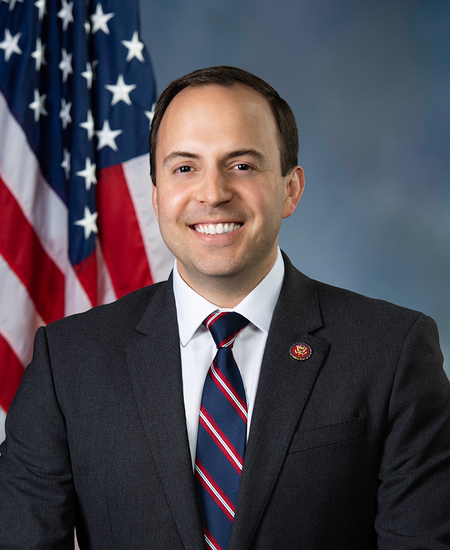
Rep. Lance Gooden
Sponsored bills
Stop Illegal Reentry Act or Kate's Law This bill increases criminal penalties for certain aliens who illegally reenter the United States after removal or exclusion. Generally, an alien who had been denied entry into or removed from the United States and who later enters or attempts to enter the United States without prior approval from the Department of Homeland Security shall be fined, imprisoned for up to five years, or both. Current law requires a fine, imprisonment for up to two years, or both, for such an alien. An alien who had been denied entry or removed three or more times and who later enters or attempts to enter the United States shall be fined, imprisoned for up to 10 years, or both. An alien who was convicted of an aggravated felony or convicted at least two times before removal or departure and who subsequently enters or tries to enter the United States shall be imprisoned at least five years and for up to twenty years, and may also be fined. Currently, there is no minimum term of imprisonment for an alien who reenters after a conviction for an aggravated felony, and there are no criminal penalties for a reentering alien who had been convicted at least two times (other than the penalties for illegal reentry generally).
Protecting America From Spies Act This bill expands the grounds for barring aliens who have engaged in acts relating to espionage or sabotage from entering the United States. Specifically, any alien shall be inadmissible if the alien has engaged in or will engage in an act that (1) violates a U.S. law relating to espionage or sabotage; (2) would violate any U.S. law relating to espionage or sabotage if it occurred in the United States; or (3) violates any U.S. law prohibiting the export of goods, technology, or sensitive information. Currently, an alien shall be inadmissible if the alien seeks to enter the United States to engage in such an action. Furthermore, the bill expands these grounds of inadmissibility and other security-related grounds to cover the spouse or child of the barred alien if the act occurred in the last five years. The bill also modifies the authority of the Department of Justice to waive certain security-related grounds of inadmissibility for an alien applying for a nonimmigrant visa.
Greyhound Protection Act of 2021 This bill modifies the federal criminal statute commonly known as the Wire Act. Currently, the Wire Act contains four prohibitions on the use of a wire transmission facility (e.g., the telephone or internet) for certain gambling activities. All four prohibitions apply to sports gambling. However, there have been conflicting interpretations of the applicability of the prohibitions to nonsports gambling (e.g., state lotteries). This bill amends the Wire Act to expressly state that the statute does not authorize the use of wire communications to gamble on commercial greyhound racing or permit the transport of animals for commercial dog racing or related activities.
Protect and Serve Act of 2021 This bill establishes a new criminal offense for knowingly assaulting a law enforcement officer and causing serious bodily injury (or attempting to do so) in circumstances that affect interstate commerce. It imposes criminal penalties—a prison term, a fine, or both—on a violator.
Back the Blue Act of 2021 This bill establishes new criminal offenses for killing, assaulting, and fleeing to avoid prosecution for killing a judge, law enforcement officer, or public safety officer. Additionally, the bill expands the list of statutory aggravating factors in death penalty determinations to also include the killing or attempted killing of a law enforcement officer, judge, prosecutor, or firefighter or other first responder; broadens the authority of federal law enforcement officers to carry firearms; and limits federal court review of challenges to state court convictions for killing a public safety officer or judge. Finally, it directs the Department of Justice to make grants to law enforcement agencies and nongovernmental organizations to promote trust and improve relations between law enforcement agencies and the communities they serve.
This bill prohibits withholding federal education funds from an otherwise eligible recipient (e.g., educational agencies, schools, and institutions of higher education) because the recipient does not require students or employees to be vaccinated against COVID-19.
Equal Treatment of Public Servants Act of 2021 This bill phases in a new funding formula for determining benefit amounts under the windfall elimination provision (WEP). The WEP reduces Social Security retirement and disability benefits for those who receive pensions for certain non-covered employment. The new formula adjusts an individual's total lifetime earnings based on the proportion of those earnings subject to Social Security payroll taxes. It applies to individuals who (1) become eligible for Social Security benefits after 2061, and (2) have earnings from non-covered service performed in a year after 1977. Beneficiaries who become eligible for benefits between 2023 and 2061 receive the higher of their benefit calculated under the existing WEP or the new formula. In addition, certain beneficiaries currently impacted by the WEP receive an additional payment. The Social Security Administration must include non-covered earnings in Social Security account statements and must study the feasibility of partnering with certain pension systems to address data sharing issues related to non-covered pensions.
Maddy summaryHRES 754 is a non-binding resolution expressing the House of Representatives' opposition to proposed "punitive natural gas taxes" on U.S. businesses, families, and workers. It cites claims that such taxes would raise average energy bills by 17%, reduce GDP by $9 billion, and eliminate 90,000 jobs, while disproportionately harming low-income households. The resolution argues that opposing these taxes supports U.S. energy security, national security, and continued leadership in reducing emissions through domestic natural gas production. As a procedural resolution, it does not create law but formally states the House's position against this policy approach.
This bill prohibits the use of federal funds to require a member of the Armed Forces to receive a COVID-19 vaccination. The bill also prohibits adverse action (e.g., punishment) being taken against a member of the Armed Forces because the member refuses to receive a COVID-19 vaccination.