

Maddy summaryHR 2551, the Military Installation Retail Security Act of 2025, prohibits the U.S. Department of Defense from renewing, extending, or entering into long-term retail contracts with businesses controlled by "covered nations" (nations designated under existing law as security concerns) on military installations in the U.S. It requires retailers to disclose ownership ties to covered nations to the Committee on Foreign Investment in the U.S. (CFIUS), which must assess national security risks within 180 days. The bill allows limited waivers only if essential services for troops' welfare are unavailable elsewhere and security risks are mitigated, with strict reporting requirements. Retailers failing to disclose ownership changes or misrepresenting control face immediate contract termination. This directly affects retailers operating on military bases with potential foreign ties.
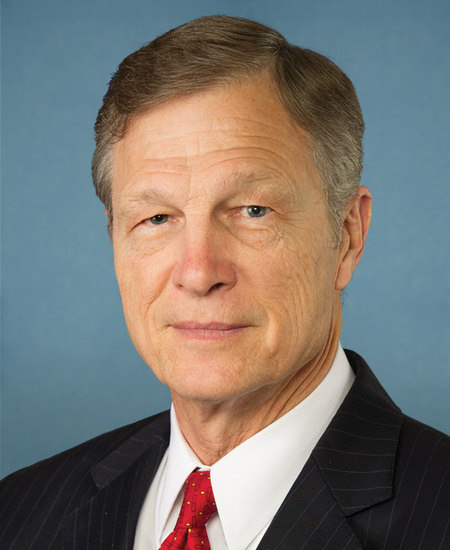
Rep. Brian Babin
Sponsored bills
Maddy summaryHR 2514, the Trucker Bathroom Access Act, requires businesses like warehouses, distribution centers, and shipping facilities (but not small restaurants under 800 sq ft) to allow commercial truck drivers access to their restrooms when delivering goods or waiting to load cargo. It also mandates that port terminals provide sufficient restrooms for drayage truck operators (drivers of large trucks moving cargo at ports) in safe, accessible areas, including parking spots for vehicle access. The bill does not require businesses to make physical restroom changes and exempts locations where access would create health, safety, or security risks. It defines "covered drivers" as those operating commercial vehicles regulated by the Department of Transportation and "covered restrooms" as those safely accessible to drivers. This law directly affects truck drivers and the businesses they interact with during deliveries or port operations.
Maddy summaryThe Free Speech Fairness Act (HR 2501) would amend tax law to allow 501(c)(3) organizations, such as charities and educational nonprofits, to make political campaign statements as part of their regular activities without risking their tax-exempt status. The bill specifies that these statements must be made in the ordinary course of the organization's exempt purpose and result in only minimal additional costs. This change clarifies that routine political commentary by these groups does not violate their tax-exempt status under current rules. The provision would apply to tax years beginning after the bill's enactment.
Maddy summaryHRES 262 establishes a House Select Committee focused solely on investigating Mexican drug cartels and their international networks, including U.S. and Mexican government efforts to address them. The committee has no legislative authority but may hold public hearings, conduct investigations, and issue policy recommendations by December 2025, with final reports due by December 2026. This procedural resolution affects only House committee structure and processes, not direct policy changes for the public or government agencies.
Maddy summaryThe SHORT Act (HR 2395) redefines federal firearm definitions to exclude antique and collector firearms from being classified as firearms, and removes distinctions between short-barreled rifles and shotguns in federal regulations. It prevents state laws from imposing taxes or registration requirements on short-barreled rifles and shotguns, requiring state rules to align with federal compliance instead. The bill also mandates the federal government to destroy specific records related to these firearms within one year of enactment.
Maddy summaryThe Freedom from Unfair Gun Taxes Act of 2025 would prohibit states and local governments from imposing taxes on the sale of firearms, ammunition, or firearm parts during interstate or foreign commerce. This bill directly affects state tax policies and manufacturers or dealers selling these items across state lines. It explicitly states that the bill does not change the existing federal tax on firearms and ammunition that funds wildlife conservation programs. The key provision bans state-level taxes for these sales in interstate transactions while preserving current federal funding mechanisms.
Fairness for High-Skilled Americans Act of 2025 This bill eliminates the Optional Practical Training Program or any successor program, unless Congress expressly authorizes such a program. (The program provides an F-1 student visa holder temporary employment authorization before or after completion of the student's studies, or both.)
Maddy summaryHRES 224 is a symbolic resolution (not a binding bill) expressing support for recognizing "Detransition Awareness Day." It urges the development of policies ensuring mental health services for people experiencing discomfort with their sex, advocating for informed consent processes about gender-affirming medical procedures, and extending medical malpractice statute of limitations. The resolution also calls for removing damage caps in malpractice claims related to such procedures and requests the Department of Health and Human Services review care guidelines. It has no legal effect but aims to foster public understanding of detransition experiences and promote ethical medical standards.
Maddy summaryHR 2100, the "No Bailouts for Reparations Act," prohibits the U.S. government from providing any federal loans, grants, or financial assistance to state or local governments that enact reparations programs based on slavery, race, ethnicity, national origin, or related historical practices. This directly affects states, cities, or territories (including Puerto Rico and Guam) that pass such reparations laws, blocking federal funding for these programs. The bill’s key provision (Section 2(a)) explicitly bans all federal financial support from entities like the Federal Reserve or independent agencies for these specific programs. It applies only to the government unit that enacts the reparations program, not to other entities. The law focuses on preventing federal financial backing for reparations initiatives, without addressing the programs themselves.
Maddy summaryHR 2128, the Reimbursing Border Communities Act of 2025, creates a federal grant program to reimburse eligible local governments within 200 miles of the U.S.-Mexico land border for costs related to border security measures, such as additional law enforcement wages. To qualify, communities must be local governments (not sanctuary jurisdictions), submit applications to the DHS Secretary, and cannot use funds for legal aid, housing, healthcare, or other services for immigrants. Grants are capped at $500,000 per community per year, with $25 million authorized annually from 2026-2036. The program requires annual reports to Congress detailing grant usage and implementation, including recommendations for future funding adjustments.