

Maddy summaryThis bill creates a tax credit for businesses selling products made with U.S.-grown cotton. The credit equals 24% of the cotton's market value if processed only in the U.S. or in countries with U.S. trade deals, or 18% for other processing locations. To qualify, cotton must be digitally traced from U.S. farms to finished products and certified by the USDA as meeting origin requirements. It directly affects clothing and textile manufacturers selling qualifying products in the U.S. market.
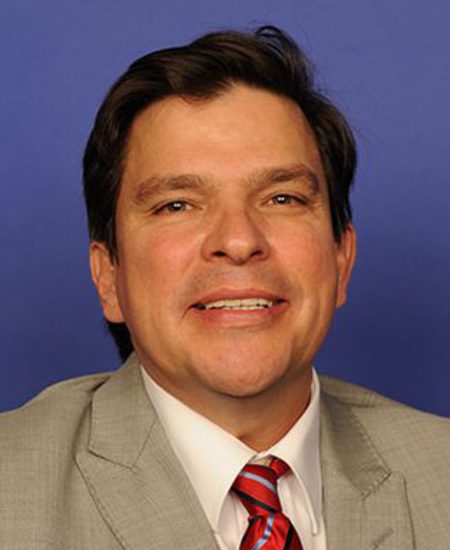
Rep. Vicente Gonzalez
Sponsored bills
Maddy summaryHRES 996 is a resolution introduced by multiple House members to impeach Kristi Lynn Arnold Noem, the Secretary of Homeland Security, for alleged violations of law and the Constitution. It outlines three articles of impeachment: obstructing congressional oversight by denying access to detention facilities and withholding funds, violating public trust through warrantless arrests and excessive force (including tear gas on children), and self-dealing by awarding federal contracts to associates without competitive bidding. If approved by the House, this resolution would formally charge Noem, triggering a Senate trial to determine her removal from office. The resolution itself does not enact new policy but initiates the constitutional impeachment process against a sitting Cabinet official.
Maddy summaryHR 6088, the *Restoring Food Security for American Families and Farmers Act of 2025*, repeals specific sections (10101-10108) from a prior reconciliation law. This action revives previous provisions related to food security programs that were modified by those repealed sections. The bill directly affects federal food assistance and agricultural support programs by restoring their prior legal framework. It does not create new policies but reverses recent changes to existing food security measures.
Maddy summaryHR 909, the Crime Victims Fund Stabilization Act of 2025, modifies how funds from the False Claims Act are deposited into the Crime Victims Fund. It specifies that from 2025 through 2029, certain False Claims Act proceeds (specifically those for qui tam plaintiff payments and government damage reimbursements) cannot be deposited into the fund. This change directly affects the composition of the Crime Victims Fund by excluding these specific revenue streams during the specified period. The bill does not create new benefits or alter victim services; it only adjusts fund allocation rules for existing False Claims Act revenues.
Maddy summaryThis concurrent resolution (HCONRES 69) commemorates the 15th anniversary of the January 8, 2011, Tucson shooting that killed six people and injured 13, including former Congresswoman Gabby Giffords. It honors the victims, survivors, and Giffords - now a prominent advocate for gun violence prevention - and recognizes her leadership in promoting civility and reducing gun violence. The resolution also commends Tucson residents and first responders for their resilience and reaffirms Congress’s commitment to respectful dialogue and opposing political violence. As a ceremonial resolution, it does not create new laws or policies.
Maddy summaryThis resolution (HRES 969) expresses support for designating the week beginning September 8, 2025, as "National Hispanic-Serving Institutions Week." It recognizes colleges and universities with at least 25% Hispanic undergraduate enrollment (known as Hispanic-Serving Institutions or HSIs) and their role in serving diverse, low-income students. The resolution does not create new policies or funding but encourages public observance through ceremonies and activities to honor HSIs’ contributions to higher education access and economic mobility. It applies symbolically to all 615+ HSIs across the U.S. and Puerto Rico.
Maddy summaryThis bill renames the Dallas, Texas Department of Veterans Affairs medical center at 4500 South Lancaster Road as the "Eddie Bernice Johnson VA Medical Center." It directly affects the facility and all official references to it in federal documents, laws, and records. The key provision (Section 2(a)) officially changes the facility's name upon enactment, and Section 2(b) requires all future references to use the new name. The bill is procedural, honoring Congresswoman Johnson's service to veterans.
Maddy summaryThe SPEED Act reforms the National Environmental Policy Act (NEPA) to streamline federal environmental reviews for projects. It limits agencies to considering only "proximate" environmental effects directly tied to a specific project (not speculative or distant impacts), sets strict 180-day deadlines for court remands, and restricts judicial review to procedural errors - not environmental outcomes. This primarily affects federal agencies (like the EPA or Corps of Engineers) and project developers (e.g., for infrastructure, energy, or construction projects) by reducing review scope and accelerating approvals. The bill clarifies NEPA is purely procedural, prohibiting courts from substituting their judgment on environmental effects or delaying actions for new scientific data after deadlines.
Maddy summaryThis bill creates a federal grant program to expand mental health and substance use care for rural underserved populations, specifically targeting health professional shortage areas and individuals working in farming, fishing, or forestry. It authorizes $10 million annually (2025-2029) for eligible providers to deliver home-based telemental health services - using video or phone - directly to patients' homes or comfortable settings. Grantees must develop quality metrics comparing remote care to in-person services, expand broadband access, provide patient devices, and cover provider technology costs. The program requires annual reports to Congress on service impact and quality.
Maddy summaryHR 6792, the Foreign-Trade Zone Export Enhancement Act of 2025, modifies U.S. tariff rules to make it easier for businesses using foreign-trade zones (FTZs) to export goods to U.S. trade partners under the USMCA (or future agreements). It allows certain merchandise manufactured or altered within FTZs - specifically items classified under HTS 9801.00.95 - to enter the U.S. duty-free when exported directly to Canada or Mexico. This change aims to support U.S. manufacturing competitiveness and job retention by reducing costs for companies processing goods in FTZs for export to USMCA countries. The bill requires U.S. Customs and Border Protection to implement these tariff changes within 90 days of enactment.