

Stop the Wait Act of 2025 This bill phases out the initial waiting period for Social Security Disability Insurance (SSDI) benefits and eliminates the waiting period for certain disabled individuals to become eligible for Medicare. Under current law, individuals generally must wait five months after the onset of disability to begin receiving SSDI benefits. The bill would gradually reduce this waiting period before eliminating it entirely in the year 2030. Further, the bill would eliminate the 24-month waiting period for certain disabled workers and other individuals to become eligible for Medicare. Under current law, individuals under the age of 65 may generally enroll in Medicare after they have been eligible for SSDI or Social Security child’s, widow’s, or widower’s benefits by reason of disability for 24 months. The bill would eliminate this waiting period for individuals for whom the annual cost of certain medical insurance would exceed a specified percentage of their household income (i.e., those who cannot afford minimum essential coverage). Medicare eligibility for these individuals must be available retroactively to the first month that an individual qualified for SSDI or Social Security child’s, widow’s, or widower’s benefits by reason of disability.
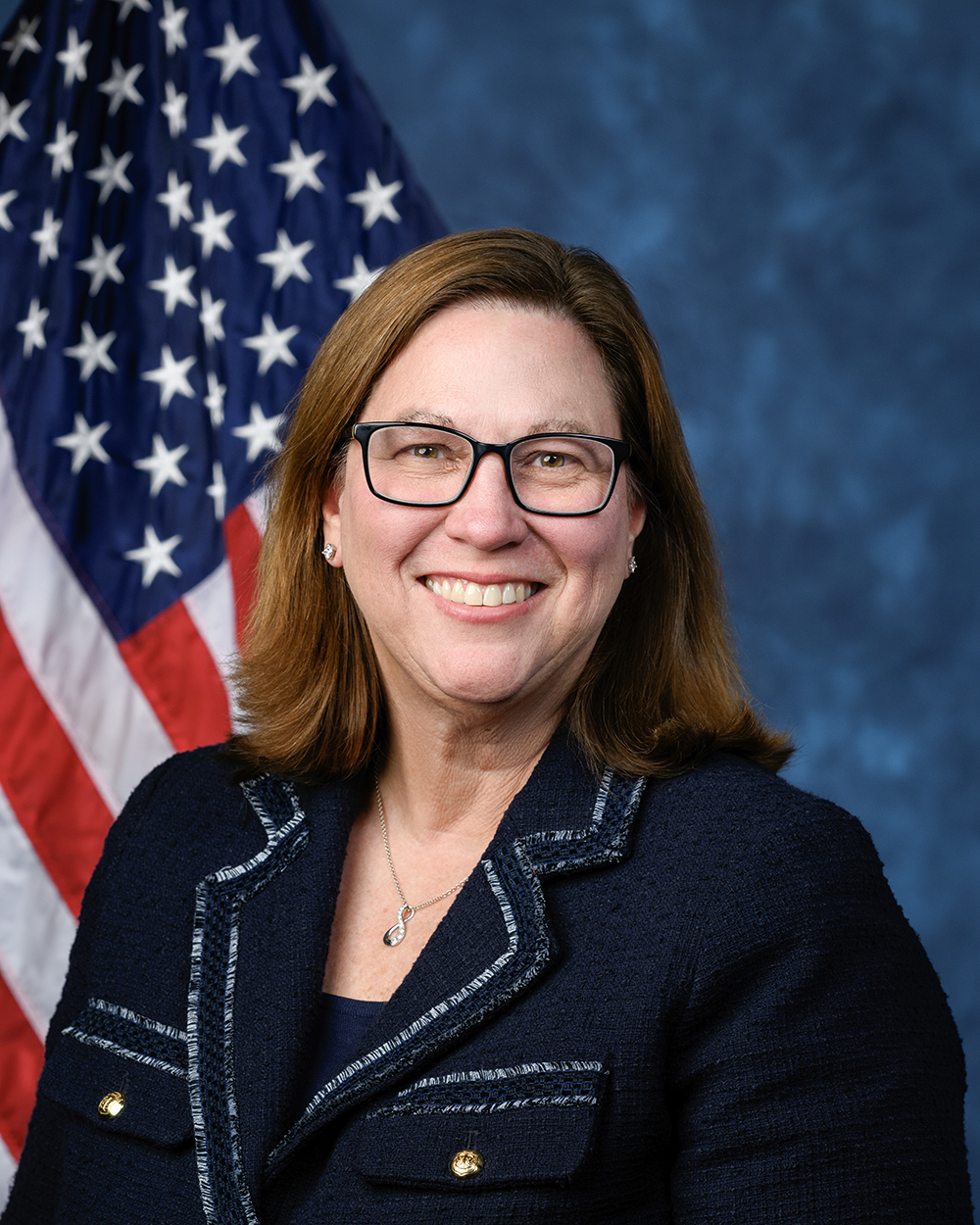
Rep. Julie Johnson
Sponsored bills
This bill provides for the presentation of a Congressional Gold Medal to the Freedom Riders, in recognition of their contribution to civil rights by fighting for equality in interstate travel.
Stop Antiabortion Disinformation Act or the SAD Act This bill prohibits deceptive advertising for reproductive health services. Specifically, the bill makes it unlawful for a person (i.e., individual, partnership, corporation, association, or organization) to deceptively advertise the reproductive health services they offer, including by misrepresenting that the person (1) offers or provides contraception or abortion services (or referrals for such contraception or abortion services), or (2) employs or offers access to licensed medical personnel. The bill provides for enforcement by the Federal Trade Commission. In addition to any other penalty, violations are subject to a civil penalty that may not exceed the greater of $100,000 (adjusted annually for inflation) or 50% of the revenue earned during the preceding 12-month period by the ultimate parent entity of the person who violated the bill.
Maddy summaryHR 869, the Keep Our PACT Act, mandates specific annual funding levels for two key education programs: Title I of the Elementary and Secondary Education Act (ESEA) and the Individuals with Disabilities Education Act (IDEA). For Title I, it requires funding in fiscal years 2026-2035 that equals the difference between the 2025 funding level and set annual dollar targets (e.g., $20.5 billion for 2026). For IDEA, it sets mandatory annual funding levels that gradually increase to reach 40% of the national average per-pupil expenditure for students with disabilities by 2035. The bill directly affects public school districts and students, particularly those with disabilities, by guaranteeing these funding levels rather than relying on annual appropriations.
Maddy summaryThis bill designates the U.S. Postal Service facility at 4400 East Paisano Drive in El Paso, Texas, as the "Enedina Sanchez Cordero Post Office Building" to honor her contributions. It requires all federal references in laws, maps, regulations, and documents to use the new name for the building. The change applies immediately to all official government records and communications. This is a ceremonial naming resolution with no new policy or funding provisions.
Medicare Patient Access and Practice Stabilization Act of 2025 This bill increases certain payment adjustments under the Medicare physician fee schedule for services furnished between April 1, 2025, and January 1, 2026.
Maddy summaryHR 887, the Lower Grocery Prices Act, directs the Government Accountability Office (GAO) to study 20 years of food-at-home cost trends using the Consumer Price Index and other economic data. The GAO must submit a report to Congress within 180 days of the bill’s enactment, detailing its findings and recommendations for lowering grocery costs. This bill does not directly lower prices or change existing policies - it only mandates a study to inform potential future legislative action. The report will be shared with specific congressional committees focused on finance and commerce.
Maddy summaryThis resolution expresses the House of Representatives' position that Congress should take steps to prevent the privatization of the United States Postal Service (USPS), ensuring it remains a federal independent agency. It highlights USPS’s constitutional role, self-sustaining nature (relying on service revenue, not taxpayer funds), and critical functions - serving 168 million addresses daily, supporting rural communities, and underpinning e-commerce. The resolution opposes privatization, noting it would raise prices, reduce services, and harm the $1.9 trillion mailing industry. As a non-binding resolution, it reflects the House’s stance but does not create new law or policy.
Maddy summaryHRES 73 is a non-binding House resolution condemning Belarus' January 2025 fraudulent presidential election and President Lukashenka’s authoritarian rule. It calls for free and fair elections with international monitoring, demands the immediate release of over 1,200 political prisoners, and supports continued U.S. aid to Belarusian democratic opposition groups. The resolution also condemns Belarus’ support for Russia’s invasion of Ukraine, including hosting Russian weapons and facilitating the abduction of Ukrainian children. As a statement of congressional position, it urges sanctions against regime officials but does not create new legal requirements.
Maddy summaryHR 768, the Holocaust Education and Antisemitism Lessons Act, requires the U.S. Holocaust Memorial Museum Director to study how states and school districts currently teach about the Holocaust and antisemitism in K-12 schools. The study will examine curriculum requirements, teacher training, educational materials used, and assessment methods across all states and a representative sample of school districts and schools. It specifically aims to identify gaps, resources needed, and how schools address antisemitism and genocide prevention in their teaching. The Museum must submit a report to Congress within three years of the bill's enactment, detailing findings on current practices and challenges. This bill does not mandate new teaching requirements but seeks to understand existing approaches to Holocaust education.