

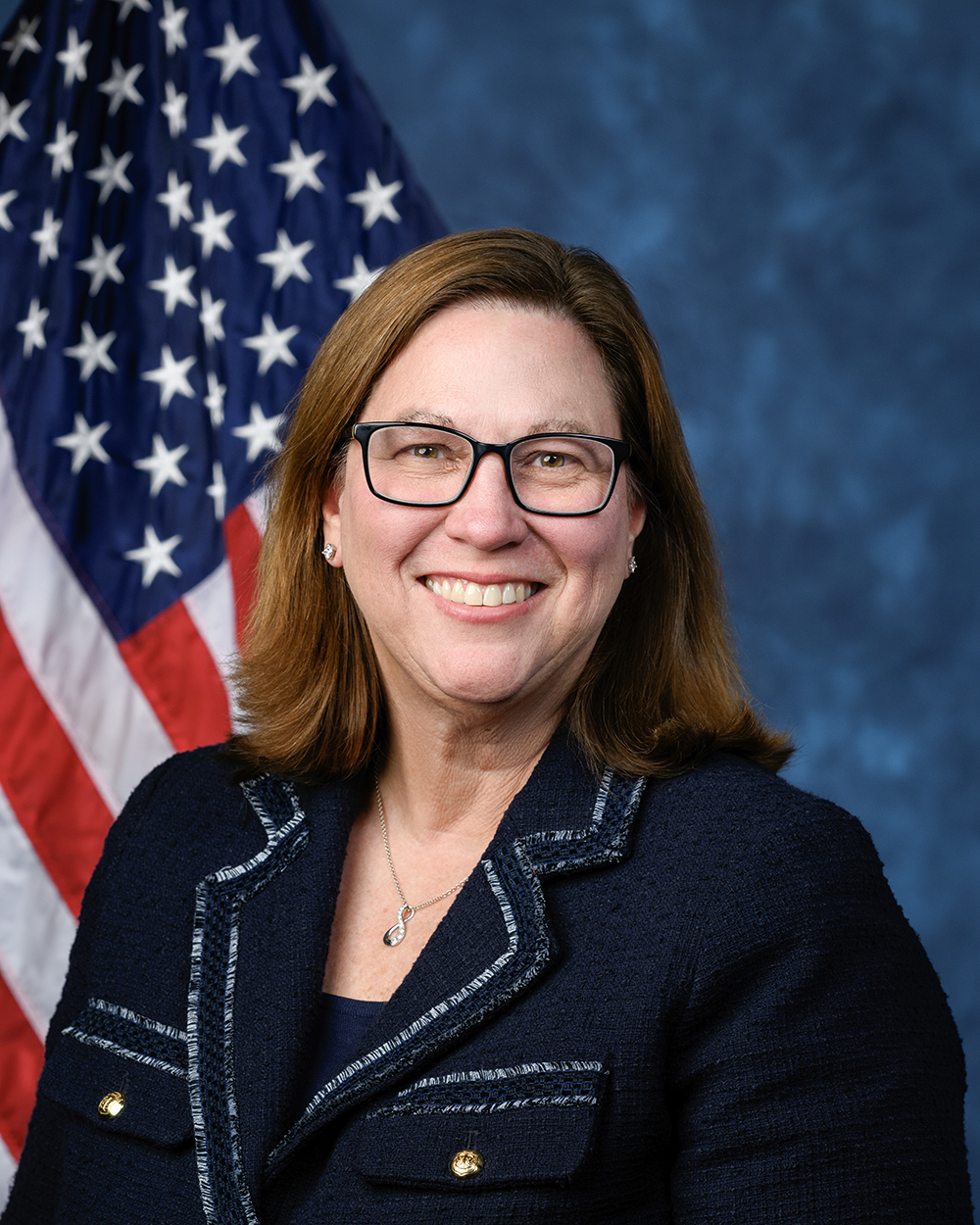
Photo of Julie Johnson
D United States House · District 32 · Texas

Rep. Julie Johnson

Compare
Total votes
650
all sessions
Attendance
96%
25 missed
Near the chamber average
With party
96%
of cast votes
Near the chamber average
Bipartisan score
2%
crosses aisle rarely
Near the chamber average
Sponsored
478
bills & resolutions
Higher than 82% of chamber peers
Committees
9
assignments
478 bills and resolutions

Sponsored bills

Total
478
Primary
25
Co-sponsor
453
This page
478
matching current filters
Co-sponsor HR 2880
In committee · Delaware House · Co-sponsor
To provide employment protections for, and reinstatement of, certain probationary Federal career employees, and for other purposes.

Maddy summaryHR 2880 provides due process protections for federal employees who are promoted to career positions (in the competitive service, excepted service, or Senior Executive Service) and serve under a probationary period. It requires these employees to be covered by existing federal employment laws, including special protections for Department of Veterans Affairs staff. The bill also allows employees removed from such positions between January 20, 2025, and the law's enactment to be reinstated to their former or equivalent role with backpay. Political appointees are excluded from these protections and reinstatement provisions.

In committee Apr 10, 2025 1 co-sponsor
Co-sponsor HR 2904
In committee · Delaware House · Co-sponsor
Pursuing Equity in Mental Health Act

Maddy summaryThe Pursuing Equity in Mental Health Act (HR 2904) aims to reduce mental health disparities affecting racial and ethnic minority groups by modifying federal grant programs, requiring research on disparities, and funding targeted initiatives. It directs the Health and Human Services Secretary to prioritize grants for community health organizations serving minority populations, mandates a National Institutes of Health study on mental health research gaps in these groups, and establishes training programs for health professionals to address cultural competency in mental health care. The bill also requires a public outreach strategy developed with community input to reduce stigma and improve access to culturally appropriate care, alongside $20 million annually (2026-2031) for this effort. Additional funding includes $150 million yearly for NIH mental health research and $750 million yearly for the National Institute on Minority Health.

In committee Apr 10, 2025 1 co-sponsor
Co-sponsor HR 2837
In committee · Delaware House · Co-sponsor
Resources for Victims of Gun Violence Act of 2025

Maddy summaryHR 2837 establishes an Advisory Council under the Department of Health and Human Services to improve access to existing resources for victims of gun violence. The council, composed of federal agency heads and appointed victims/support professionals, will assess needs, identify effective programs, and compile a public resource hub with contact information for medical, financial, mental health, legal, and government support services. It requires a detailed report within 180 days of enactment and a follow-up report within two years, focusing on gaps in current assistance and coordination. The bill directly affects individuals defined as victims of gun violence (including those wounded, threatened, witnessing incidents, or related to victims) and aims to connect them to existing federal, state, and nonprofit resources without authorizing new funding. The council will sunset after five years.

In committee Apr 10, 2025 1 co-sponsor
Co-sponsor HR 2831
In committee · Delaware House · Co-sponsor
Small Business Energy Loan Enhancement Act

Maddy summaryHR 2831, the Small Business Energy Loan Enhancement Act, doubles the maximum loan amounts for certain small business energy projects under the Small Business Investment Act of 1958, raising the cap from $5.5 million to $10 million for two specific loan categories. This directly affects small businesses seeking financing for energy-related investments, such as efficiency upgrades or renewable energy installations. The bill requires the Small Business Administration (SBA) to annually report to Congress on which industries and geographic areas receive these loans. These changes aim to increase access to capital for qualifying energy projects without altering eligibility criteria.

In committee Apr 10, 2025 1 co-sponsor
Co-sponsor HR 2888
In committee · Delaware House · Co-sponsor
Stopping a Rogue President on Trade Act

Maddy summaryHR 2888, the "Stopping a Rogue President on Trade Act," terminates specific executive orders imposing tariffs (EOs 14257, 14193, and 14194) and requires congressional approval for new tariffs or trade restrictions. It directly affects the President, who can no longer unilaterally impose or increase tariffs without Congress passing a joint resolution approving the action. Key mechanisms include mandating a formal joint resolution process for tariff decisions (with limited exceptions for existing antidumping duties and trade agreements) and applying expedited congressional procedures. This bill shifts authority from the executive branch to Congress for major trade policy changes.

In committee Apr 10, 2025 1 co-sponsor
Primary HR 2852
In committee · Delaware House · Lead sponsor
Expanded Student Saver’s Tax Credit Act

Maddy summaryThis bill expands eligibility for two tax credits: the Saver's Credit (for retirement savings) and the Saver's Match (for low-income workers). It removes the previous exclusion of full-time students, allowing any dependent student claimed by a parent on their tax return to qualify for these benefits. The change applies to contributions made after the bill's enactment and aligns with existing rules for dependents under Section 151 of the tax code. This directly affects dependent college students who were previously ineligible for these credits, potentially increasing their access to retirement savings incentives.

In committee Apr 10, 2025 0 co-sponsors
Co-sponsor HJRES 91
In committee · Delaware House · Co-sponsor
Relating to a national emergency by the President on April 2, 2025.

Maddy summaryH.J. Res. 91 terminates the national emergency declared by the President on April 2, 2025, under Executive Order 14257. The resolution ends this emergency status by invoking Section 202 of the National Emergencies Act (50 U.S.C. 1622). This action would halt the use of emergency powers associated with the declaration, such as special authorities or funding mechanisms. The bill directly affects federal agencies and the executive branch by removing the legal basis for operating under the emergency framework.

In committee Apr 9, 2025 1 co-sponsor
Co-sponsor HR 2790
In committee · Delaware House · Co-sponsor
GOSAFE Act

Maddy summaryThe GOSAFE Act prohibits the sale, manufacture, transfer, and possession of gas-operated semi-automatic firearms and large capacity ammunition feeding devices (those holding more than 10 rounds). It defines gas-operated firearms as those that use gas from fired cartridges to cycle the action, requiring the Attorney General to publish a list of prohibited firearms within 180 days. The bill establishes a process for manufacturers to seek approval for new firearm designs before selling to civilians and creates a "Firearm Safety Trust Fund" to cover related costs. Certain firearms are exempt, including single-shot, muzzle-loading, and firearms with permanently fixed magazines holding 10 or fewer rounds. Violations could result in fines up to $5,000 or up to 12 months in prison.

In committee Apr 9, 2025 1 co-sponsor
Co-sponsor HR 2767
In committee · Delaware House · Co-sponsor
BRAIN Act

Maddy summaryHR 2767, the BRAIN Act, aims to advance brain tumor research and improve patient care by requiring the NIH to create a public database of tumor samples collected with federal funding. It authorizes $50 million annually for a Glioblastoma Therapeutics Network to accelerate treatment development and $10 million for cellular immunotherapy research (including CAR-T therapies) targeting brain tumors. The bill also mandates a national awareness campaign to increase understanding of cancer clinical trials and biomarker testing, plus $5 million yearly for pilot programs studying survivor care coordination and follow-up services. Additionally, it directs the FDA to issue guidance ensuring brain tumor patients can access clinical trials. These provisions directly affect patients, researchers, and healthcare providers focused on brain tumors and rare cancers.

In committee Apr 9, 2025 1 co-sponsor
Co-sponsor HR 2763
In committee · Delaware House · Co-sponsor
American Family Act

Maddy summaryThe American Family Act (HR 2763) establishes a new refundable child tax credit that provides monthly payments to eligible families with children. It would pay $300 per month for each child under age 6 and $360 per month (120% of $300) for each child age 6 or older, with income limits of $150,000 for joint filers and $112,500 for other filers. The bill creates a "period of presumptive eligibility" to determine eligibility for monthly payments, allowing families to receive advance payments based on information from previous tax returns. This would directly affect millions of families with children who meet the income requirements, providing more consistent financial support throughout the year rather than an annual tax credit.

In committee Apr 9, 2025 1 co-sponsor
Showing 331 to 340 of 478 bills
Previous 1 33 34 35 48 Next